Dimon Defies Big-Bank Critics, Winning FDIC Auction to Keep Expanding

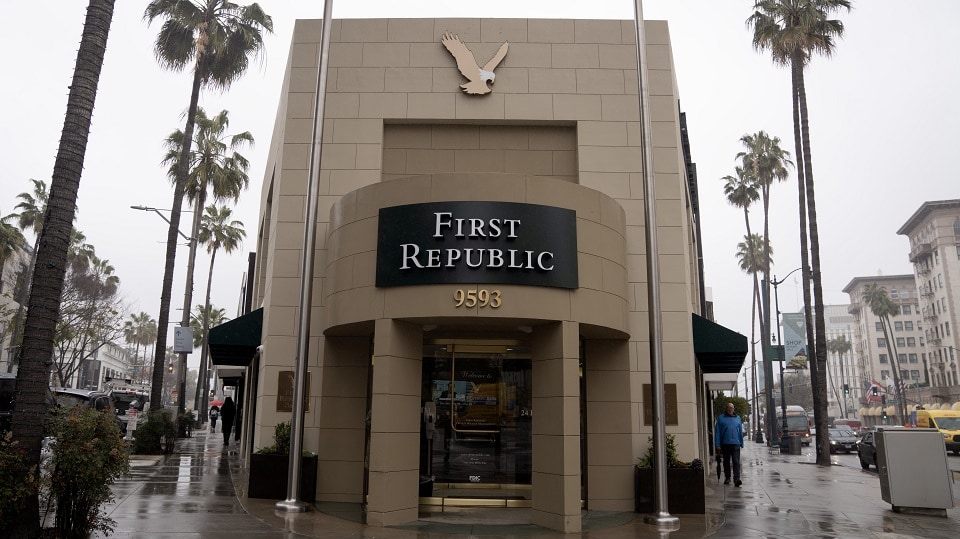
(Bloomberg) -- JPMorgan Chase & Co.'s purchase of First Republic Bank puts a new twist on “too big to fail” — with the largest US lender using its mighty balance sheet to beat competitors and spare regulators an even uglier hit from the latest regional bank collapse.
JPMorgan Chief Executive Officer Jamie Dimon's offer to acquire the troubled lender reduced the cost to the Federal Deposit Insurance Corp.'s main fund, compared with offers received from smaller firms. But the outcome means the US banking giant will now grow even larger, potentially provoking critics of financial titans.
Indeed, US rules normally forbid banks as massive as Dimon's from buying competitors, but there are exceptions for emergencies, aimed at preventing a larger-than-necessary hit to the FDIC. The agency estimated the cost to its deposit insurance fund will be about $13 billion — compared with the roughly $20 billion hit inflicted by Silicon Valley Bank's collapse in March.
“This is getting near the end of it, and hopefully this helps stabilize everything,” Dimon said on a call with journalists. Regional banks that reported first-quarter results in recent weeks “actually had some pretty good results,” the CEO said. “The American banking system is extraordinarily sound.”
JPMorgan's victory is, ironically, the result of two regulatory policies that were supposed to help tame the unchecked growth of financial giants after the 2008 financial crisis. Worried about the potential for too-big-to-fail banks to bring down the financial system, regulators forced them to strengthen their capital and rein in risk-taking. Some years later, the Trump administration pushed through a bipartisan effort to ease the regulatory burden on smaller banks and help them compete with larger ones.
That all backfired when the Federal Reserve embarked on its fastest spree of rate hikes in a generation last year, putting pressure on smaller banks by eroding the value of low-interest debts on their balance sheets. At the same time, depositors began moving their money to a variety of investment products as interest rates drove up yields.
By this year, the big, heavily regulated banks stood out as beacons of relative safety, attracting those customers' cash. And then suddenly in March, wealthy customers and businesses were panicking, yanking deposits and transferring them to JPMorgan and its peers.
As First Republic teetered, Dimon helped arrange an industry lifeline, teaming up with 10 other large banks to deposit $30 billion into the firm. But the bank and its advisers still weren't able to find a deal that would patch the hole in its balance sheet.

After the situation worsened last week, leaving First Republic's stock down 97% this year, the FDIC began soliciting bids from banks, including leading regionals such as PNC Financial Services Group Inc. and Citizens Financial Group Inc. to take it over. But JPMorgan flexed its muscle and won.
The takeover will add about $173 billion of loans, $30 billion of securities and $92 billion in deposits to JPMorgan's balance sheet. The bank and the FDIC agreed to share losses and recoveries on single-family mortgages and commercial loans.
“The resolution of First Republic Bank involved a highly competitive bidding process and resulted in a transaction consistent with the least-cost requirements of the Federal Deposit Insurance Act,” the regulator said in announcing the sale.
New York-based JPMorgan was the only bidder that offered to take the entire bank off the FDIC's hands in the cleanest way, according to two people familiar with the decision. That was more appealing for the agency than the competing bids, which proposed breaking up First Republic or would have required complex financial arrangements to fund its $100 billion of mortgages, said the people, who asked for anonymity to describe the private talks.
The other bids would have cost the FDIC several billion dollars more from its insurance fund, one of the people said.
“Our government invited us and others to step up, and we did,” Dimon said in a statement. “Our financial strength, capabilities and business model allowed us to develop a bid to execute the transaction in a way to minimize costs to the Deposit Insurance Fund.”
JPMorgan's success in snapping up First Republic echoes the outcome of Credit Suisse Group AG's collapse in March. UBS Group AG, the biggest Swiss bank, emerged as a winner in that crisis, agreeing to buy its smaller rival for $3.3 billion in a deal that included extensive government guarantees and liquidity provisions.
With massive banks getting even larger, critics of the industry are raising alarms. Prominent political figures including Democratic Senator Elizabeth Warren have repeatedly called for them to be broken up.
“The failure of First Republic Bank shows how deregulation has made the too-big-to-fail problem even worse,” Warren said in a tweet Monday. “A poorly supervised bank was snapped up by an even bigger bank—ultimately taxpayers will be on the hook. Congress needs to make major reforms to fix a broken banking system.”
The government had been making efforts to keep the largest banks from getting bigger through acquisitions.
US rules bar those with more than 10% of the country's deposits from buying other deposit-taking institutions. But the regulations do allow exceptions under a few circumstances, including taking over banks that have failed or are in danger of failing.
Interest-Only Loans
Counterintuitively, First Republic's trouble stemmed from a focus on lending to people with ample ability to repay their debts — wealthy homebuyers.
As it sought to turn its wealth business into a major player, the San Francisco-based bank lured clients from wealthy enclaves across the country, offering giant mortgages that put off principal payments for a decade, giving borrowers more time to invest and grow their money.
By the end of last year, First Republic's books held about $58 billion in interest-only mortgages on single-family homes. But those assets — with low interest rates and delayed repayment schedules — lose value as interest rates rise.
The firm's deposits had plummeted to $92.6 billion by Friday from $176.4 billion at the end of 2022, according to the California Department of Financial Protection and Innovation. Advances from the Federal Home Loan Bank and Fed had reached a combined total of $121.3 billion, a 766% surge in outstanding borrowings compared with the fourth quarter.
“Due to the bank's financial condition, the bank is unable to get additional funding from the FHLB and Federal Reserve on terms that would ensure its continued viability,” the California regulator said.
While First Republic was previously the nation's 14th-largest bank, it is striking how little of a difference its addition will make to JPMorgan's $3.7 trillion balance sheet.
The boost from First Republic's assets is far less than JPMorgan's annual growth rate in two of the last three years.
“We need large, successful banks,” Dimon said on a call discussing the transaction. “Anyone who thinks it would be good for the United States of America not to have that, should call me directly.”
More stories like this are available on bloomberg.com
©2023 Bloomberg L.P.

-
Ten Things I Learnt This Samvat

Patience can be a trap. Cheap stocks can stay cheap. Leverage can wipe you out. What did Samvat 2082 teach us? Niraj Shah writes on 10 lessons from the year gone by.
-
Talking Points This Week: Tech Nerves, FII Buying, And A Faraway Banking Shock
The global markets are not shining this Diwali. The exception in the large markets is, India.
-
Midterm Rally Lasted A Day. The Hard Reality Of A Divided US May Last Two Years | Opinion
Between a contested AI boom, a debt ceiling that arrives in 2027 and a president with every incentive to act alone, the next two years may prove more volatile than the first day's rally suggests.
-
Blue Wave Will Derail the AI Trade but Won't Dismantle the AI Era | Unhedged Position
The Democrats' sweep of the US Congress will see politics collide with economic forces both over the long and short term.
-
It's Time To Take The GST Council's Bet On Trust Global
Payment records can prove India's services exports, and clear, proportionate rules can bring foreign digital sellers into the tax net.
-
Opinion | India at 38: From Innovation Overperformer to Innovation Powerhouse
India now has 453 VC-backed deep science startups, 18 of them late-stage, after 117 percent growth since 2020. Laurus Labs, at USD 9.3 billion, is the most valuable deep science company in any middle-income economy outside China.
-
Navigating Energy Crossroads: S Jaishankar's Call For Diversified Supply Chains At G20 Ministerial Meeting
As geopolitical fault lines continue to test maritime trade routes and commodity flows, Jaishankar's message remains pertinent: true economic resilience requires open markets, protected transit lines, and a genuine commitment to multilateral cooperation rather than coercion.
-
Indians Are Travelling, But Not Every Journey Is A Holiday | The Week In Whys
Pilgrims, patients and working women are the real travellers, and the system hasn't quite caught up with them.
-
Getting To Work Costs Women More | The Reason Why
It is not just about women paying more than men. It is about women paying much more in cities than in villages.









