Debt-Cap Fight To Restrain Auction Sizes Even As Deficit Grows
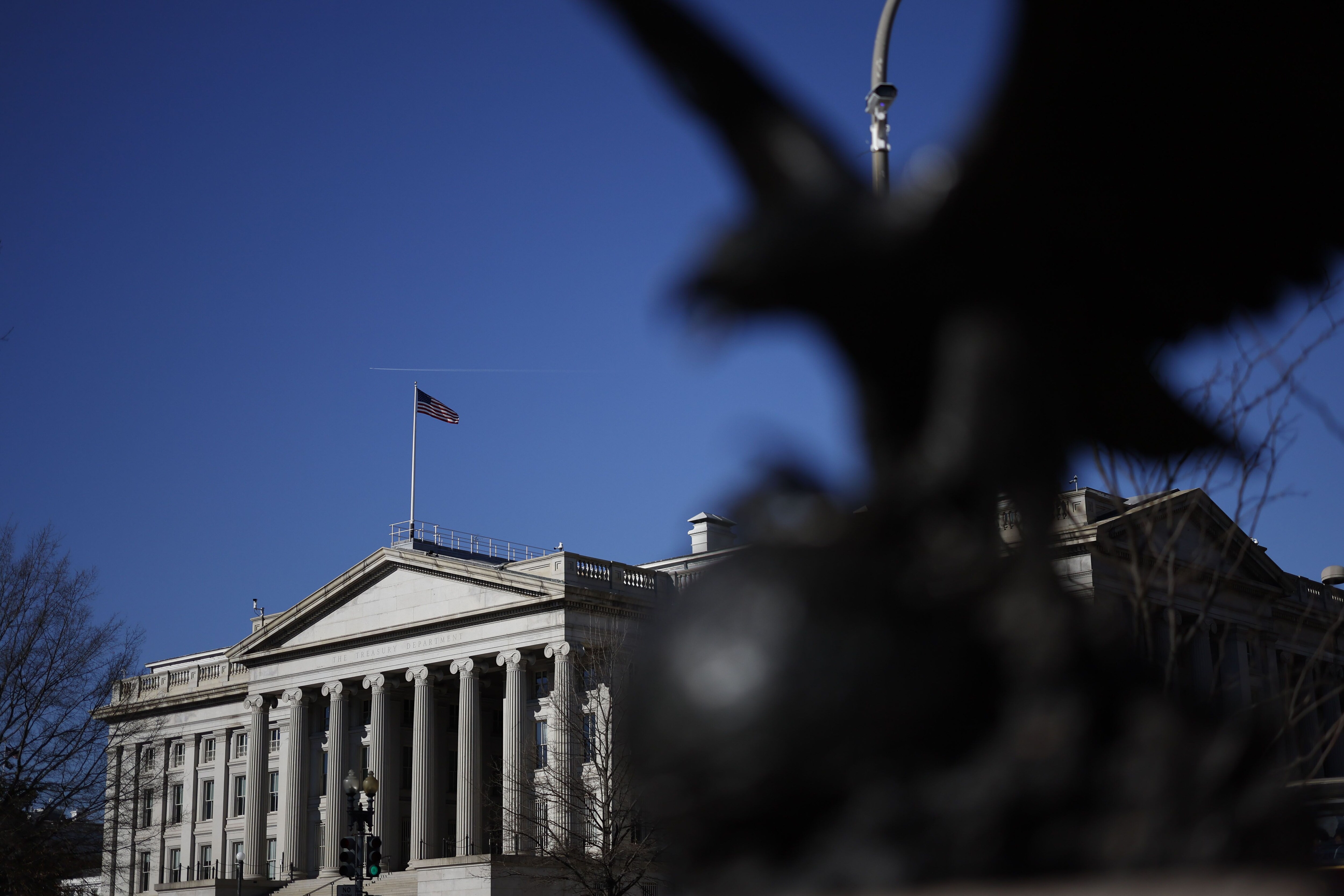
(Bloomberg) -- The US Treasury is facing the need for increasing issuance of longer-term securities this year as the budget deficit worsens, but for now its plans are frozen by the partisan standoff in Washington over raising the debt limit.
This Wednesday's so-called quarterly refunding announcement — at which the Treasury Department outlines its issuance plans for longer-term securities — is likely to be the third in a row without any change to the slate of coupon-bearing debt auctions that kicks off each three-month cycle. Most forecasters see the combined size for the three securities being kept at $96 billion.
Later this year, the Treasury will be under pressure to boost that figure, to fund a widening budget gap while maintaining its preferred overall maturity structure.
The extent of the Treasury's increasing borrowing needs will be on display Monday afternoon, when it updates quarterly assessments for April-through-June and the following three months. Those are likely to assume that Congress raises or suspends the debt limit before the department runs out of cash — which could come as soon as June.
With the Treasury constrained from what it can do thanks to having hit the debt ceiling in January and using special measures to avoid breaching it since then, dealers aren't expecting major new signals on issuance strategy on Wednesday. The refunding will provide Treasury Secretary Janet Yellen's debt managers to renew calls to Congress to address the limit.
“Treasury is better off doing the bare minimum they can do, with the backdrop of the uncertainty around the debt ceiling,” said Jason Williams, an interest-rate strategist at Citigroup Inc. “Treasury will need to increase coupon debt ahead but it's not an emergency for them to do it now. It makes more sense for them to wait.”
An unchanged quarterly refunding plan would suggest the Treasury sells:
- $40 billion of 3-year notes on May. 9
- $35 billion of 10-year notes on May. 10
- $21 billion of 30-year bonds on May. 11
In its broader discussion of debt-management strategy, the Treasury may on Wednesday offer an update on its thinking about a potential program to buy back some outstanding securities. The department has for months been looking at such an initiative, in part to bolster trading liquidity.
Read More: Treasury Asks Dealers Views on Buybacks, Post Debt-Limit T-Bills
“It could be an interesting refunding on two issues: one being how Treasury is thinking about changes to coupon-debt sizes ahead and also on buybacks,” said Priya Misra, global head of rates strategy at TD Securities.
Misra noted that the Federal Reserve's continuing quantitative-tightening program — which sees up to $60 billion of Treasuries mature each month without replacement — is also contributing to the need for the Treasury in time to expand its refunding size.
As with many other dealers, Misra is penciling that in for November. JPMorgan Chase & Co. strategists wrote that an increase is “unavoidable,” and that team sees a boost coming in August.
For now, the Treasury is running down its stockpile of cash and shrinking its issuance of Treasury bills as it works to stay under the $31.4 trillion debt limit.
Speaker Kevin McCarthy last week muscled a debt-limit bill through the House that's opposed by President Joe Biden and congressional Democrats, leaving the situation in limbo with the clock ticking until the government runs out of enough cash to make good on all federal obligations.
The Treasury is expected in the coming days to offer an update of its timeline for when it will likely exhaust the special accounting measures it's been deploying since January to stay within the statutory limit.
Once the ceiling is suspended or raised, the Treasury is expected to ramp back up its sales of T-bills to rebuild its cash. Wells Fargo & Co.'s team predicts $1.1 trillion in net new bill issuance from the start of August through the end of the year — assuming a debt-ceiling resolution is put in place before that. By the end of March 2024, net new bill supply will have catapulted up by $1.5 trillion, Wells Fargo says.

That surge would then threaten to lift the share of bills in the Treasury's overall debt load above the 15% to 20% advised by the Treasury Borrowing Advisory Committee — a group of dealers, investors and other market participants that counsels US debt managers.
“That, along with our deficit forecast, mean Treasury will have to increase coupons starting in November,” said Angelo Manolatos, a rates strategist at Wells Fargo.
More stories like this are available on bloomberg.com
©2023 Bloomberg L.P.

-
Ten Things I Learnt This Samvat

Patience can be a trap. Cheap stocks can stay cheap. Leverage can wipe you out. What did Samvat 2082 teach us? Niraj Shah writes on 10 lessons from the year gone by.
-
Talking Points This Week: Tech Nerves, FII Buying, And A Faraway Banking Shock
The global markets are not shining this Diwali. The exception in the large markets is, India.
-
Midterm Rally Lasted A Day. The Hard Reality Of A Divided US May Last Two Years | Opinion
Between a contested AI boom, a debt ceiling that arrives in 2027 and a president with every incentive to act alone, the next two years may prove more volatile than the first day's rally suggests.
-
Blue Wave Will Derail the AI Trade but Won't Dismantle the AI Era | Unhedged Position
The Democrats' sweep of the US Congress will see politics collide with economic forces both over the long and short term.
-
It's Time To Take The GST Council's Bet On Trust Global
Payment records can prove India's services exports, and clear, proportionate rules can bring foreign digital sellers into the tax net.
-
Opinion | India at 38: From Innovation Overperformer to Innovation Powerhouse
India now has 453 VC-backed deep science startups, 18 of them late-stage, after 117 percent growth since 2020. Laurus Labs, at USD 9.3 billion, is the most valuable deep science company in any middle-income economy outside China.
-
Navigating Energy Crossroads: S Jaishankar's Call For Diversified Supply Chains At G20 Ministerial Meeting
As geopolitical fault lines continue to test maritime trade routes and commodity flows, Jaishankar's message remains pertinent: true economic resilience requires open markets, protected transit lines, and a genuine commitment to multilateral cooperation rather than coercion.
-
Indians Are Travelling, But Not Every Journey Is A Holiday | The Week In Whys
Pilgrims, patients and working women are the real travellers, and the system hasn't quite caught up with them.
-
Getting To Work Costs Women More | The Reason Why
It is not just about women paying more than men. It is about women paying much more in cities than in villages.









