Commerce Minister ‘Strongly Recommends’ a 200 Basis Point Rate Cut
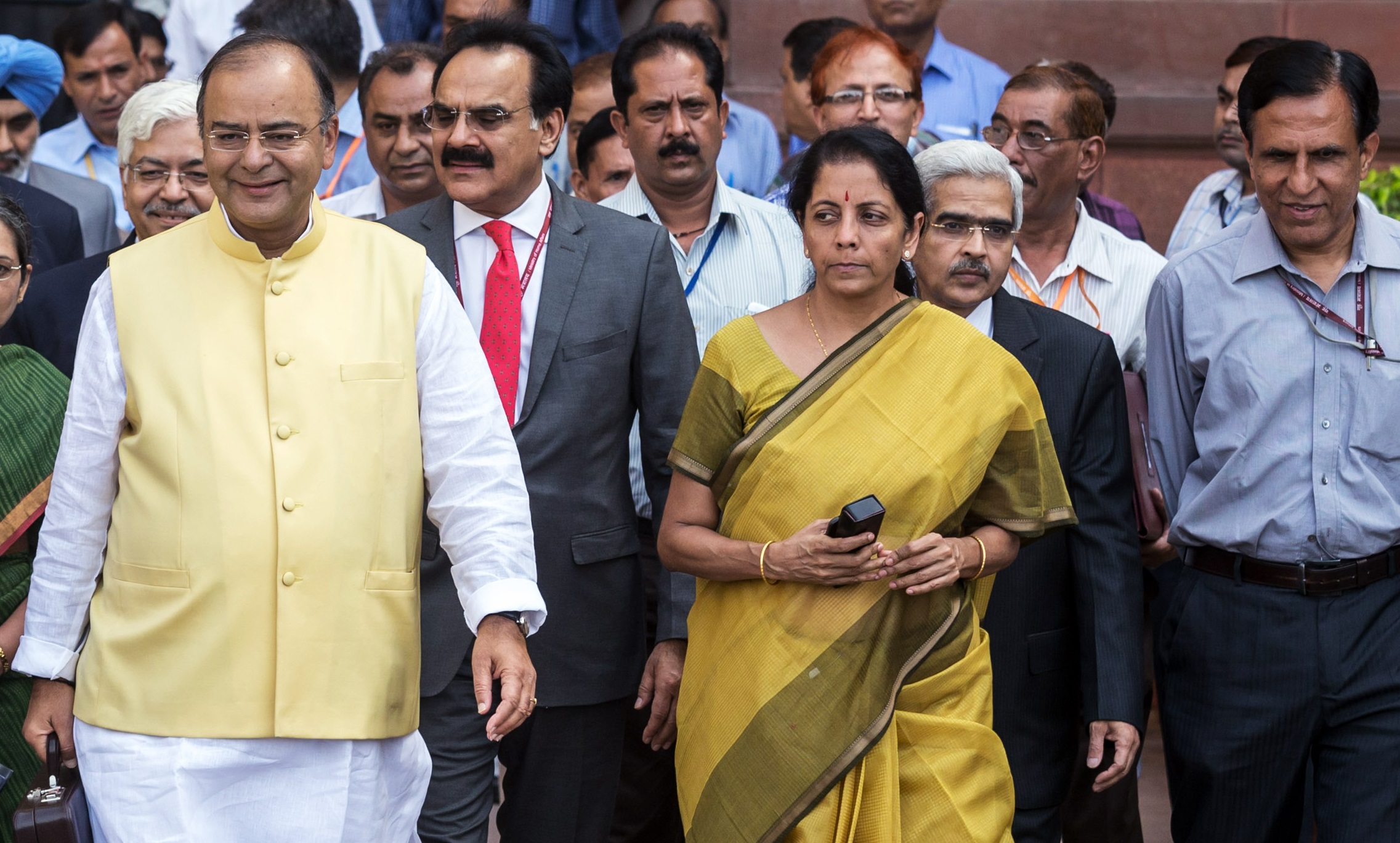
A week after Urjit Patel was named the new Reserve Bank of India Governor, the Commerce Minister Nirmala Sitharaman told reporters in a briefing on Wednesday that she “has no hesitation in recommending 200 bps rate cut” to the RBI.
The minister said affordable credit was necessary to boost India's manufacturing sector, adding that high interest rates are adversely affecting small and medium enterprises.
“I still hold the cost of credit in India is high...undoubtedly, particularly for small and medium (industries), who create a lot of jobs for us, who contribute 40 percent of all engineering exports in this country.. and are all hard pressed for money. And for them approaching a bank is no solution because of the prevailing rate of interest. So I have no hesitation to say, yes, 200 bps (rate cut) I would strongly recommend,” Sitharaman said. She was responding to a question on expectations of a rate cut from the new RBI governor.
Sitharaman had pushed for a rate cut in beginning of 2015 on similar grounds. She had also written to the Finance Ministry and the RBI on the issue ahead of the monetary policy announcement earlier this month. The RBI left interest rates unchanged in its August 9 monetary policy review, adding that its stance remains “accommodative” despite upside risks to inflation. The next policy review is slated for October 4 this year.
She also directed banks to pass on the benefits of the rate cuts to industry.
In India you have come to a stage where banks seem to be, holding on and saying no, RBI may take a call on this but we are not going to. So this call is, therefore, not only related to the RBI governor. I would want the entire banking system of this country to be more caring about industries.Nirmala Sitharaman, Commerce Minister
She further urged banks to pass on the benefits of any future rate cuts to small industries: “They (small industries) may not have huge NPAs but that doesn't mean that I need to discourage them, it's time now for the Indian economy to have a breath of fresh air for all these smaller companies. Their competitiveness is being affected purely because of the cost of borrowing,”
She didn't elaborate, however, on whether the central bank had room for such a deep cut in the policy rate.
FDI in Tobacco Sector
The minister said the government is treading a cautious path towards permitting foreign direct investment in the tobacco sector. “Tobacco is a health affected sector. We need to reduce tobacco growth in India in line with commitments made before the WHO (World Health Organisation).”
Permitting FDI in tobacco will not only contradict India's commitments before the WHO but also encourage more companies to enter India which will in turn increase tobacco production, she added.
“We are looking at ways to provide alternate means/crops for tobacco farmers.. it is still being explored,” she said.
Unlikely to Reshape E-Commerce FDI Policy
On alleged violation of FDI norms by e-commerce companies with respect to hefty discounts, the minister said a grievance redressal mechanism is being developed with the consumer affairs ministry on board.
The government is firm on its stand that e-commerce companies must stick to the stated norms. “The DIPP secretary has been meeting the companies and they have assured that they are not giving discounts but the sellers on their platform are giving them,” she said.
RCEP Talks to Conclude in 2017?
With the December 2016 deadline of concluding trade negotiations with Regional Comprehensive Economic Partnership (RCEP) member countries looking bleak, the commerce minister said she is hopeful that the talks will be concluded by the end of 2017.
“India is keen on bringing in services debate during RCEP negotiations as no detailed discussion has taken place on liberalising this sector. India is working on common concession for RCEP member countries. The next meeting is due in November,” she said.
The negotiations on regional economic pacts with RCEP member countries started in 2013 which will cover trade in goods and services, competition, intellectual property rights, economic and technical cooperation among others. The member countries include 10 ASEAN countries like Indonesia, Malaysia, Philippines, Singapore, Thailand, Vietnam, Myanmar and others and six of their trade partners which includes India.

-
Blue Wave Will Derail the AI Trade but Won't Dismantle the AI Era | Unhedged Position

The Democrats' sweep of the US Congress will see politics collide with economic forces both over the long and short term.
-
It's Time To Take The GST Council's Bet On Trust Global
Payment records can prove India's services exports, and clear, proportionate rules can bring foreign digital sellers into the tax net.
-
Opinion | India at 38: From Innovation Overperformer to Innovation Powerhouse
India now has 453 VC-backed deep science startups, 18 of them late-stage, after 117 percent growth since 2020. Laurus Labs, at USD 9.3 billion, is the most valuable deep science company in any middle-income economy outside China.
-
Navigating Energy Crossroads: S Jaishankar's Call For Diversified Supply Chains At G20 Ministerial Meeting
As geopolitical fault lines continue to test maritime trade routes and commodity flows, Jaishankar's message remains pertinent: true economic resilience requires open markets, protected transit lines, and a genuine commitment to multilateral cooperation rather than coercion.
-
Indians Are Travelling, But Not Every Journey Is A Holiday | The Week In Whys
Pilgrims, patients and working women are the real travellers, and the system hasn't quite caught up with them.
-
Getting To Work Costs Women More | The Reason Why
It is not just about women paying more than men. It is about women paying much more in cities than in villages.
-
AI Bias In Investing Cannot Be Eliminated, But It Can Be Governed
Framing is a particularly important example as identical financial information presented in terms of gains rather than losses can lead an LLM to reach a different assessment.
-
Joining The Dots | Dark Skies, Steady Diya: Why Hope Holds This Diwali
With war, a weak rupee and foreign outflows weighing on sentiment, policymakers at the NDTV World Summit and market veterans at NDTV Profit Ignite: Diwali Edition offered the same advice: stay invested and filter out the noise.
-
The Curious Case of Equitas Small Finance Bank And A CEO Who Quit For Stock
PN Vasudevan believes persistent investor concerns over a perceived conflict of interest had become a governance overhang on Equitas Small Finance Bank's stock, even as the lender improved profitability and asset quality.










