To Beat the Heat, We’ll Need to Turn Our Homes Into Batteries
(Bloomberg Opinion) -- The world's climate is changing faster than we can keep up with it. With the first El Nino in four years now under way, hot and dry conditions are spreading across areas where a huge share of the world's population lives: South and Southeast Asia, northern China, southern Africa, and the tropical Americas.
The effects are already starting to strain infrastructure that wasn't built for such conditions. At the Koyana Dam southeast of Mumbai, one of India's largest hydroelectric projects has gone into partial shutdown to preserve its dwindling reservoir for drinking water. Similar conditions are prevailing across southern Kerala state. In Malaysia, the government has been flying cloud-seeding planes to refill two dams that keep Penang supplied.
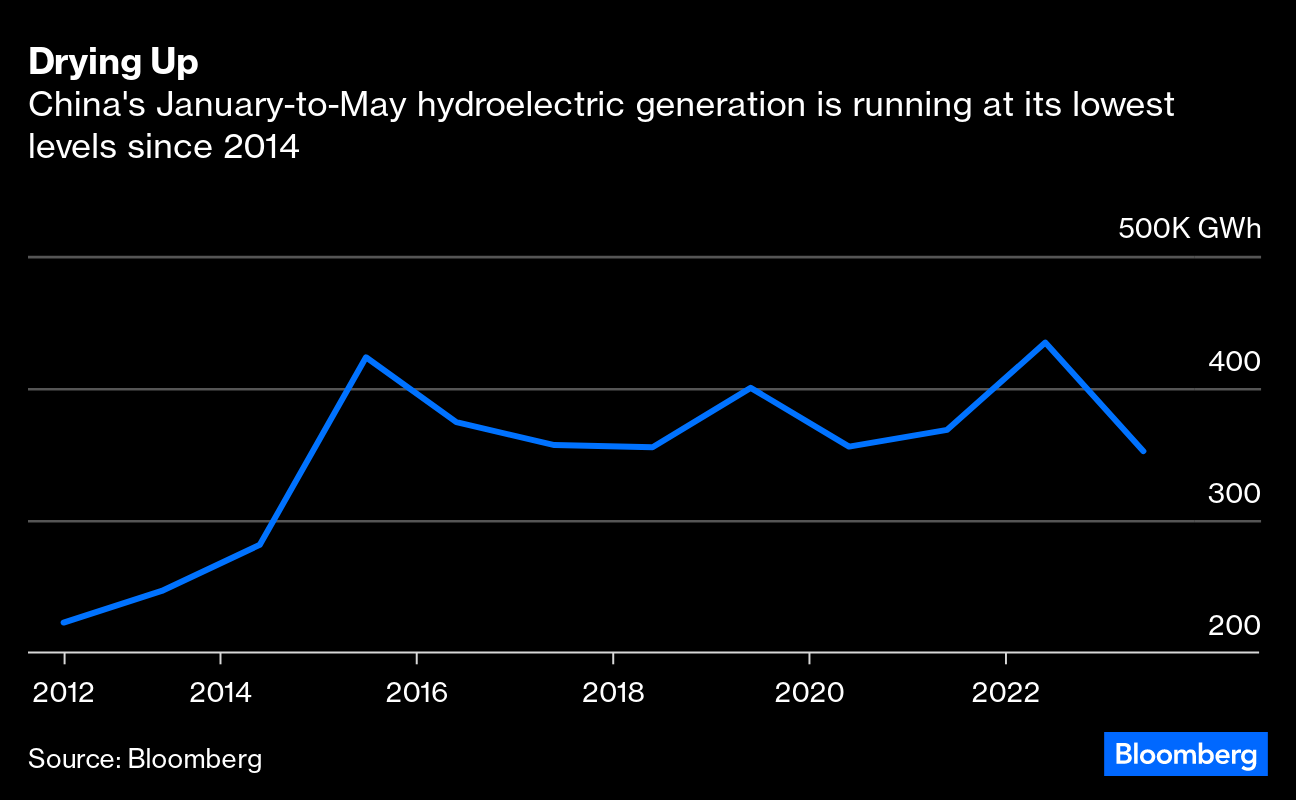
Water in the Rhine is already dipping, threatening a repeat of last year's drought that halted one of Europe's major transport arteries, while the lake that feeds the Panama Canal is heading to its lowest levels on record. In China, which produces about a third of the world's hydroelectricity, year-to-date power output from the country's dams in May fell to the lowest level since 2014. That's despite a spate of dam-building over the past decade that should allow the country to generate a quarter more now.
Those problems are only going to increase if the current aridity persists through the rest of the season. Simultaneous increases in summer temperatures and incomes mean that air conditioning use is surging. Emerging countries such as India, China, Indonesia and the Philippines will lead the addition of 1 billion units globally this decade, but they're not the only ones. In Europe, where fewer than 10% of households have air conditioners, Daikin Industries Ltd. predicts its sales of the devices will increase 23% over the coming fiscal year.
That risks thwarting much of the progress being made on decarbonizing the world's electrical grids. The sheer scale of peak electricity demand in summer is outstripping the availability of renewable power to meet it, causing governments to fall back on coal as the only means of keeping the lights on. That's particularly the case because global warming is raising night-time temperatures faster than those during daylight hours — precisely the opposite pattern that would allow you to harness the explosive boom in solar power.
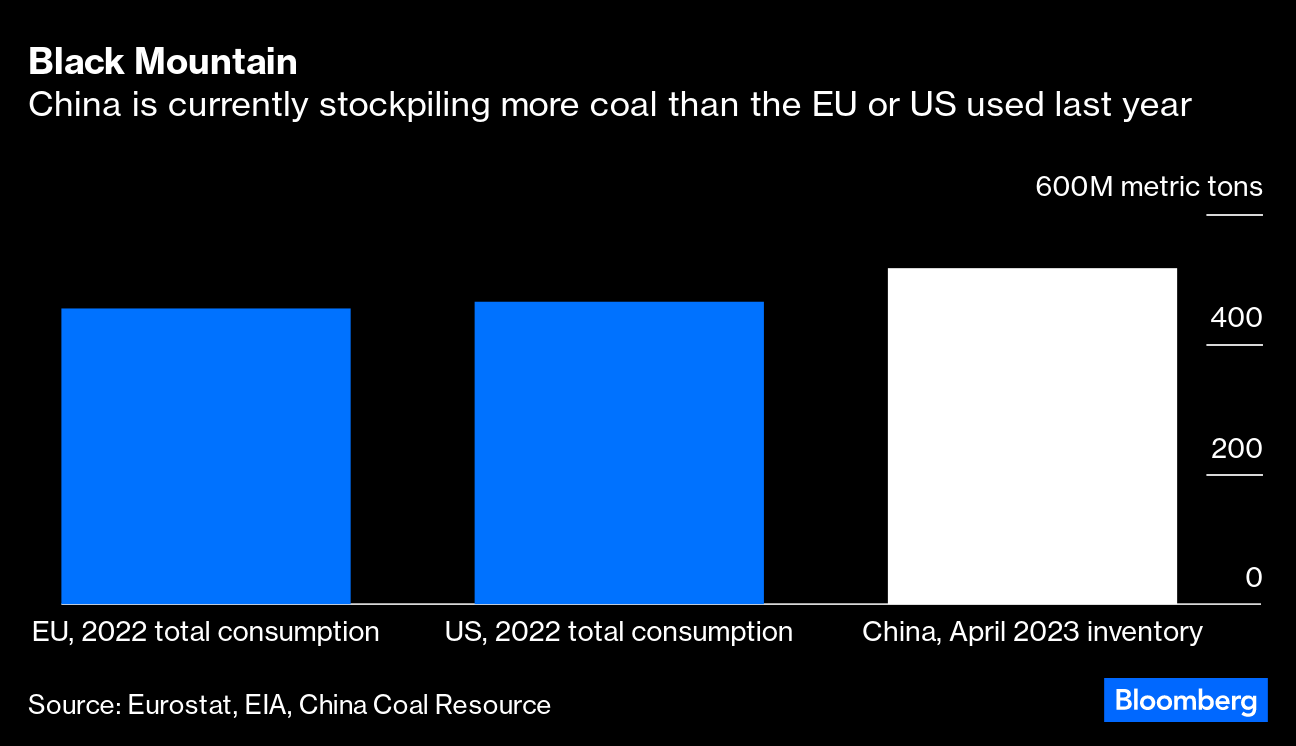
China's stockpile of solid fuel has increased more than fivefold since September 2021, leaving its reserves alone in excess of volumes produced in Europe or the US during an entire year. India's increased 44% from a year earlier by mid-June, even as coal-fired generation rose at a more sedate 5.1% pace.
All this activity to boost power is treating the symptoms, rather than the cause. What businesses and households want are buildings cool enough for us to live comfortably in them. Throwing more electrons at the problem is too blunt a tool to work for long, especially if they're generated by burning fossil fuels.
A better solution is batteries — but not the sort you can use to charge your phone. Instead, the entire building should be treated as a heat battery. With better building materials and insulation, and using air-conditioning to cool the walls and air during the heat of the day when solar output is at the maximum, it's possible to drastically reduce the need for overnight cooling. Utilizing thick cinder blocks instead of poured cement for walls and adding window shading can help reduce energy consumption by up to 40%, according to India's energy efficiency regulator. Even painting roofs white will help, one expedient being encouraged by the government.
Far too little is being done. Demand-side management, where smart meters allow utilities to switch cooling equipment on and off to match supply of electricity from their generators, is still relatively rare everywhere — despite the fact that it can cut power consumption in the heat by a quarter. Consumers welcome it, as long as they receive discounts on their bills and an override button.
Such restrictions are already accepted in other areas of life. Parts of southeast England will ban usage of hosepipes later this month as drinking water stocks run low. Smart meters that allow demand-side management are already being rolled out in some Indian states to help with chronic under payment of bills. The solar water pump program that India has introduced to farmers in recent years works in a similar way by cutting irrigation loads on the grid.
The fitful implementation of such programs needs to speed up if we're to avoid future hot weather energy crises. Global warming is altering the nature of power demand in the summer, and we'll lose if we try to outrun its pace of change. To keep our cool on a heating planet, we're going to need to make the most of the infrastructure we already have.
More from Bloomberg Opinion:
- A Hotter Planet Is Already Warping Asset Prices: Jonathan Levin
- Smoky Orange Haze Amplifies Focus on Ventilation: Brooke Sutherland
- Water Risks Are Coming to Bite Investors: Lara Williams
This column does not necessarily reflect the opinion of the editorial board or Bloomberg LP and its owners.
David Fickling is a Bloomberg Opinion columnist covering energy and commodities. Previously, he worked for Bloomberg News, the Wall Street Journal and the Financial Times.
More stories like this are available on bloomberg.com/opinion
©2023 Bloomberg L.P.

-
Blue Wave Will Derail the AI Trade but Won't Dismantle the AI Era | Unhedged Position

The Democrats' sweep of the US Congress will see politics collide with economic forces both over the long and short term.
-
It's Time To Take The GST Council's Bet On Trust Global
Payment records can prove India's services exports, and clear, proportionate rules can bring foreign digital sellers into the tax net.
-
Opinion | India at 38: From Innovation Overperformer to Innovation Powerhouse
India now has 453 VC-backed deep science startups, 18 of them late-stage, after 117 percent growth since 2020. Laurus Labs, at USD 9.3 billion, is the most valuable deep science company in any middle-income economy outside China.
-
Navigating Energy Crossroads: S Jaishankar's Call For Diversified Supply Chains At G20 Ministerial Meeting
As geopolitical fault lines continue to test maritime trade routes and commodity flows, Jaishankar's message remains pertinent: true economic resilience requires open markets, protected transit lines, and a genuine commitment to multilateral cooperation rather than coercion.
-
Indians Are Travelling, But Not Every Journey Is A Holiday | The Week In Whys
Pilgrims, patients and working women are the real travellers, and the system hasn't quite caught up with them.
-
Getting To Work Costs Women More | The Reason Why
It is not just about women paying more than men. It is about women paying much more in cities than in villages.
-
AI Bias In Investing Cannot Be Eliminated, But It Can Be Governed
Framing is a particularly important example as identical financial information presented in terms of gains rather than losses can lead an LLM to reach a different assessment.
-
Joining The Dots | Dark Skies, Steady Diya: Why Hope Holds This Diwali
With war, a weak rupee and foreign outflows weighing on sentiment, policymakers at the NDTV World Summit and market veterans at NDTV Profit Ignite: Diwali Edition offered the same advice: stay invested and filter out the noise.
-
The Curious Case of Equitas Small Finance Bank And A CEO Who Quit For Stock
PN Vasudevan believes persistent investor concerns over a perceived conflict of interest had become a governance overhang on Equitas Small Finance Bank's stock, even as the lender improved profitability and asset quality.










