World’s Climate Change Crisis Has Tourists Seeking ‘Coolcations’
Record heat waves, blazing wildfires and oppressive humidity are transforming the world's tourism industry as holidaymakers struggle to deal with the havoc wrought by climate change.
That's seen a growing number look beyond traditional hotspots like Greece and Portugal in favor of ‘coolcations' — visiting parts of the world that offer milder climes. Already, nearly half of Virtuoso's luxury travel advisers say their clients are altering plans due to climate change.
Heat waves in Europe saw tourist sites including the Acropolis in Athens and the Eiffel Tower in Paris shut this summer, and the region is tipped to see a widening tourism divide due to the uneven impact of climate change. Its northern coastal regions are likely to have a more than 5% increase in demand during summer and early autumn, while parts of its south will lose almost 10% of summer tourists, according to a European Commission study.
That trend is likely to be replicated around the world.
Dangerously high temperatures have driven down visitor numbers at Tokyo Disney Resort, and US theme park operator Six Flag Entertainment Corp. said severe weather, including heat waves, drove a nearly $100 million loss in the second quarter as it reduced revenue outlook. Meanwhile, places like Antarctica, Norway and Iceland have seen their popularity boom.
From ice parks to green oases in city centers, here's how the world is trying to help tourists beat the heat.
Abu Dhabi

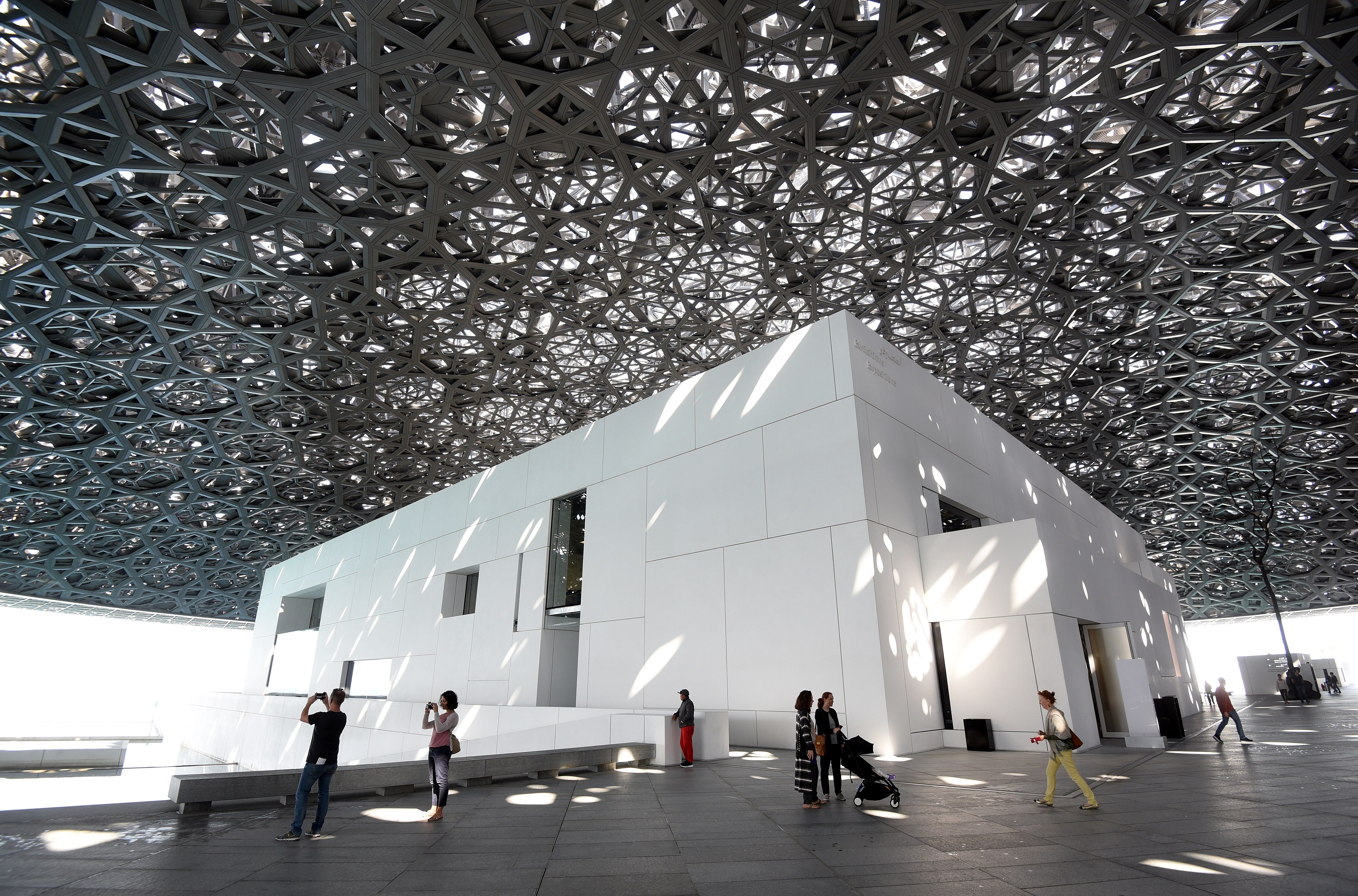
Abu Dhabi is mixing ancient practices and cutting-edge technology to combat extreme heat that saw daytime temperatures soar to 51.8C (125F) earlier this month — a near record.
Its Masdar City is already one of the world's most sustainable cities, with the majority of its energy needs generated by solar panels on roofs and an on-site photo-voltaic plant that offsets about 15,000 tons of carbon emissions per year.
As well as cutting-edge technology, Masdar has sought to modernize the traditional barjeel wind tunnel that funnels breezes into the city's center. Its narrow, shaded streets also help create a microclimate that's several degrees cooler than surrounding areas, and buildings are oriented to maximize shade.
The United Arab Emirates calls Masdar City, which is about 110 kilometers (68 miles) from Dubai, a template for sustainable urban development and is a core part of the country's longer-term goals to diversify its economy away from oil.
Harbin
While China's southern metropolises swelter, the northern city of Harbin is emerging as a temperate summertime getaway. Best known for frigid winters that see temperatures drop to as low as -25C, the city is now bringing its signature winter ice festival to the hotter months.
Harbin Ice and Snow World, the world's largest winter theme park, allows tourists to wander through ice sculptures in its expansive indoor facility. The attraction's advance snow-making technology can even make it snow outside in temperatures that exceed 20C, according to Xinhua.
The city is representative of the lopsided economic impact of climate change as areas buffeted by increasingly frequent heat waves lose out on tourist dollars and cooler regions benefit from an influx in visitors. A study of 280 Chinese cities found that for every 1C rise in temperature, domestic tourism revenue slipped by 6%.
China's national weather service offers a guide to 16 major “heat-escaping” routes, while online tour agencies Fliggy and Trip.com sell packages to cooler destinations, including Harbin and the grasslands of Inner Mongolia.
Sapporo
While heady summer humidity hangs over most of Japan, Sapporo, on the northern island of Hokkaido, is an increasingly popular ‘coolcation' escape.
Its milder temperatures offer respite, but Sapporo's most unique heat mitigation strategy is something that harnesses its most abundant resource: snow. The city has rolled out a system, including at the famed Moerenuma art park and shopping malls, that melts snow stored over the winter and uses the chilled water in air conditioning systems.
Copenhagen
While parts of Europe are rocked by anti-tourism protests, Copenghagen is rewarding visitors for climate-friendly actions.
Its CopenPay program offers free excursions and discounts to travelers who take the train to the city and stay longer in an effort to reduce transportation emissions — which result in the biggest climate impact in the tourism industry.
Copenhagen's 3 billion Danish kroner ($468 million) effort to clean up its harbor is also bearing fruit and its public baths have gone viral on social media. In July, the city opened its first open-water swimming lane — a 450-meter course with buoys and ropes that stretches across the harbor.
Away from the waterfront, the city's Cloudburst Management plan has created a network of parks and public squares that temporarily hold and absorb rainwater during heavy storms. These spaces then act as natural cooling hubs, as the water and vegetation work to lower temperatures.
Paris
Paris disappointed visitors when it closed the Eiffel Tower during the recent July heat wave and temperatures are once again topping 40C in August.
The city is combating the extreme heat by creating more than 800 ‘cool islands' – parks, forests, swimming pools and museums — along shaded walkways to offer tourists respite and offers an interactive app, Extrema, that guides users to the nearest cool spaces.
It's also rolled out ‘oasis squares' across Paris' 20 arrondissements that include trees, water fountains and shaded gazebos, and is aiming to replace about 60,000 parking spaces with trees by 2030.
Perhaps the most high-profile change has been to allow swimming in the Seine River for the first time in a century following about €1.4 billion ($1.6 billion) of sewer upgrades. The city has imposed limits though: the three bathing sites are only open between July 5 and Aug. 31
Singapore
Singapore's iconic Supertrees are a major tourist draw but also play an important role as the city's ‘green lung.'
The concrete structures that stretch as high as 50 meters serve a variety of purposes from vertical gardens to rainfall collectors, while air intake and exhaust towers help control temperatures at the sprawling Gardens by the Bay complex.
Beyond its top tourist attraction, Singapore has adopted designs that use porous pavements and green spaces to absorb rainwater and keep the city cooler. It also deploys Airbitat systems in public spaces and at events like the Singapore Grand Prix, which are designed to be 80% more energy efficient than conventional air conditioning units.
Phoenix
One of America's hottest cities, Phoenix, Arizona, has become a global leader in urban cooling.
Its ‘Cool Pavement' program has coated more than 140 miles of streets with a light-colored, solar-reflective material that can lower surface temperatures by as much as 16F — offering much needed reprieve in the city that last year saw 113 consecutive days of highs reaching at least 100F.
Still, there's one major trade off: research shows the reflecting coating can make people standing on the treated pavement feel even hotter.
Phoenix also steers tourists into safer activities during times of extreme heat by shutting hiking trails but facilitating tubing and kayaking on the Salt River. The Desert Botanical Garden offers flashlight tours after dark, while dozens of public splash pads provide free water play well into the evening.

-
Where You Live Shapes How You Get To Work | The Reason Why

Two-wheelers are the most popular way to get to work in India, accounting for nearly 43% of workplace commutes.
-
High US Salaries, No Green Card Certainty: The Financial Calculation Facing Indian H-1B Families
The suspension of PERM processing at eight technology employers does not cancel existing H-1B visas. What it does is force a question many Indian families have been avoiding: is the US salary worth tying your career and family plans to one employer?
-
Unhedged Position: Can India See An Indonesia-Style Time Correction?
The Nifty is trading below levels it first clocked in 2024. Is there, then, as I have suggested in the headline, potential that the current time correction drags on painfully for the next three-five, even ten years?
-
Navigating Friction And Energy Realities: An Analysis Of Marco Rubio's October Visit To India
Occurring at a critical juncture marked by stalled trade negotiations and escalating geopolitical pressures over global energy supplies, the visit offers a profound window into modern US-India relations.
-
India Exports Capital. Why Not Export Trusteeship?
The big question, then, is whether India can build an institution that global borrowers, investors, banks, and lawyers can trust, even without an Indian connection.
-
France's Economy & Politics Are In Crisis | The Reason Why
Let's look at how the French economy and politics evolved under Nicolas Sarkozy, Franois Hollande and Emmanuel Macron.
-
You May Inherit The Business. You Must Earn Its Credibility.
Succession tests the founder's ability to share authority as much as it tests the next generation's readiness to assume it.
-
Signing Deals Is One Thing; Making Them Work Is Another | The Week In Whys
Sometimes, things don't turn out as planned. Indian companies have lost some bids to rivals, some projects won't produce until 2030.
-
FOMC Wall, PERM Suspension, Hospital Stocks | Talking Points This Week
A PERM suspension would directly affect green-card sponsorship rather than H-1B visas, so the near-term earnings impact could remain relatively limited. The key question is whether this marks a new phase in US scrutiny of Indian IT.
-
Everything, Everywhere, All At Once: Dalal Street's Week To Forget | Joining The Dots
Visa curbs, a Starlink spat and cancer drug caps: what connects this week's shocks for Indian markets









