China’s Export-Led Growth Exposes Economy to Steeper Tariff Hit
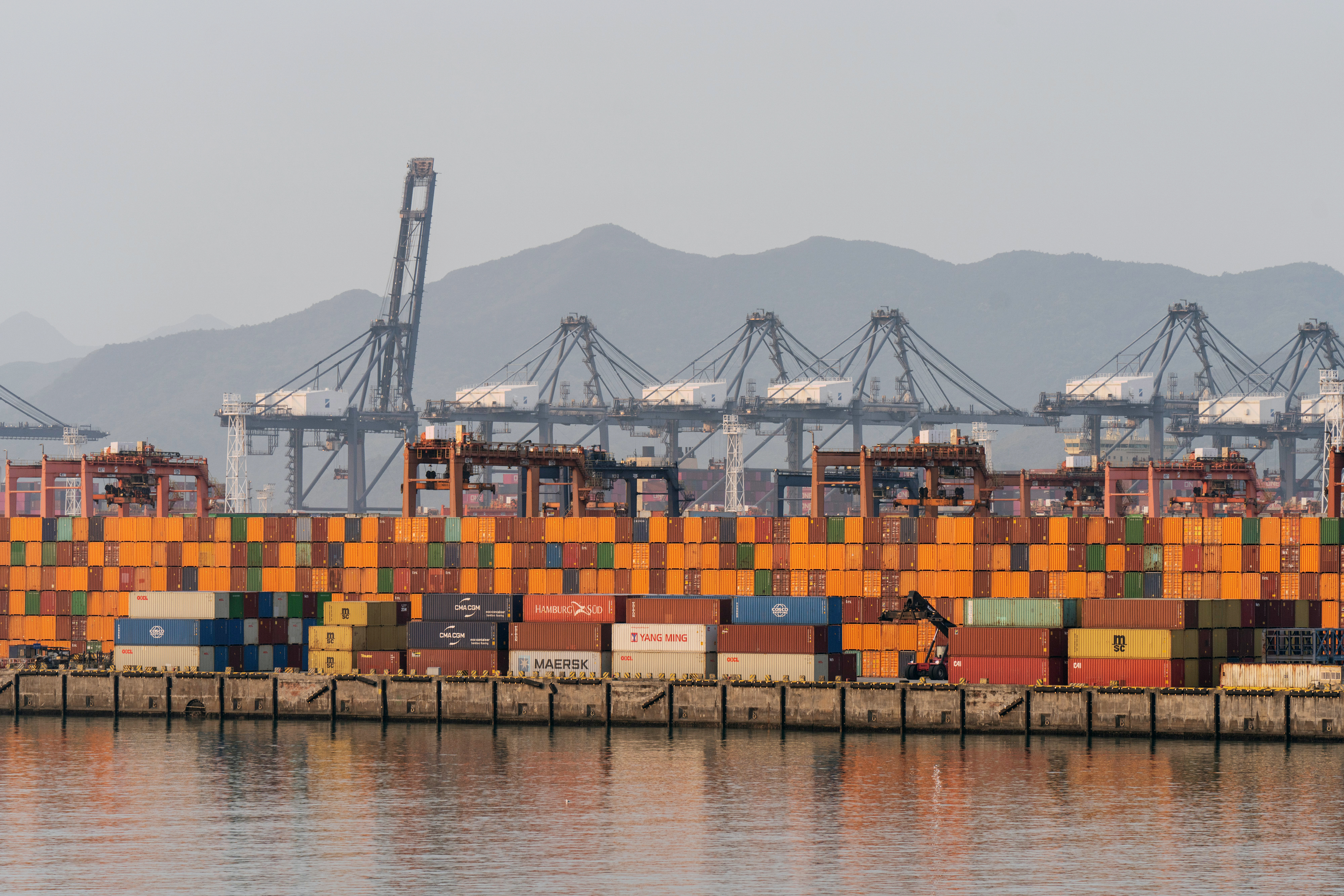
China's stronger-than-expected growth in the first quarter masks a key vulnerability: a growing dependence on foreign demand, which increases the threat of a sharper economic hit as trade tensions soar.
Nearly 40% of first-quarter GDP expansion — which came in at 5.4% — was driven by net exports, the highest share for this period in over a decade. That's also up from last year, when trade accounted for almost a third of overall growth.

That heavy dependence on foreign demand comes at a precarious time. With the US ramping up tariffs on Chinese goods and global demand weakening amid the broader fallout from President Donald Trump's chaotic trade policies, the export engine helping power China's recovery may be at risk of stalling.
The strong contribution from trade also shows how fragile the domestic economy remains as it faces pressure from deflation, sluggish consumer demand and a prolonged property slump. Economists including from Citigroup Inc. and UBS Group AG have cut their 2025 growth forecasts to around 4% or lower, calling for more stimulus to stabilize the economy.

China's trade surplus with the US totaled $77 billion in the first quarter, accounting for 28% of its overall goods trade surplus, and that figure is expected to shrink as tariffs hit. Bloomberg Economics warned the new US duties will “crush” exports as it cut its forecast for GDP growth this year to 4.2%.
What Bloomberg Economics Says...“President Donald Trump's barrage of tariffs means Chinese goods now face an effective US levy of about 115%. Along with indirect impacts from decreased transshipments and a slowdown in global growth, this could knock 2.0%-2.5% off GDP.”— Eric Zhu, Chang Shu, David Qu, economistsRead full note here
The fiscal data released late last week also points to underlying weakness in the economy, with tax revenues shrinking 3.5% in the first quarter. That's well below the 4.6% growth in nominal GDP.

Part of the revenue shortfall likely stems from increased rebates for exporters and other tax breaks, with export tax rebates rising 14% from the same period a year earlier. Export-related tax returns as a share of foreign shipments climbed to 12.3% in January-March, pointing to faster payouts to help the finances of Chinese companies.
Land sales also continued to slump, with revenue down 16% in the first quarter after three straight years of declines.
The continued contraction in land sales and tax revenues meant total income under the two major budgets fell 2.6% to 6.9 trillion yuan ($950 billion) in the first quarter. That slowdown in revenue comes even before the full impact of the US tariffs, suggesting the government will have to go even further into debt to try and support the economy.

While the Chinese government has pledged to counter external shocks with stronger efforts to drive domestic demand, the latest budget data shows infrastructure investment is still lagging. Expenditure in areas such as urban and rural development, water conservation and transportation under the general public budget, the government's main book, contracted 4.2% in the first quarter from a year earlier, the first drop in two years.

That trend may need to be reversed quickly if global trade takes a bigger hit from rising tariff uncertainty.
“Fiscal stimulus needs to do the heavy lifting to buffer the external shock and buttress domestic demand,” Bloomberg Economics wrote. “We expect the government to quicken execution of its expansive 2025 budget. But further support may be needed later in the year if there is no meaningful tariff de-escalation in coming months.”

-
Navigating Energy Crossroads: S Jaishankar's Call For Diversified Supply Chains At G20 Ministerial Meeting

As geopolitical fault lines continue to test maritime trade routes and commodity flows, Jaishankar's message remains pertinent: true economic resilience requires open markets, protected transit lines, and a genuine commitment to multilateral cooperation rather than coercion.
-
Indians Are Travelling, But Not Every Journey Is A Holiday | The Week In Whys
Pilgrims, patients and working women are the real travellers, and the system hasn't quite caught up with them.
-
Getting To Work Costs Women More | The Reason Why
It is not just about women paying more than men. It is about women paying much more in cities than in villages.
-
AI Bias In Investing Cannot Be Eliminated, But It Can Be Governed
Framing is a particularly important example as identical financial information presented in terms of gains rather than losses can lead an LLM to reach a different assessment.
-
Joining The Dots | Dark Skies, Steady Diya: Why Hope Holds This Diwali
With war, a weak rupee and foreign outflows weighing on sentiment, policymakers at the NDTV World Summit and market veterans at NDTV Profit Ignite: Diwali Edition offered the same advice: stay invested and filter out the noise.
-
The Curious Case of Equitas Small Finance Bank And A CEO Who Quit For Stock
PN Vasudevan believes persistent investor concerns over a perceived conflict of interest had become a governance overhang on Equitas Small Finance Bank's stock, even as the lender improved profitability and asset quality.
-
Talking Points This Week: AI Cash Burn, A Tiger Comeback And An India That Still Finds Its Own Path
India is not immune to higher oil or tighter global liquidity, yet its earnings base is broader, its domestic policy levers are still available.
-
Foreign Investors Own Half Of HDFC Bank and ICICI Bank. An LTCG Cut Could Matter Most Here
Foreign portfolio investors have US$115 billion parked in HDFC Bank, ICICI Bank. If the government cuts long-term capital gains tax, Jefferies says returning foreign money could land here first.
-
'Never Seen This Level Of Negativity': Sandeep Tandon Says The Next Rally May Be Closer Than You Think
Veteran investor Sandeep Tandon says foreign selling is easing, large-caps are due a comeback and mid-caps are crowded, while he turns positive on gold, power and pharma this Diwali.
-
Indians Stay With Family, Not In Hotels | The Reason Why
India still lacks enough clean, reliable and affordable hotels for budget-conscious travellers.










