China's Small Banks Dumped on Signs of More Policy Pain in 2018
(Bloomberg) -- China's smaller banks started the New Year with a double whammy from regulators and investors, and more pain may be looming.
Bank of Tianjin Co. tumbled by as much as 12 percent in the first two trading days, the biggest two-day decline since its Hong Kong listing in March 2016, after rallying at the end of last year. Bank of Jinzhou Co., Bank of Qingdao Co., and Huishang Bank Corp. fell by more than 3 percent. In contrast, bigger rivals have rallied.
A policy announcement on Friday highlighted China's tough stance toward smaller banks, which are already a target of government efforts to reduce leverage in the financial system. The People's Bank of China said it will set up a mechanism for lowering banks' reserve requirements as needed during the Lunar New Year festival next month, letting national lenders use as much as 2 percentage points of reserves to meet liquidity needs for 30 days. The small banks, which are often the most cash-strapped, were excluded.
“This shows regulators are unrelenting in deleveraging efforts,” said Richard Cao, a Shenzhen-based analyst at Guotai Junan Securities Co. Small banks seeking liquidity will have to borrow from bigger banks at higher costs, he added.
Bearing Brunt
China's smaller banks have borne the brunt of a deleveraging campaign since April last year which has pushed up their borrowing costs, weakened profit growth and increased solvency risks, Natixis SA said in a December report.
Funding for smaller banks “has clearly worsened” because they lack large deposit bases, said Alicia Garcia Herrero, the firm's chief economist for Asia Pacific.
The extensive branch networks of larger lenders lure deposits that act as a buffer as policy makers push ahead with deleveraging. Regulators ramped up financial supervision last year, targeting excessive interbank lending as well as the shadow financing that has helped some smaller lenders expand aggressively.
China's changes that may hurt small banks include:
- Lenders with more than 500 billion yuan ($77 billion) of assets must classify their negotiable certificates of deposit as interbank liabilities from January this year. NCDs will be limited to a third of a lender's total liabilities under the PBOC's macro prudential assessment framework.
- The banking regulator will introduce three new quantitative indicators of commercial banks' liquidity management, describing the current supervision of smaller banks as inadequate.
- The China Securities Regulatory Commission has started to restrict money-market funds from investing in NCDs issued by lower-rated banks.
- China announced plans to overhaul regulation of $15 trillion of asset-management products and break an implicit guarantee that drove investment into such vehicles.
To contact Bloomberg News staff for this story: Jun Luo in Shanghai at jluo6@bloomberg.net.
To contact the editors responsible for this story: Marcus Wright at mwright115@bloomberg.net, Paul Panckhurst
©2018 Bloomberg L.P.
With assistance from Jun Luo

-
Why Amazon And Flipkart Are Struggling To Beat Meesho In India's Smaller Cities

With 274 million users and lowest-cost logistics, Meesho is defending its value commerce crown against giants like Amazon and Flipkart.
-
High US Salaries, No Green Card Certainty: The Financial Calculation Facing Indian H-1B Families
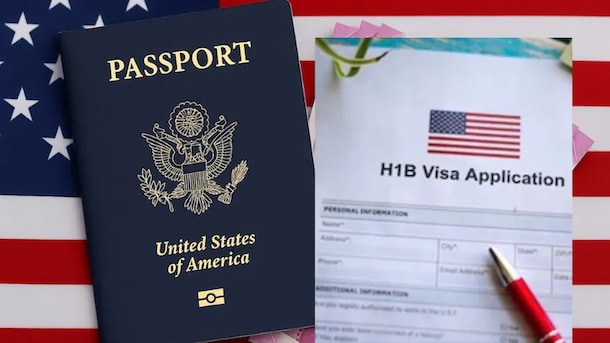
The suspension of PERM processing at eight technology employers does not cancel existing H-1B visas. What it does is force a question many Indian families have been avoiding: is the US salary worth tying your career and family plans to one employer?
-
Swiggy vs Eternal: Food Delivery's Two Rivals Are No Longer In The Same Race
Eternal is building a private AI assistant, dark.ai. Swiggy is still working out how to make Instamart pay, with an operating loss of Rs 895 crore in the July-September quarter while Blinkit stayed profitable.
-
Where You Live Shapes How You Get To Work | The Reason Why
Two-wheelers are the most popular way to get to work in India, accounting for nearly 43% of workplace commutes.
-
Unhedged Position: Can India See An Indonesia-Style Time Correction?
The Nifty is trading below levels it first clocked in 2024. Is there, then, as I have suggested in the headline, potential that the current time correction drags on painfully for the next three-five, even ten years?
-
Navigating Friction And Energy Realities: An Analysis Of Marco Rubio's October Visit To India
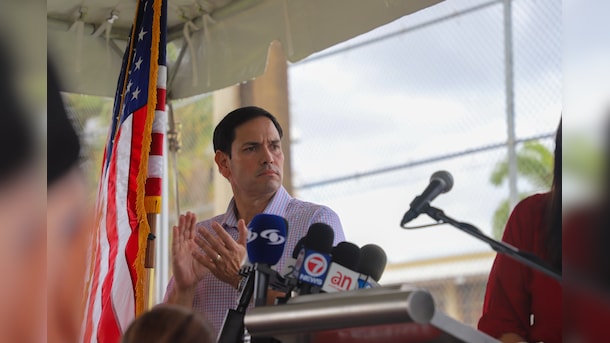
Occurring at a critical juncture marked by stalled trade negotiations and escalating geopolitical pressures over global energy supplies, the visit offers a profound window into modern US-India relations.
-
India Exports Capital. Why Not Export Trusteeship?
The big question, then, is whether India can build an institution that global borrowers, investors, banks, and lawyers can trust, even without an Indian connection.
-
France's Economy & Politics Are In Crisis | The Reason Why
Let's look at how the French economy and politics evolved under Nicolas Sarkozy, Franois Hollande and Emmanuel Macron.
-
You May Inherit The Business. You Must Earn Its Credibility.
Succession tests the founder's ability to share authority as much as it tests the next generation's readiness to assume it.
-
Signing Deals Is One Thing; Making Them Work Is Another | The Week In Whys
Sometimes, things don't turn out as planned. Indian companies have lost some bids to rivals, some projects won't produce until 2030.