China Factory Activity Shrinks Again In Warning To Economy
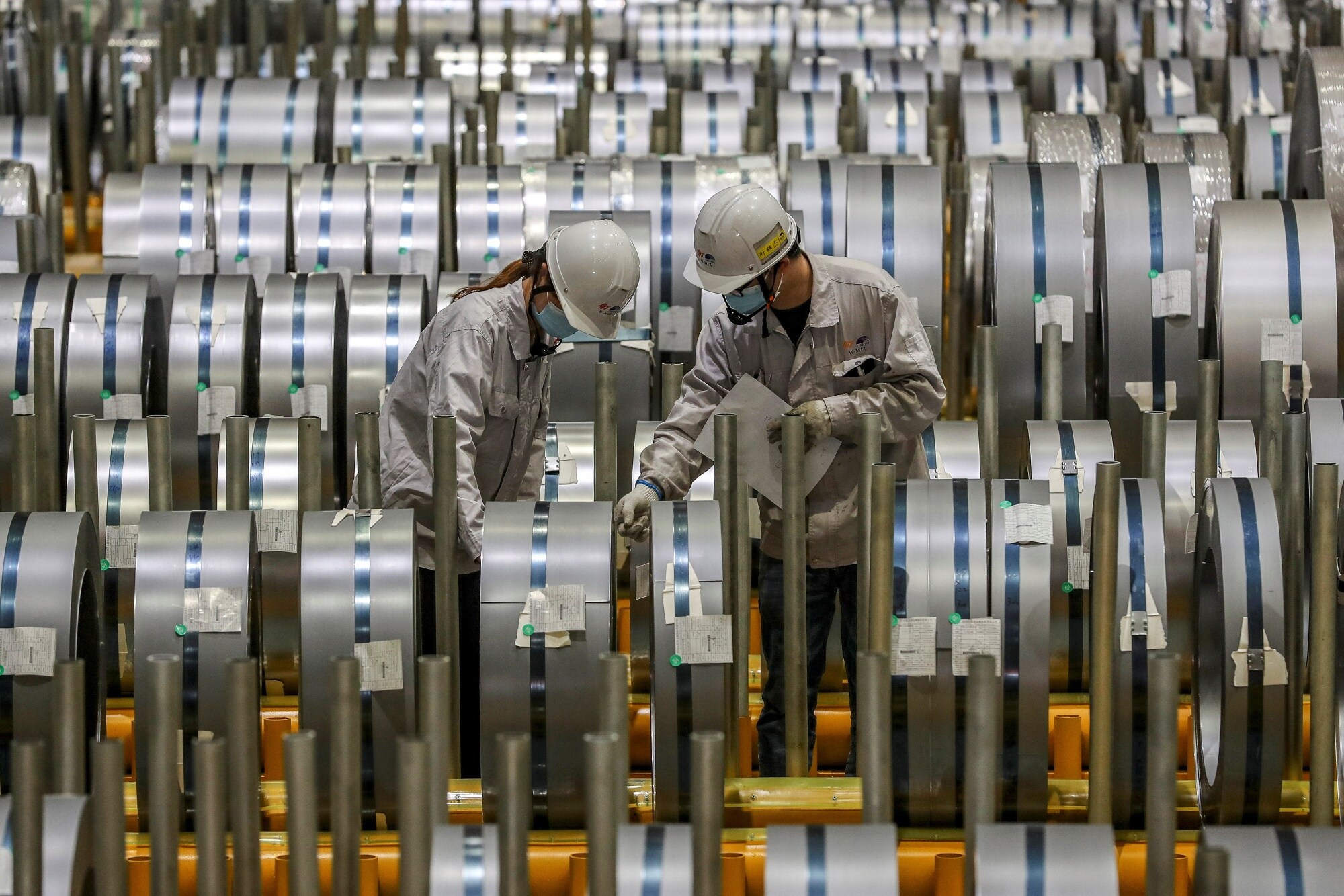
(Bloomberg) -- China's factory activity contracted for a second straight month in June, signaling weakness in an area that Beijing is betting on to drive the economy.
The official manufacturing purchasing manager index was at 49.5, the National Bureau of Statistics said Sunday. That was the same reading as May, and in line with economists' prediction in a Bloomberg survey. Any number above 50 points to an expansion.
A sub-index of new orders at factories inched lower to 49.5 as demand weakened, while a gauge measuring new export orders was unchanged at 48.3.
Meanwhile, the non-manufacturing measure of activity in construction and services fell to 50.5, the statistics office said. That compares with a forecast of 51, and a May reading of 51.1.
China's economy has performed unevenly this year, with manufacturing at times a bright spot while consumption has been weighed down by a prolonged real estate crisis. The continued contraction in the factory sector poses a threat to the country's economic growth target of around 5% this year.
Trade Tensions
In a statement accompanying the data, NBS analyst Zhao Qinghe cautioned that “the foundation for sustained recovery and improvement still needs to be consolidated.”
Trade tensions have added to the challenges. The US and European Union — two of China's biggest export markets — have sounded the alarm over a surge in cheap Chinese exports, which they say are unfairly bolstered by Beijing's massive subsidies. Both have threatened to impose tariffs on China's electric car exports, along with other sectors where Beijing is leading on price.
The drop in the construction index to 52.3, from 54.4 in May, marked its weakest print since July 2023 and suggests that state infrastructure spending, a key support for the recovery, lost steam, according to Bloomberg Economics. That suggests bolder stimulus may be needed.
“Policymakers will likely focus on fiscal measures to support the economy, given the constraints on monetary easing due to currency pressures,” said Zhou Hao, chief economist at Guotai Junan International.
(Updates with details and comment throughout)
More stories like this are available on bloomberg.com
©2024 Bloomberg L.P.

-
Talking Points This Week: Tech Nerves, FII Buying, And A Faraway Banking Shock

The global markets are not shining this Diwali. The exception in the large markets is, India.
-
Midterm Rally Lasted A Day. The Hard Reality Of A Divided US May Last Two Years | Opinion
Between a contested AI boom, a debt ceiling that arrives in 2027 and a president with every incentive to act alone, the next two years may prove more volatile than the first day's rally suggests.
-
Blue Wave Will Derail the AI Trade but Won't Dismantle the AI Era | Unhedged Position
The Democrats' sweep of the US Congress will see politics collide with economic forces both over the long and short term.
-
It's Time To Take The GST Council's Bet On Trust Global
Payment records can prove India's services exports, and clear, proportionate rules can bring foreign digital sellers into the tax net.
-
Opinion | India at 38: From Innovation Overperformer to Innovation Powerhouse
India now has 453 VC-backed deep science startups, 18 of them late-stage, after 117 percent growth since 2020. Laurus Labs, at USD 9.3 billion, is the most valuable deep science company in any middle-income economy outside China.
-
Navigating Energy Crossroads: S Jaishankar's Call For Diversified Supply Chains At G20 Ministerial Meeting
As geopolitical fault lines continue to test maritime trade routes and commodity flows, Jaishankar's message remains pertinent: true economic resilience requires open markets, protected transit lines, and a genuine commitment to multilateral cooperation rather than coercion.
-
Indians Are Travelling, But Not Every Journey Is A Holiday | The Week In Whys
Pilgrims, patients and working women are the real travellers, and the system hasn't quite caught up with them.
-
Getting To Work Costs Women More | The Reason Why
It is not just about women paying more than men. It is about women paying much more in cities than in villages.
-
AI Bias In Investing Cannot Be Eliminated, But It Can Be Governed
Framing is a particularly important example as identical financial information presented in terms of gains rather than losses can lead an LLM to reach a different assessment.









