China Expected To Target GDP Growth Of Around 5% In 2024
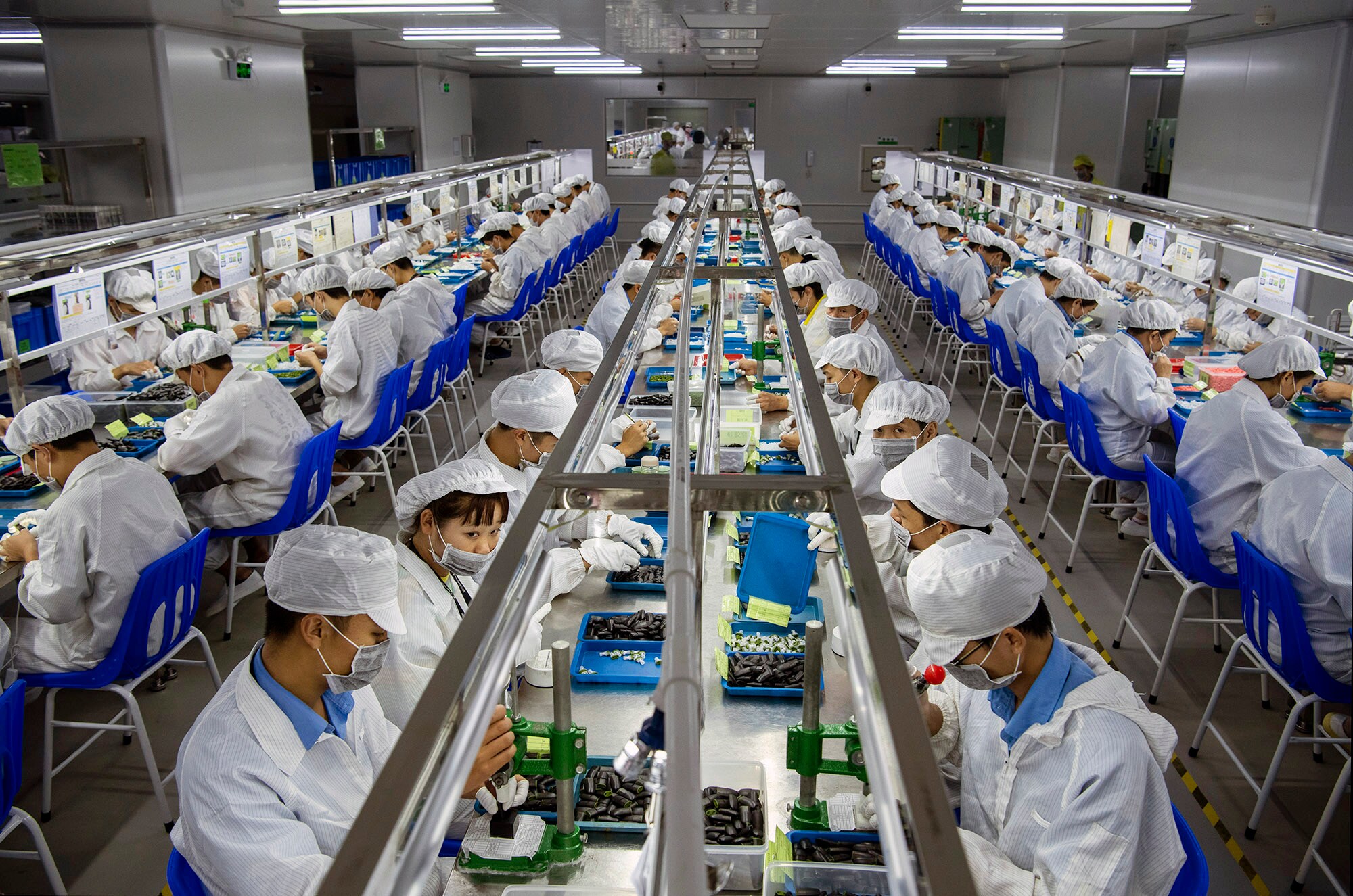
(Bloomberg) -- China is expected to set its annual growth rate for 2024 at “around 5%” when the national legislature meets this week, a fairly ambitious target for a government grappling with severe economic challenges.
Almost all of the 27 economists surveyed by Bloomberg about the upcoming annual National People's Congress session expect Beijing to announce a growth target similar to 2023's, albeit one that will be harder to reach given a higher base of comparison. Economists polled in a separate, broader survey expect the economy to grow about 4.6% in 2024.
Premier Li Qiang is scheduled to deliver his first government work report Tuesday, outlining key economic targets for measures including the gross domestic product growth and fiscal deficit. These targets could serve as a precursor to Beijing's broader policies for the year as it seeks to arrest an erosion of confidence. Top officials have signaled they likely won't rely on massive stimulus given concerns around creating systemic risks, and there will be a tougher comparison this year since 2023's growth benefited from the post-pandemic reopening.

“Expectations are perhaps unrealistically high that the Two Sessions in March will produce major policy stimulus,” Erica Tay, economist at Maybank Securities, said in a survey response. “Policymakers may announce ambitious growth targets, but the economy remains weighed down by excess capacity and the property slump.”
China will likely run a smaller budget deficit of 3.28% of GDP this year, while ramping up new sovereign bond issuance by more than 20%, according to economists polled by Bloomberg. The quota for local government bonds issuance is estimated to remain largely unchanged at 4 trillion yuan ($556 billion). The target for the surveyed urban jobless rate will also likely remain at 5.5%.

President Xi Jinping's government is still contending with a plethora of structural problems, including a persistent property crisis and stubborn deflation. Recent data suggested an uneven recovery in the world's No. 2 economy: A slump in the nation's home sales dragged on and factory activities shrank for the fifth straight month in February, while travel and tourism picked up during a recent long holiday.
Read more about Bloomberg's pre-NPC surveys here.
More stories like this are available on bloomberg.com
©2024 Bloomberg L.P.

-
Love, Sex Aur Dhokha: The Audacious Plot To Spy On Jensen Huang

A Taipei dinner, a Singapore chip buyer and a suspected Chinese asset: inside the alleged spy operation that got close to NVIDIA's Jensen Huang.
-
Ten Things I Learnt This Samvat
Patience can be a trap. Cheap stocks can stay cheap. Leverage can wipe you out. What did Samvat 2082 teach us? Niraj Shah writes on 10 lessons from the year gone by.
-
Talking Points This Week: Tech Nerves, FII Buying, And A Faraway Banking Shock
The global markets are not shining this Diwali. The exception in the large markets is, India.
-
Midterm Rally Lasted A Day. The Hard Reality Of A Divided US May Last Two Years | Opinion
Between a contested AI boom, a debt ceiling that arrives in 2027 and a president with every incentive to act alone, the next two years may prove more volatile than the first day's rally suggests.
-
Blue Wave Will Derail the AI Trade but Won't Dismantle the AI Era | Unhedged Position
The Democrats' sweep of the US Congress will see politics collide with economic forces both over the long and short term.
-
It's Time To Take The GST Council's Bet On Trust Global
Payment records can prove India's services exports, and clear, proportionate rules can bring foreign digital sellers into the tax net.
-
Opinion | India at 38: From Innovation Overperformer to Innovation Powerhouse
India now has 453 VC-backed deep science startups, 18 of them late-stage, after 117 percent growth since 2020. Laurus Labs, at USD 9.3 billion, is the most valuable deep science company in any middle-income economy outside China.
-
Navigating Energy Crossroads: S Jaishankar's Call For Diversified Supply Chains At G20 Ministerial Meeting
As geopolitical fault lines continue to test maritime trade routes and commodity flows, Jaishankar's message remains pertinent: true economic resilience requires open markets, protected transit lines, and a genuine commitment to multilateral cooperation rather than coercion.
-
Indians Are Travelling, But Not Every Journey Is A Holiday | The Week In Whys
Pilgrims, patients and working women are the real travellers, and the system hasn't quite caught up with them.









