Canada Set for Snap Election With Trade War Rattling Economy
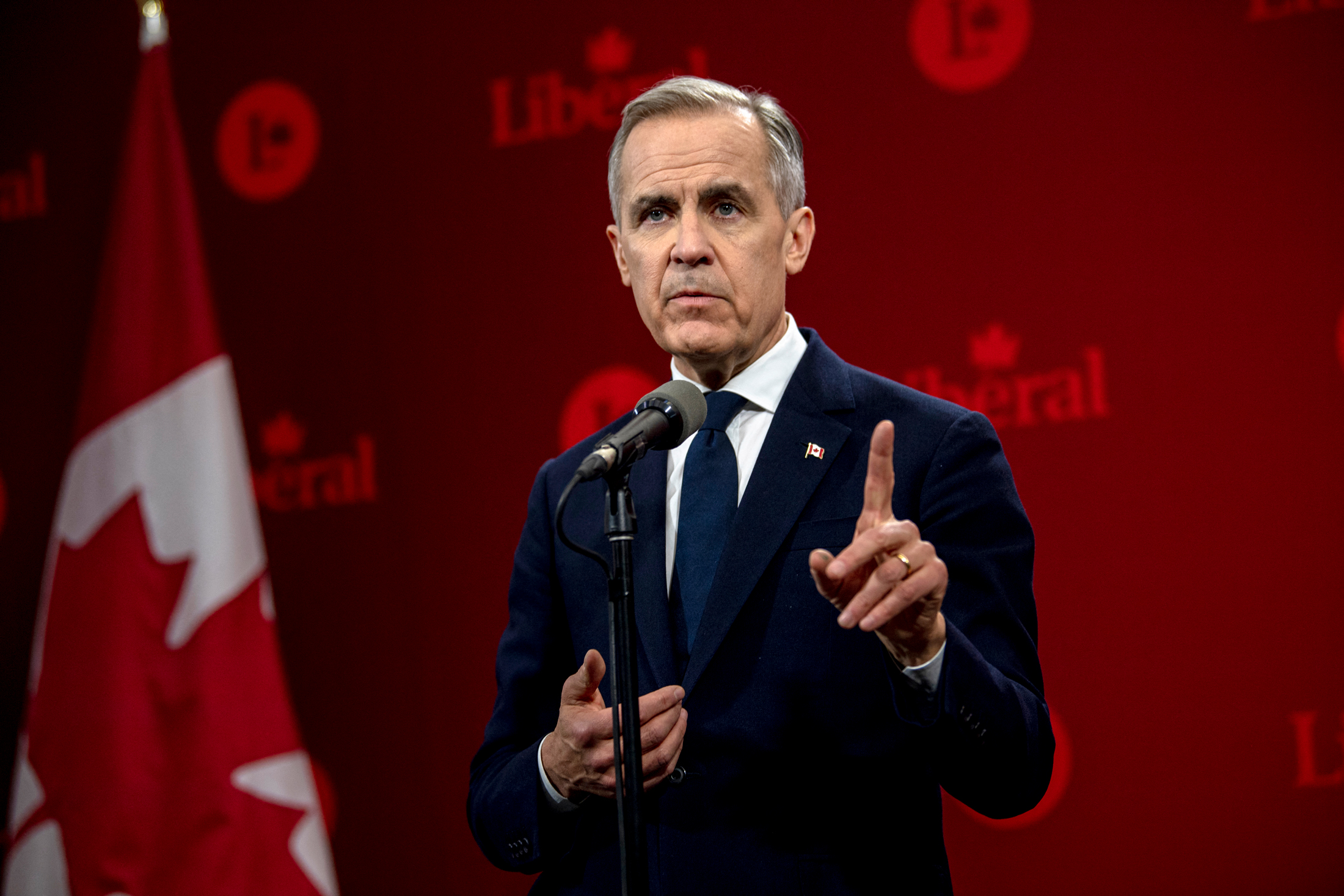
(Bloomberg) --Canadian Prime Minister Mark Carney is set to call a national election within days, seeking his own mandate from voters at a time when the country's businesses have been shaken by a trade war with the US.
Carney, the former governor of two central banks, was sworn in as prime minister on March 14 after winning the leadership of the Liberal Party. He's riding a wave of early support in public opinion polls, and the country is due to have an election this year.
Carney, 60, is likely to ask for Parliament to be dissolved on Sunday, according to multiple news outlets. He's leaning toward setting April 28 as the voting date, the Globe and Mail reported, citing people it didn't name.
The Liberals have been in power since 2015 and appeared set for certain defeat before Justin Trudeau announced his resignation in January. Some polls now give the party a small lead, while others have the Conservative Party, led by Pierre Poilievre, in first place.
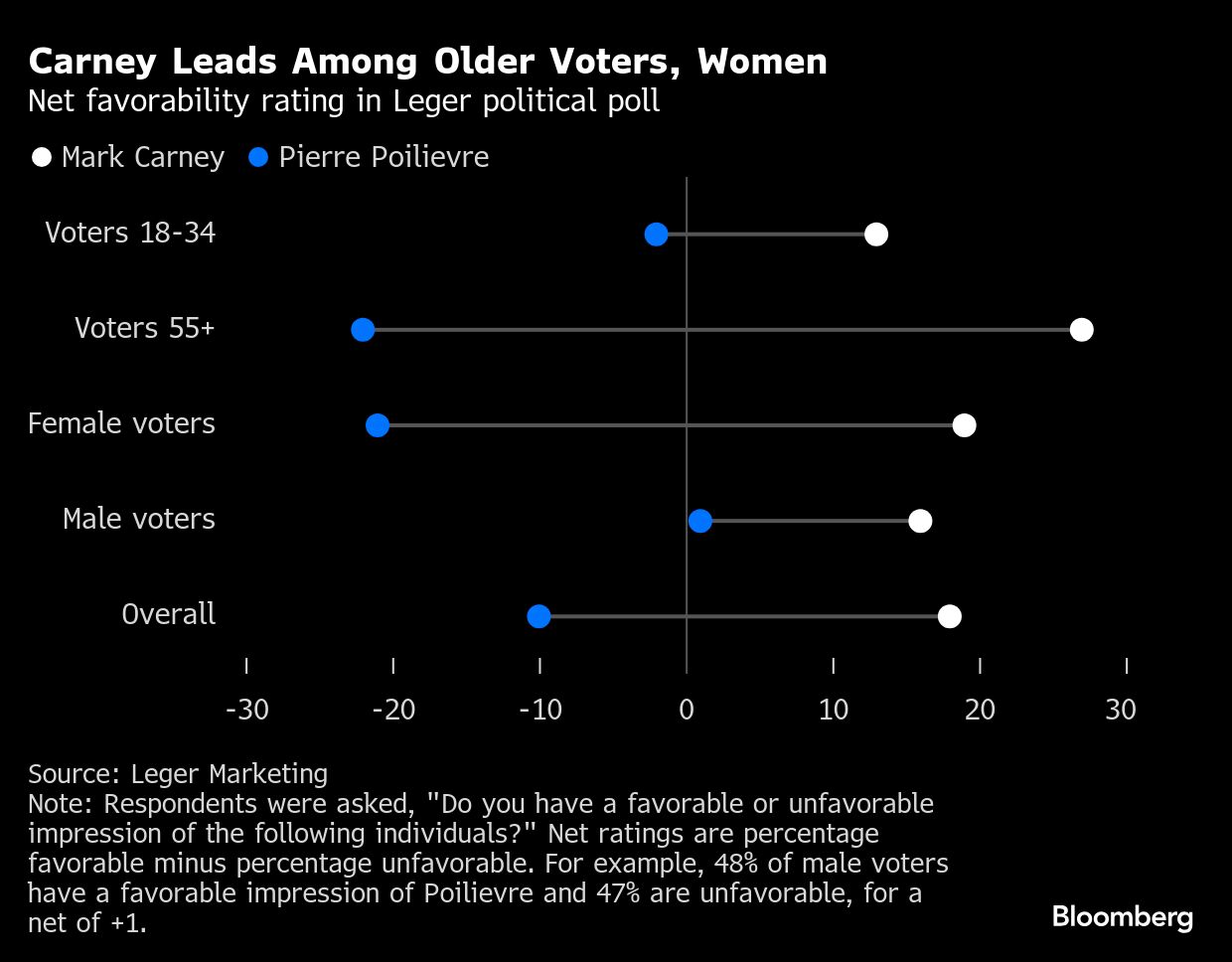
A recent survey by Leger Marketing shows that voters have a more favorable impression of Carney, who was governor of the Bank of Canada from 2008 to 2013.
Carney has risen to power during one of the most hostile moments in Canada-US relations in recent history. US President Donald Trump has threatened to use “economic force” to try to turn Canada into a US state and has already imposed steep tariffs on many Canadian goods, with Canada retaliating in kind with import taxes on about C$60 billion ($42 billion) of US products so far.
The escalation of the trade war has shaken confidence in the private sector. Optimism among Canada's small- and medium-sized firms fell to the lowest level in at least a quarter-century, according to the Canadian Federation of Independent Business.
The CFIB's Business Barometer index fell to 25 this month, according to a flash poll of 1,065 firms taken between March 5 and March 7. That's the lowest reading on record in data back to 2000.
In a recent interview on Fox News, Trump said he would rather work with the Liberal Party leader in Canada to resolve the trade war he instigated. Poilievre and the Conservatives have seized on those remarks, saying they show he's the better choice to stand up to Trump.

-
Talking Points This Week: Tech Nerves, FII Buying, And A Faraway Banking Shock

The global markets are not shining this Diwali. The exception in the large markets is, India.
-
Midterm Rally Lasted A Day. The Hard Reality Of A Divided US May Last Two Years | Opinion
Between a contested AI boom, a debt ceiling that arrives in 2027 and a president with every incentive to act alone, the next two years may prove more volatile than the first day's rally suggests.
-
Blue Wave Will Derail the AI Trade but Won't Dismantle the AI Era | Unhedged Position
The Democrats' sweep of the US Congress will see politics collide with economic forces both over the long and short term.
-
It's Time To Take The GST Council's Bet On Trust Global
Payment records can prove India's services exports, and clear, proportionate rules can bring foreign digital sellers into the tax net.
-
Opinion | India at 38: From Innovation Overperformer to Innovation Powerhouse
India now has 453 VC-backed deep science startups, 18 of them late-stage, after 117 percent growth since 2020. Laurus Labs, at USD 9.3 billion, is the most valuable deep science company in any middle-income economy outside China.
-
Navigating Energy Crossroads: S Jaishankar's Call For Diversified Supply Chains At G20 Ministerial Meeting
As geopolitical fault lines continue to test maritime trade routes and commodity flows, Jaishankar's message remains pertinent: true economic resilience requires open markets, protected transit lines, and a genuine commitment to multilateral cooperation rather than coercion.
-
Indians Are Travelling, But Not Every Journey Is A Holiday | The Week In Whys
Pilgrims, patients and working women are the real travellers, and the system hasn't quite caught up with them.
-
Getting To Work Costs Women More | The Reason Why
It is not just about women paying more than men. It is about women paying much more in cities than in villages.
-
AI Bias In Investing Cannot Be Eliminated, But It Can Be Governed
Framing is a particularly important example as identical financial information presented in terms of gains rather than losses can lead an LLM to reach a different assessment.









