Canada Inflation Quickens to 2.6% on End of Sales Tax Break
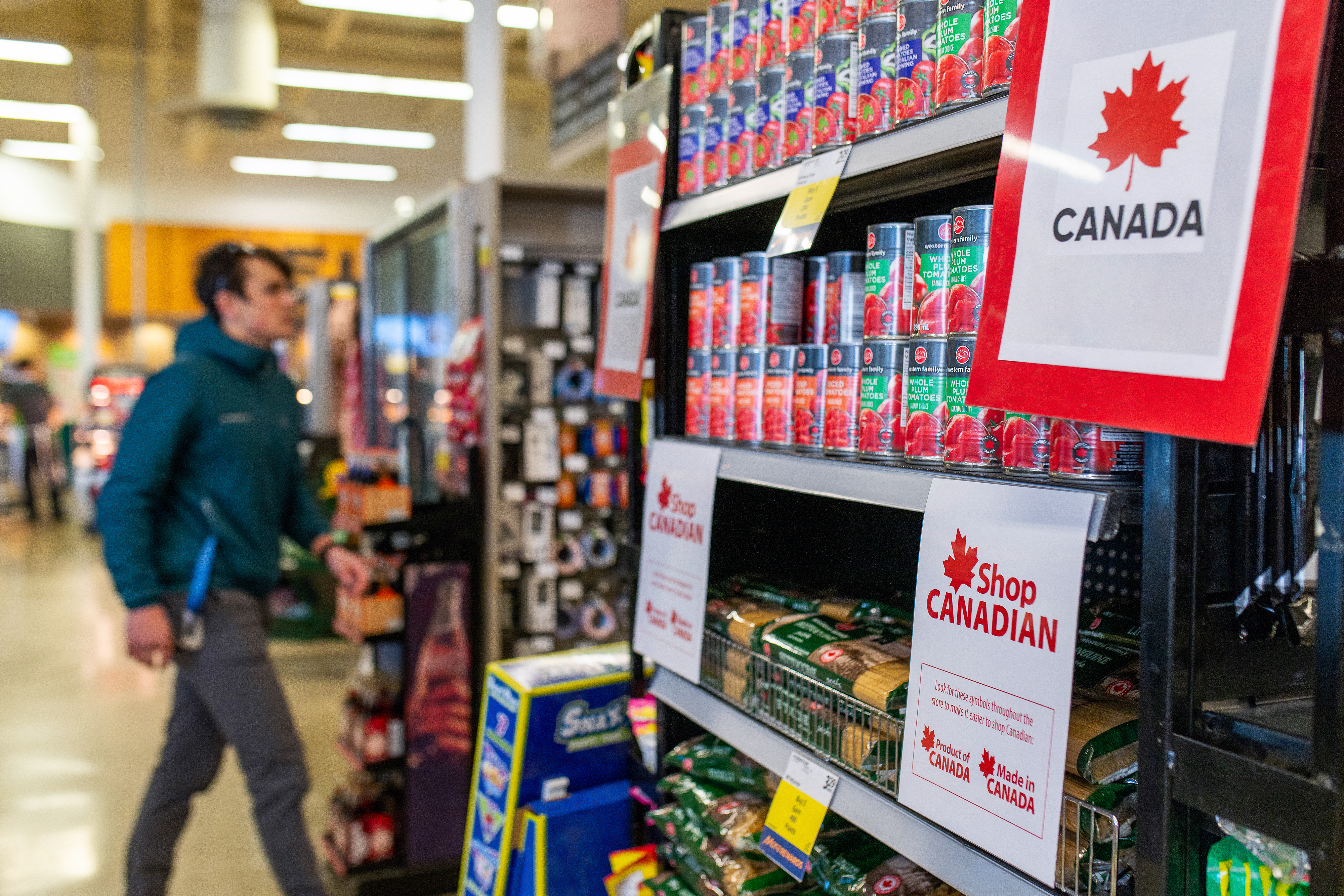
(Bloomberg) -- Inflation in Canada grew at the fastest pace in eight months, after a sales tax holiday that helped keep a lid on food and grocery prices ended in the middle of February.
The consumer price index rose at a 2.6% yearly pace last month, the highest rate since June and up from 1.9% in January, Statistics Canada said Tuesday. The index jumped 1.1% on a monthly basis in February, the fastest pace in nearly three years. Both figures exceeded economist expectations in a Bloomberg survey.
While the second straight acceleration in the headline number is expected, the pace of price gains may still surprise Bank of Canada policymakers, who cut interest rates for the seventh straight meeting last week as Donald Trump's tariff threats hamper business and consumer spending.
But assuming the federal sales tax break hadn't been in place, Canadian inflation would have jumped even higher to 3% in February, right at the upper bound of the bank's target range, from 2.7% a month earlier. Canadian inflation has not been at or above 3% since the end of 2023.
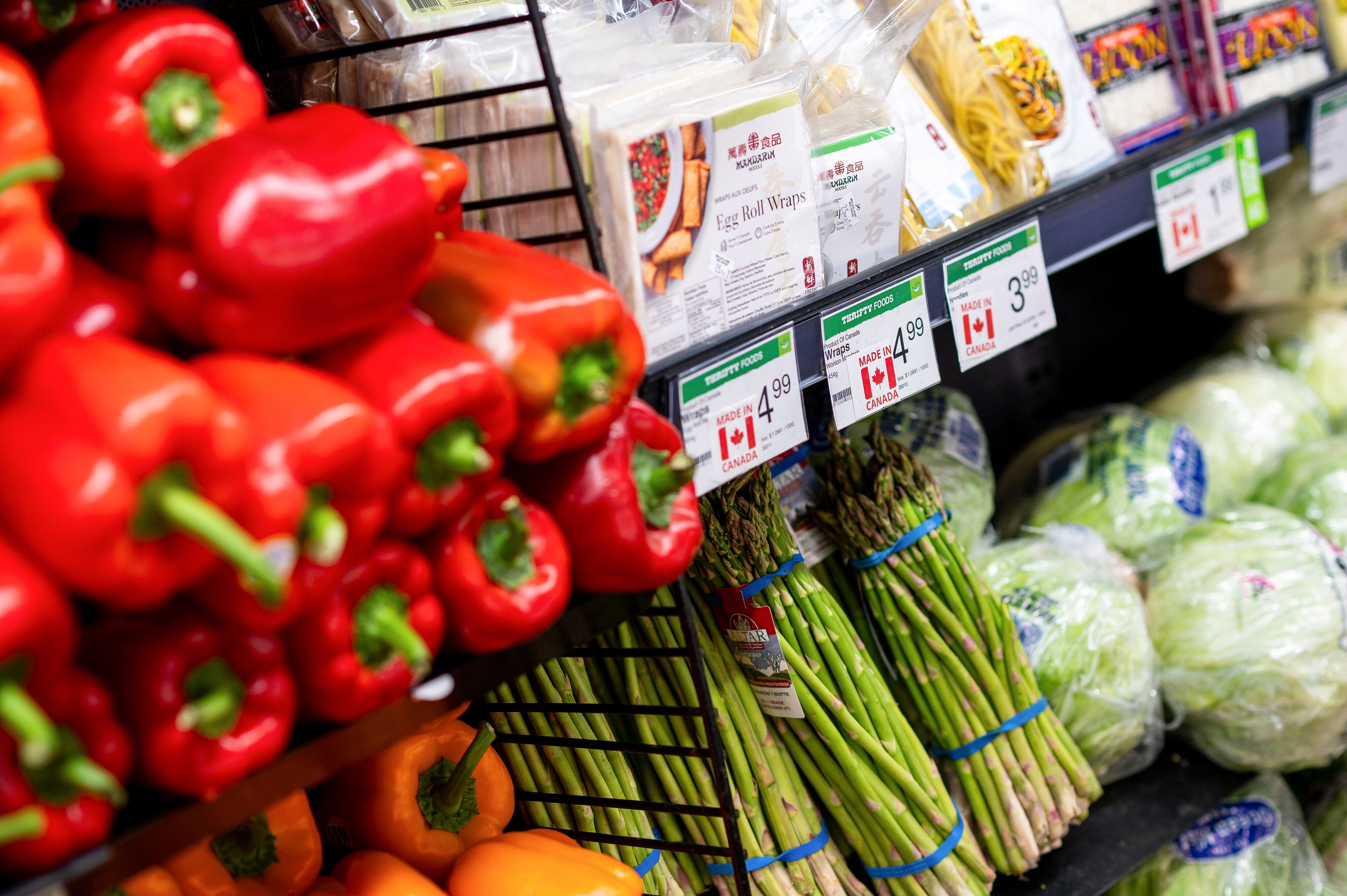
A grocery store in Sidney, British Columbia.
The central bank's two preferred core inflation measures both accelerated to a 2.9% yearly pace, versus 2.7% in January. The three-month moving averages of the figures rose slightly to 3.3%, from 3.2% previously. The bank has said underlying price pressures may be cooler than the measures indicate and it's reviewing them as part of its upcoming mandate renewal.
Other core measures also jumped significantly. Inflation excluding food and energy quickened to 2.9% on a yearly basis, from 2.2% previously, while excluding shelter, prices rose 2% year-over-year from 0.9% the previous month.
Still, tariffs remain the biggest factor for the rate path ahead. Trump has already imposed tariffs on a broad range of Canadian goods, including steel and aluminum, and Canada has retaliated with levies of its own. With more US tariffs and Canadian retaliation expected next month, policymakers must weigh downward pressures on inflation from a weaker economy and upward pressures from higher costs.
Read More: Canada Is Limited in Matching Further US Tariffs, Carney Says
Bank of Canada Governor Tiff Macklem said last week the bank would “proceed carefully” amid the tariff war. Economists are still awaiting more clarity on tariffs before firming up their expectations for the next rate decision on April 16, when policymakers will also update their forecasts.
The sales tax break on a variety of items, making up 10% of the consumer price basket, ended on Feb. 15. Its expiration put upward pressure on costs of food, groceries and alcohol. Restaurant food prices contributed the most to the February acceleration, with a slower decline of 1.4% compared to a drop of 5.1% in January.
Regionally, prices rose at a faster pace in February compared to the previous month in all 10 provinces, with New Brunswick and Ontario seeing the biggest accelerations.

-
Opinion | India at 38: From Innovation Overperformer to Innovation Powerhouse

India now has 453 VC-backed deep science startups, 18 of them late-stage, after 117 percent growth since 2020. Laurus Labs, at USD 9.3 billion, is the most valuable deep science company in any middle-income economy outside China.
-
Navigating Energy Crossroads: S Jaishankar's Call For Diversified Supply Chains At G20 Ministerial Meeting
As geopolitical fault lines continue to test maritime trade routes and commodity flows, Jaishankar's message remains pertinent: true economic resilience requires open markets, protected transit lines, and a genuine commitment to multilateral cooperation rather than coercion.
-
Indians Are Travelling, But Not Every Journey Is A Holiday | The Week In Whys
Pilgrims, patients and working women are the real travellers, and the system hasn't quite caught up with them.
-
Getting To Work Costs Women More | The Reason Why
It is not just about women paying more than men. It is about women paying much more in cities than in villages.
-
AI Bias In Investing Cannot Be Eliminated, But It Can Be Governed
Framing is a particularly important example as identical financial information presented in terms of gains rather than losses can lead an LLM to reach a different assessment.
-
Joining The Dots | Dark Skies, Steady Diya: Why Hope Holds This Diwali
With war, a weak rupee and foreign outflows weighing on sentiment, policymakers at the NDTV World Summit and market veterans at NDTV Profit Ignite: Diwali Edition offered the same advice: stay invested and filter out the noise.
-
The Curious Case of Equitas Small Finance Bank And A CEO Who Quit For Stock
PN Vasudevan believes persistent investor concerns over a perceived conflict of interest had become a governance overhang on Equitas Small Finance Bank's stock, even as the lender improved profitability and asset quality.
-
Talking Points This Week: AI Cash Burn, A Tiger Comeback And An India That Still Finds Its Own Path
India is not immune to higher oil or tighter global liquidity, yet its earnings base is broader, its domestic policy levers are still available.
-
Foreign Investors Own Half Of HDFC Bank and ICICI Bank. An LTCG Cut Could Matter Most Here
Foreign portfolio investors have US$115 billion parked in HDFC Bank, ICICI Bank. If the government cuts long-term capital gains tax, Jefferies says returning foreign money could land here first.










