A Universal Basic Income Could Trump The PDS In Supporting India’s Poor, Says An IMF Study
The idea of a universal basic income for India was put on the table in 2016-17 by former chief economic adviser Arvind Subramanian. Almost immediately after, it was dismissed as impractical, given the limited fiscal space available to the Indian government.
The debate, however, has not died down. Adding to the emerging views on whether India should move to a system of cash transfers is the International Monetary Fund, which believes that a basic income scheme could be more effective in supporting low income households when existing support programs like the Public Distribution System are inefficient.
Under UBI, every individual receives an unconditional uniform cash transfer. This transfer would ideally replace nearly 950 schemes and sub-schemes in the country, accounting for about five percent of the GDP then. Food subsidy, provided through the PDS, is the single largest of all of these schemes.
UBI vs PDS: The Pros
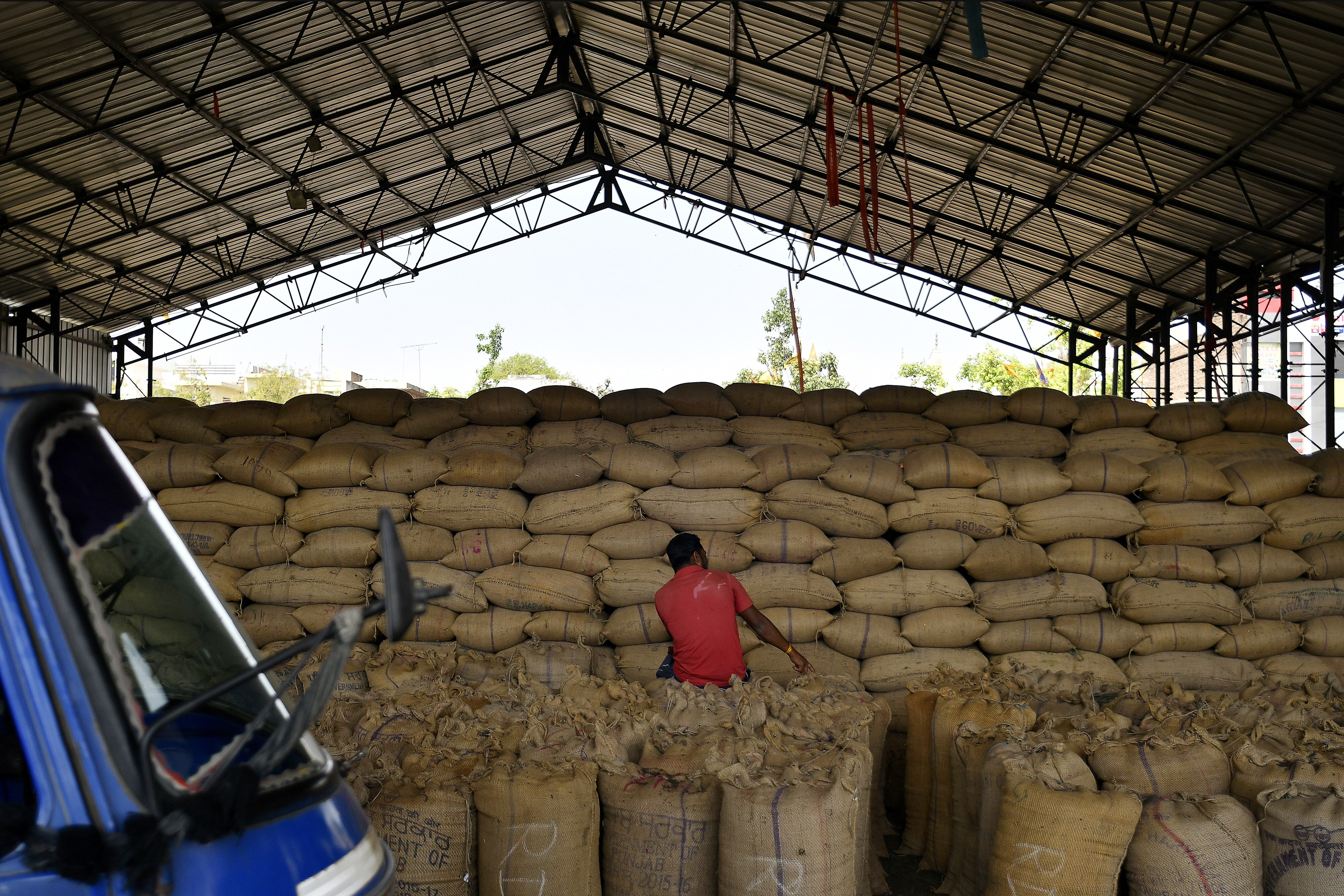
India's PDS system has always been plagued with leakages. The IMF believes that a UBI scheme could be a more effective support system than the PDS.
A UBI would outperform the PDS in terms of coverage, targeting and progressivity, said a paper co-authored by IMF staffers David Coady and Delphine Prady. Eliminating an inefficient PDS would mean public expenditure savings which could reach households as a more generous UBI.
Currently out of every Rs. 100 spent on the PDS program, Rs. 64 reaches households. Recycling the estimated expenditure savings of 36 percent would be equivalent to a 55 percent increase in uniform transfer, according to the IMF's research.
The IMF paper argued that a cash transfer program would be much simpler to administer than the PDS, especially with the Aadhaar in place. The transition may be similar, in part, to the LPG subsidy program, where beneficiaries pay the market price of the LPG but receive the difference in price as a direct bank transfer.
UBI vs PDS: The Cons
However, the study acknowledges that a truly universal basic income could also provide benefits to relatively higher income groups and, in turn, lead to a slight decline in the benefits targeted at the lowest income categories.
On average, 50 percent of households in the bottom four income deciles would face a 6 percent welfare loss, while the other 50 percent would gain 3 percent, said the study.
This can be corrected, said the authors of the study.
The elimination of the PDS will result in public expenditure savings. These savings could be returned to households as a more generous UBI, argued the report. This would help reduce any decline in benefits provided to the citizens at the bottom of the income curve.
Is A Quasi-UBI Preferable?
The IMF study also suggested that a basic income scheme, which is not completely universal, may work to ensure that low-income households don't lose out.
Re-allocating UBI transfers going to households in the top three income deciles would result in a 42 percent increase in the per capita level of UBI for the rest of the population, showed the study.
Other programs, such as a targeted conditional cash transfer (CCT) program that links benefiteligibility to households investing in the education, health and nutrition status of their children,could further help to address these losses , said the IMF.

-
A New Samvat Wishlist: Inclusive Prosperity And Human Development

India has strengthened its economic foundations through infrastructure, digital access and enterprise. Its next growth chapter must deepen productivity, create better livelihoods and widen participation in prosperity.
-
Love, Sex Aur Dhokha: The Audacious Plot To Spy On Jensen Huang
A Taipei dinner, a Singapore chip buyer and a suspected Chinese asset: inside the alleged spy operation that got close to NVIDIA's Jensen Huang.
-
Ten Things I Learnt This Samvat
Patience can be a trap. Cheap stocks can stay cheap. Leverage can wipe you out. What did Samvat 2082 teach us? Niraj Shah writes on 10 lessons from the year gone by.
-
Talking Points This Week: Tech Nerves, FII Buying, And A Faraway Banking Shock
The global markets are not shining this Diwali. The exception in the large markets is, India.
-
Midterm Rally Lasted A Day. The Hard Reality Of A Divided US May Last Two Years | Opinion
Between a contested AI boom, a debt ceiling that arrives in 2027 and a president with every incentive to act alone, the next two years may prove more volatile than the first day's rally suggests.
-
Blue Wave Will Derail the AI Trade but Won't Dismantle the AI Era | Unhedged Position
The Democrats' sweep of the US Congress will see politics collide with economic forces both over the long and short term.
-
It's Time To Take The GST Council's Bet On Trust Global
Payment records can prove India's services exports, and clear, proportionate rules can bring foreign digital sellers into the tax net.
-
Opinion | India at 38: From Innovation Overperformer to Innovation Powerhouse
India now has 453 VC-backed deep science startups, 18 of them late-stage, after 117 percent growth since 2020. Laurus Labs, at USD 9.3 billion, is the most valuable deep science company in any middle-income economy outside China.
-
Navigating Energy Crossroads: S Jaishankar's Call For Diversified Supply Chains At G20 Ministerial Meeting
As geopolitical fault lines continue to test maritime trade routes and commodity flows, Jaishankar's message remains pertinent: true economic resilience requires open markets, protected transit lines, and a genuine commitment to multilateral cooperation rather than coercion.









