Yulu Launches Electric Scooters
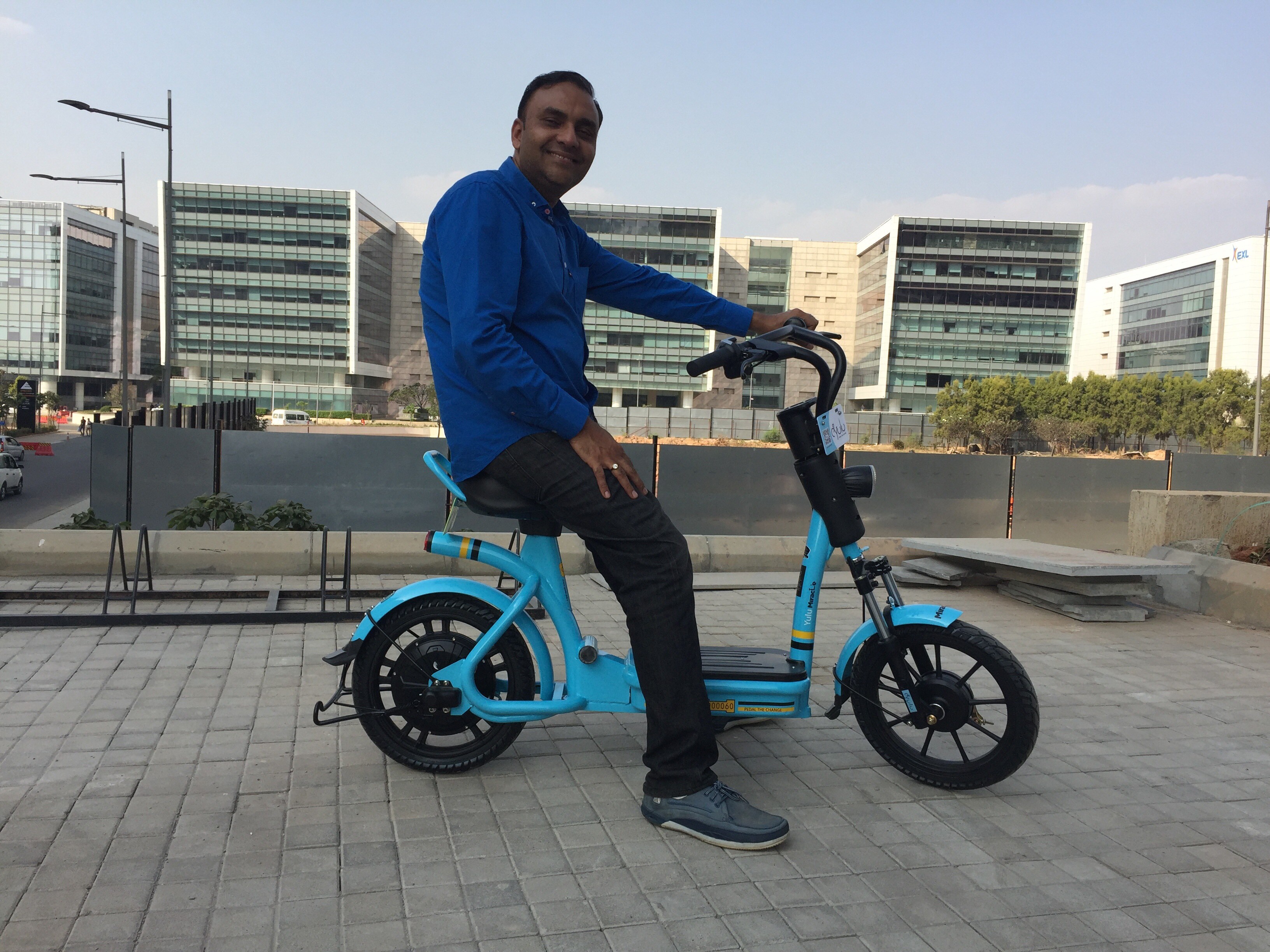
Bicycle sharing startup Yulu launched electric scooters as it looks to provide short-distance commutes for users.
Yulu Miracle is a dock-less, lithium-powered scooter focusing on first- and last-mile connectivity—cover distances up to 5 km. It has a battery-swapping model that can forecast the demand and use of the vehicle using machine learning and artificial intelligence. Each scooter sends its battery charge percent to Yulu servers at regular intervals using internet of things hardware.
“It will change the game for micro-mobility in India,” Amit Gupta, co-founder of Yulu, told BloombergQuint in an interview.
Yulu joins the likes of global electric scooter ventures such as Lime and Bird. So far, it raised nearly $7 million in seed funding from investors, including Blume Ventures Advisors, 3One4 Capital, a Japanese family office and angel investors such as Flipkart Co-Founder Binny Bansal, InMobi Co-Founder Naveen Tewari and Mohit Saxena, Freshworks Co-Founder Girish Mathrubootham and SlideShare Founder Amit Ranjan.
The investment was used to customise the vehicles and add features such as airless special purpose tire, sensor lights and install QR code to unlock the vehicle using the Yulu app, Gupta said.
The startup, according to Gupta, will deploy 250 electric scooters in Bengaluru and aims to add 250-500 additional vehicles every week for the next eight to 10 weeks. It has 850 Yulu zones or parking areas in the city that will be used to keep the electric scooters as well. “We will also expand to Pune and Mumbai,” he said.
Bicycle-Sharing Model
Yulu aims to continue to offer both bicycles and electric scooters.
This comes at a time the bicycle-sharing model faced certain headwinds in the country. Car rental startup Zoomcar that launched its bicycle-sharing platform PEDL halted its services last year. Chinese bike-sharing startup ofo rolled back its operations in the country. Ola's bicycle rental push did not take off. Also, bicycle sharing platform Mobycy pivoted to launch electric scooters in India last year.
Gupta said three to four of its bicycle-sharing clusters are profitable. “It's all about density. Once you get the critical mass in a cluster, you get economy of scale and business model starts to make sense.”
Watch the video here:

-
Talking Points This Week: Tech Nerves, FII Buying, And A Faraway Banking Shock

The global markets are not shining this Diwali. The exception in the large markets is, India.
-
Midterm Rally Lasted A Day. The Hard Reality Of A Divided US May Last Two Years | Opinion
Between a contested AI boom, a debt ceiling that arrives in 2027 and a president with every incentive to act alone, the next two years may prove more volatile than the first day's rally suggests.
-
Blue Wave Will Derail the AI Trade but Won't Dismantle the AI Era | Unhedged Position
The Democrats' sweep of the US Congress will see politics collide with economic forces both over the long and short term.
-
It's Time To Take The GST Council's Bet On Trust Global
Payment records can prove India's services exports, and clear, proportionate rules can bring foreign digital sellers into the tax net.
-
Opinion | India at 38: From Innovation Overperformer to Innovation Powerhouse
India now has 453 VC-backed deep science startups, 18 of them late-stage, after 117 percent growth since 2020. Laurus Labs, at USD 9.3 billion, is the most valuable deep science company in any middle-income economy outside China.
-
Navigating Energy Crossroads: S Jaishankar's Call For Diversified Supply Chains At G20 Ministerial Meeting
As geopolitical fault lines continue to test maritime trade routes and commodity flows, Jaishankar's message remains pertinent: true economic resilience requires open markets, protected transit lines, and a genuine commitment to multilateral cooperation rather than coercion.
-
Indians Are Travelling, But Not Every Journey Is A Holiday | The Week In Whys
Pilgrims, patients and working women are the real travellers, and the system hasn't quite caught up with them.
-
Getting To Work Costs Women More | The Reason Why
It is not just about women paying more than men. It is about women paying much more in cities than in villages.
-
AI Bias In Investing Cannot Be Eliminated, But It Can Be Governed
Framing is a particularly important example as identical financial information presented in terms of gains rather than losses can lead an LLM to reach a different assessment.









