Who Has Your Aadhaar Data?
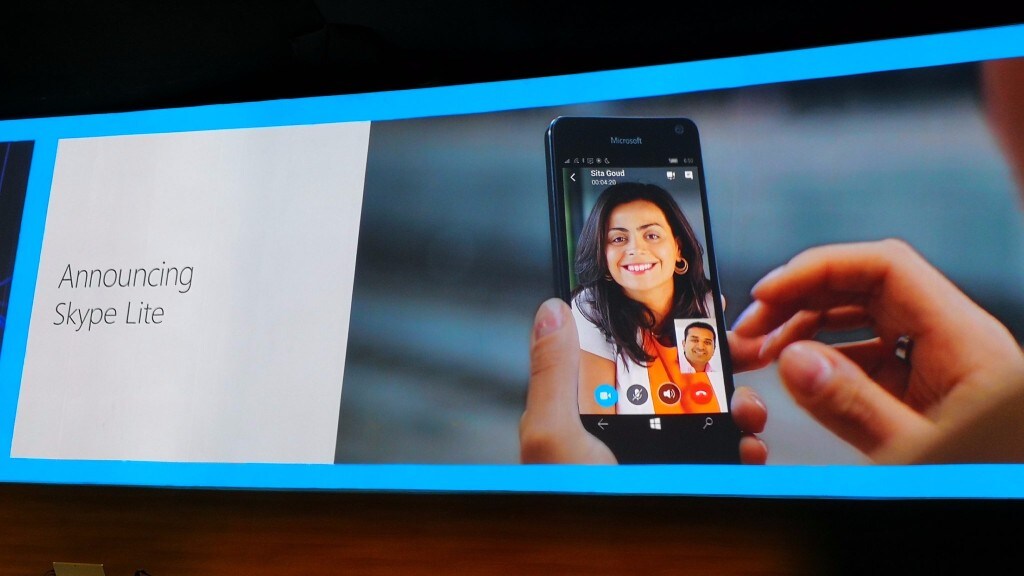
This February, Microsoft launched Skype Lite, a special version of its popular video-calling app for India. It is designed to run smoothly on cheaper smartphones and where network connectivity is sparse.
While the app works surprisingly well even in areas with limited internet, there's a feature that was showcased by Microsoft at its launch event that could be a cause for concern – Aadhaar verification. It conducted a mock video interview for a job where Skype Lite helped verify the identity of the aspirant using Aadhaar.
At first, it might seem very useful. What can possibly go wrong if a potential employer uses your Aadhaar information for verification on an encrypted network? Dig a little deeper and that question evolves into: how has your personal identity information that you voluntarily gave to the government instead landed at the doorstep of a tech giant like Microsoft?
It's natural for these insecurities to get compounded with all the recent talk about the Aadhaar programme and concerns being raised about its security and privacy.
Usha Ramanathan, an independent legal researcher who has been tracking Aadhaar since 2009, says, “There is Section 57 of the Aadhaar Act 2016, which, among other things, makes it clear as the blue sky on a cloudless day that the Aadhaar Act could never have been a Money Bill. It allows private companies to use the UID database for ‘establishing the identity of an individual for any purpose'.” She is wary about how private companies – like American biometric technology provider L-1 Identity Solutions, open-source document database MongodB, and consulting firms Accenture and Ernst and Young – are holding all our data.
Microsoft explains how some of these concerns might be misplaced as its Aadhaar integration with Skype Lite is absolutely safe, convenient and how it could actually reduce fraud in transactions involving the Indian government, businesses and consumers.
Also Read: In Defence Of Aadhaar - Nandan Nilekani
Alok Lall, director at Office Business Group, Microsoft India, explains that the UIDAI has directly appointed a number of Authentication User Agencies (AUAs) from various government and non-government entities to facilitate and process such authentication requests, including e-KYC services. Microsoft has contracted with one such AUA and, in this case, is itself a sub-AUA to provide Aadhaar-enabled authentication services to its Skype Lite users in India.
“For privacy reasons, the functionality within Skype Lite is such that only the verifier's name, photo, birth year and last 4 digits of Aadhaar would be shared with the requester, for the purpose of authenticating the identity. The verifier is made aware of what details he or she will be sharing with the requester, and must indicate consent before the authentication can proceed,” says Lall.
Ramanathan points out there are several private companies – suppliers of hardware, software, banks, eKYC service providers and AUAs – that are linked to the Aadhaar interface. But, perhaps Microsoft comes into the spotlight because it's the biggest global tech behemoth to get involved with the largest biometric database in the world.
Lall points out that Skype-to-Skype voice, video, file transfers and instant messages are encrypted. This protects ordinary Skype users from potential eavesdropping by malicious users.
The company says it does not store data and has no access to the central repository. It only uses standard interfaces exposed for a sub-AUA.
As for the Aadhaar database, the UIDAI mentions it is encrypted using the highest available public key cryptography (PKI-2048 and AES-256) with each data record having an in-built mechanism to detect any tampering. UIDAI says that even if a hacker attempted to decrypt it using millions of computers, it would take him billions of years to crack the code.
Also Read: Project Aadhaar Is All About Compulsion, Not Consent: Usha Ramanathan
Ramanathan mentions that it might not be an external threat to the database that is worrisome. She says, “Sometimes I wonder if it is because they (private companies) already have the data with them that there is no known case of hacking or data breach from the UID database?”

While nobody from the current UIDAI team responded to BloombergQuint's queries, former chairman of UIDAI, Nandan Nilekani, says, “Aadhaar is meant to be a platform, a platform for the use of a variety of things. The law has a section (Section 57 of Aadhaar Act) which says it can be used for other purposes.” He goes on to point out how Aadhaar has been based on user consent from the beginning.
If you wish to use Skype Lite and if you wish to authenticate yourself for some purpose, that is your decisionNandan Nilekani, Former Chairman, UIDAI
Privacy experts like Ramanathan aren't convinced by that argument. She believes that “consent” per se is the biggest sham in the Aadhaar project. “If the UID number has to be seeded everywhere, for any service or subsidy, what consent are we talking about? Compulsion is the only route, so I think we should stop pretending there is any choice and consent in this project.”
Also Read: Aadhaar Details Of 13.5 Crore People Available On Government Sites

-
Why Amazon And Flipkart Are Struggling To Beat Meesho In India's Smaller Cities

With 274 million users and lowest-cost logistics, Meesho is defending its value commerce crown against giants like Amazon and Flipkart.
-
High US Salaries, No Green Card Certainty: The Financial Calculation Facing Indian H-1B Families
The suspension of PERM processing at eight technology employers does not cancel existing H-1B visas. What it does is force a question many Indian families have been avoiding: is the US salary worth tying your career and family plans to one employer?
-
Swiggy vs Eternal: Food Delivery's Two Rivals Are No Longer In The Same Race
Eternal is building a private AI assistant, dark.ai. Swiggy is still working out how to make Instamart pay, with an operating loss of Rs 895 crore in the July-September quarter while Blinkit stayed profitable.
-
Where You Live Shapes How You Get To Work | The Reason Why
Two-wheelers are the most popular way to get to work in India, accounting for nearly 43% of workplace commutes.
-
Unhedged Position: Can India See An Indonesia-Style Time Correction?
The Nifty is trading below levels it first clocked in 2024. Is there, then, as I have suggested in the headline, potential that the current time correction drags on painfully for the next three-five, even ten years?
-
Navigating Friction And Energy Realities: An Analysis Of Marco Rubio's October Visit To India
Occurring at a critical juncture marked by stalled trade negotiations and escalating geopolitical pressures over global energy supplies, the visit offers a profound window into modern US-India relations.
-
India Exports Capital. Why Not Export Trusteeship?
The big question, then, is whether India can build an institution that global borrowers, investors, banks, and lawyers can trust, even without an Indian connection.
-
France's Economy & Politics Are In Crisis | The Reason Why
Let's look at how the French economy and politics evolved under Nicolas Sarkozy, Franois Hollande and Emmanuel Macron.
-
You May Inherit The Business. You Must Earn Its Credibility.
Succession tests the founder's ability to share authority as much as it tests the next generation's readiness to assume it.
-
Signing Deals Is One Thing; Making Them Work Is Another | The Week In Whys
Sometimes, things don't turn out as planned. Indian companies have lost some bids to rivals, some projects won't produce until 2030.










