Startup Profitability Timelines Probably Halved Amid Fund Crunch: Accel's Subramanian
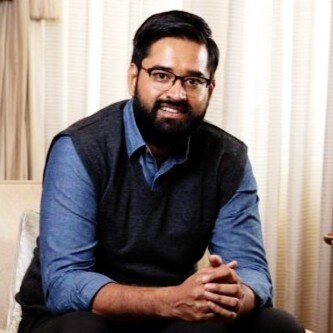
A shorter path to profitability is becoming the standard as tighter access to capital becomes the norm, according to Accel's Barath Shankar Subramanian.
"The cost of capital has gone up significantly in the last two-to-three years... which means anybody starting out here has to fundamentally look at building a strong and resilient business which probably has a shorter path to profitability," Subramanian, partner at the venture capital firm Accel, told BQ Prime.
"If you were thinking about getting to profitability in five years, you probably have to shrink that down to maybe half the time or cut down the business burn and get to, like, contribution-level profitability in a shorter time frame," he said.
Subramanian said this shift is here to stay and that the "ecosystem is also internalising that quite well".
Accel, which has been operating in India since 2008, has backed startups like Flipkart, Swiggy, and Cure Fit. The firm is currently in its seventh fund for the country. The fund, with capital worth $650 million to be allocated, is its largest one yet for early-stage startups in India and other southeast Asian countries.
Subramanian said the amount of capital in the system has definitely "shrunk". "Not the dry powder in the system, but what is actually being deployed has definitely shrunk in the last two–three years," he said. "So, this tightening means that as a founder, you have to be very real about how you're going to use that resource to build your company."
In terms of corporate misgovernance in startups, Subramanian said there are multiple reasons why the ecosystem has been seeing a string of such instances.
"Depending on which sector you are in and how you estimated the market versus what the reality has been, there might have been some mismatch. But it's also a function of the pace at which some of the rounds happened," he said.
"When there was excess capital available ... some of the milestones that were set were really not realistically achievable. So, that might force some kind of behaviour change to get to those milestones, if at all it's possible," Subramanian said.
He highlighted that these incidents have caused the ecosystem to have a lot more awareness. "There is a lot more top-of-mind recall to making sure that these kinds of things don't happen."
Watch The Interview Here:

-
Navigating Energy Crossroads: S Jaishankar's Call For Diversified Supply Chains At G20 Ministerial Meeting

As geopolitical fault lines continue to test maritime trade routes and commodity flows, Jaishankar's message remains pertinent: true economic resilience requires open markets, protected transit lines, and a genuine commitment to multilateral cooperation rather than coercion.
-
Indians Are Travelling, But Not Every Journey Is A Holiday | The Week In Whys
Pilgrims, patients and working women are the real travellers, and the system hasn't quite caught up with them.
-
Getting To Work Costs Women More | The Reason Why
It is not just about women paying more than men. It is about women paying much more in cities than in villages.
-
AI Bias In Investing Cannot Be Eliminated, But It Can Be Governed
Framing is a particularly important example as identical financial information presented in terms of gains rather than losses can lead an LLM to reach a different assessment.
-
Joining The Dots | Dark Skies, Steady Diya: Why Hope Holds This Diwali
With war, a weak rupee and foreign outflows weighing on sentiment, policymakers at the NDTV World Summit and market veterans at NDTV Profit Ignite: Diwali Edition offered the same advice: stay invested and filter out the noise.
-
The Curious Case of Equitas Small Finance Bank And A CEO Who Quit For Stock
PN Vasudevan believes persistent investor concerns over a perceived conflict of interest had become a governance overhang on Equitas Small Finance Bank's stock, even as the lender improved profitability and asset quality.
-
Talking Points This Week: AI Cash Burn, A Tiger Comeback And An India That Still Finds Its Own Path
India is not immune to higher oil or tighter global liquidity, yet its earnings base is broader, its domestic policy levers are still available.
-
Foreign Investors Own Half Of HDFC Bank and ICICI Bank. An LTCG Cut Could Matter Most Here
Foreign portfolio investors have US$115 billion parked in HDFC Bank, ICICI Bank. If the government cuts long-term capital gains tax, Jefferies says returning foreign money could land here first.
-
'Never Seen This Level Of Negativity': Sandeep Tandon Says The Next Rally May Be Closer Than You Think
Veteran investor Sandeep Tandon says foreign selling is easing, large-caps are due a comeback and mid-caps are crowded, while he turns positive on gold, power and pharma this Diwali.
-
Indians Stay With Family, Not In Hotels | The Reason Why
India still lacks enough clean, reliable and affordable hotels for budget-conscious travellers.










