LinkedIn To Tell Job Seekers How Likely They Are To Get A Response
(Bloomberg) -- More than 14 million job seekers' applications went completely ignored in a single quarter last year, according to one hiring platform. Now, sites like Greenhouse and LinkedIn are experimenting with new ways to hold companies accountable for making the hiring process so miserable for applicants.
Three of the biggest job search sites — LinkedIn, Indeed and Greenhouse — have put tools in place to highlight which companies frequently respond to applicants in a timely manner.
The changes come as frustration mounts among US job seekers, an increasing number of whom are languishing in long-term unemployment as the labor market slows. The job search has always been painful, but these days applicants feel more than ever like they're sending their resumes into the void. According to Greenhouse, half of applicants say they've been ghosted after an interview.
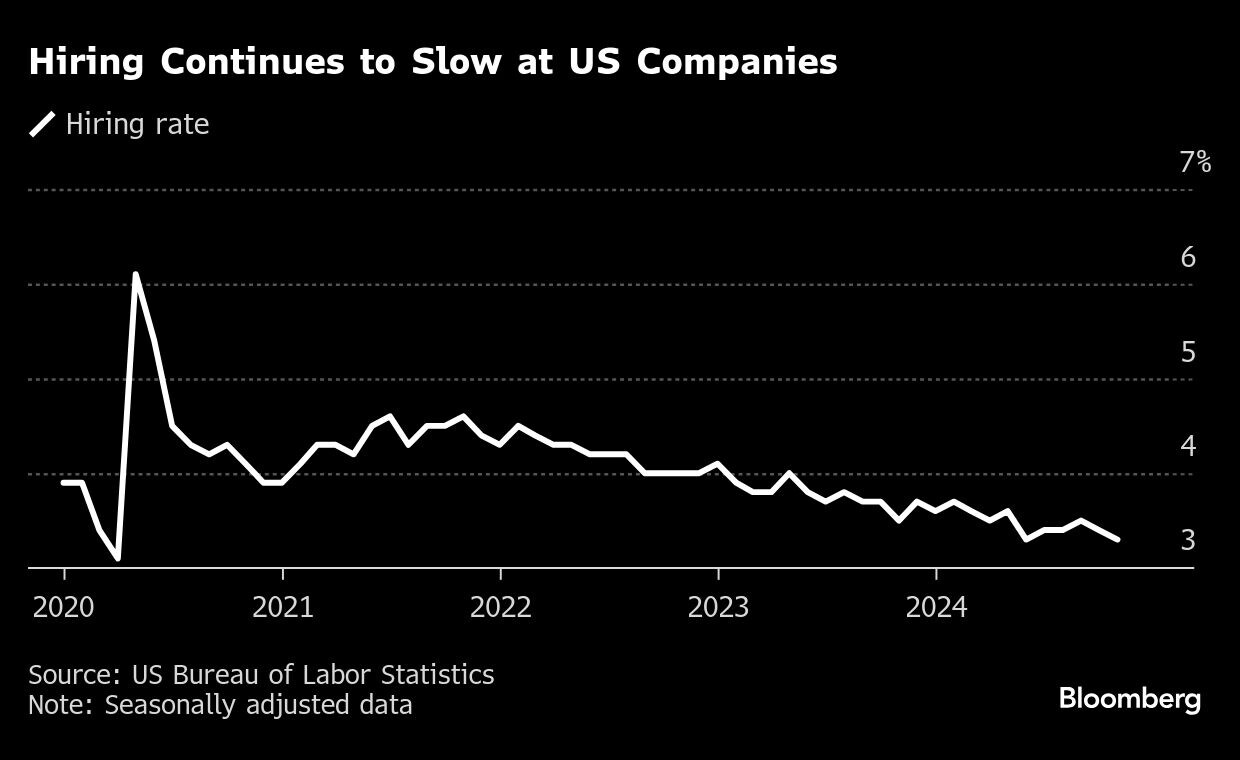
Meanwhile, new artificial intelligence tools have made it easier for candidates to play a numbers game, generating tailored resumes for hundreds of roles. But that's led to an increasingly overwhelming flood of applications for companies, making it nearly impossible to process the deluge and respond to every hopeful in a timely manner — let alone find their perfect match.
Eliminating Pain Points
In a bid to boost transparency, LinkedIn is adding “responsiveness insights” that show applicants which listings are being actively reviewed by employers. It's testing the insights on a small number of job postings before rolling them out sitewide in the coming months.
The platform is also refining its “job match” feature that uses AI to see how well qualified a candidate is for a given listing. The feature is designed to help cut down on the flood of applications companies are receiving by nudging users to focus their efforts on jobs where they actually have a good shot at hearing back. That, in theory, should make the hiring process more efficient for both parties.
The feature is a game-changer, LinkedIn product manager Rohan Rajiv said — one made possible by AI. “These next 12 months are going to be a pretty dramatic change in terms of how this whole process works,” he said.
Indeed chose to focus on encouraging employer responsiveness after the issue showed up as the biggest pain point for job seekers in a recent survey. While the platform has issued “responsive employer” badges since 2018 to recognize companies that consistently reply to more than half of all messages, it started releasing even more detail in 2023, including labels that share the employer's median response time with candidates.
Indeed has launched a mobile app for hiring managers it says has made the process easier and faster for busy bosses to communicate with applicants on the go. The platform is also giving employers the option to use AI-powered automated messaging for application submission confirmation emails, rejection notifications and interview scheduling.
Greenhouse, meanwhile, is testing a set of four badges that would verify an employer meets the platform's respectful, communicative, prepared and fair hiring process standards for a given job posting. In order to win the “respectful” badge, an employer must do things like ask for applicants' pronouns and name pronunciation, as well as send out confirmation emails.
For “communicative,” they're expected to clear out active candidates on closed jobs and send out rejection emails. To earn the “prepared” badge, hiring managers must have a clear plan of exactly what questions they will ask and what they're testing for. For “fair,” they need to do things like anonymize resumes and take-home tests to reduce bias.
While there's a lot of talk about how badly candidates are being treated by some companies, other businesses take pride in being courteous. "So the question is: How do you find them?” said Jon Stross, Greenhouse's president and cofounder.
The badges are meant to reward those companies that are working hard to do right by candidates, Stross said. They also create accountability internally, he said: “Inside that company you have some recruiting leader who's saying, ‘I want to treat people well. We should be sending out rejection emails and not ghosting folks.'”
Stross admits the badge system can be challenging for companies to earn and maintain — employers have to stay consistent to keep them. “Most folks don't get all four badges,” he said. “Our view was that if we made it too easy, it would be meaningless for candidates.”
Keeping the Human Touch
Clarence Lal, the global head of talent acquisition for satellite imagery company Planet, said he looks at the new Greenhouse badges as an accountability measure and a way to see how well the hiring process is working.
“Everybody talks about candidate experience and it's a bit of a buzzword,” he said. “But at the end of the day, it's just another human being on the other side of that interview — you have to have that same type of consideration.”
Planet has earned the respectful and fair badges, and is working toward earning verification for being communicative and prepared. In particular, the company is overhauling its interview process, redoing training for hiring managers and making sure each candidate gets the same set of questions and is evaluated against the same set of criteria.
Already, Lal said his team has seen improvement: with about 2,000 active applicants across 34 open roles — all handled by four recruiters — they've seen their time to hire drop by 43% from the year before and the rate at which candidates accept offers rise by 5%.
Sara Niemi, senior manager of talent acquisition at the alarm clock-maker Hatch, said they decided to opt into the beta test because they were already doing most of the things the badges check for. Right now, they've earned the respectful and communicative badges, but hope to get all of them soon.
“As candidates understand what these badges mean a little bit more, I do think they'll be a plus,” she said. That said, her team of three is already swamped with resumes — one social media role got over 1,000 applications in 24 hours — and it's possible the badges will attract even more attention from candidates.
“If I could have a person literally just go through all the resumes and that is everything that they did, I don't even know if we'd still be able to respond to everyone within some of the criteria,” Niemi said.

-
Talking Points This Week: Tech Nerves, FII Buying, And A Faraway Banking Shock

The global markets are not shining this Diwali. The exception in the large markets is, India.
-
Midterm Rally Lasted A Day. The Hard Reality Of A Divided US May Last Two Years | Opinion
Between a contested AI boom, a debt ceiling that arrives in 2027 and a president with every incentive to act alone, the next two years may prove more volatile than the first day's rally suggests.
-
Blue Wave Will Derail the AI Trade but Won't Dismantle the AI Era | Unhedged Position
The Democrats' sweep of the US Congress will see politics collide with economic forces both over the long and short term.
-
It's Time To Take The GST Council's Bet On Trust Global
Payment records can prove India's services exports, and clear, proportionate rules can bring foreign digital sellers into the tax net.
-
Opinion | India at 38: From Innovation Overperformer to Innovation Powerhouse
India now has 453 VC-backed deep science startups, 18 of them late-stage, after 117 percent growth since 2020. Laurus Labs, at USD 9.3 billion, is the most valuable deep science company in any middle-income economy outside China.
-
Navigating Energy Crossroads: S Jaishankar's Call For Diversified Supply Chains At G20 Ministerial Meeting
As geopolitical fault lines continue to test maritime trade routes and commodity flows, Jaishankar's message remains pertinent: true economic resilience requires open markets, protected transit lines, and a genuine commitment to multilateral cooperation rather than coercion.
-
Indians Are Travelling, But Not Every Journey Is A Holiday | The Week In Whys
Pilgrims, patients and working women are the real travellers, and the system hasn't quite caught up with them.
-
Getting To Work Costs Women More | The Reason Why
It is not just about women paying more than men. It is about women paying much more in cities than in villages.
-
AI Bias In Investing Cannot Be Eliminated, But It Can Be Governed
Framing is a particularly important example as identical financial information presented in terms of gains rather than losses can lead an LLM to reach a different assessment.









