Japanese Hakuto To Hitch A Ride To Moon With India’s TeamIndus
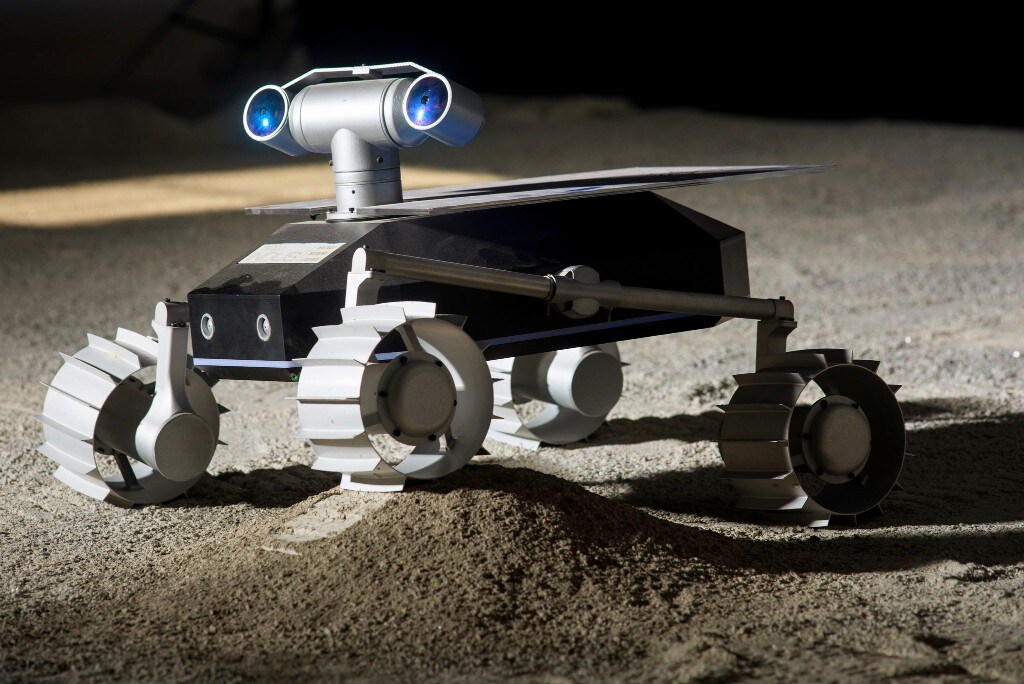
Displaying sportsmanship, India's TeamIndus will take along Japanese rival Hakuto's rover on its spacecraft to the moon, where they will compete for a $25 million prize.
The U.S. and Israeli teams are also in the race for Google's Lunar XPRIZE that requires privately funded teams to land their spacecraft on the moon, travel 500 metres and broadcast high definition video, images and data back to earth.
The TeamIndus spacecraft, in addition to the Japanese Rover, will carry its own indigenously designed and developed robotic rover, ECA -- short for 'Ek Chhoti si Asha' (one small wish).
"We are delighted to welcome Hakuto on board our spacecraft and look forward to working with them over the next few months... This is a reaffirmation of our technology preparedness as we continue to build towards becoming the first private entity to land on the moon," TeamIndus Fleet Commander Rahul Narayan said.
Earlier this month, Team Indus had inked a commercial launch contract with Indian Space Research Organisation (ISRO) for the moon mission.
TeamIndus will launch the spacecraft aboard ISRO's PSLV that will inject the spacecraft into an orbit 800 km above the surface of the earth.
From there on, the spacecraft will set course to the moon by switching on its own engines. After landing on the lunar surface on Mare Imbrium, both the rovers would be deployed.
Team Indus is supported by industry veterans including Ratan Tata (Tata Group), Nandan Nilekani (Infosys), Sachin Bansal and Binny Bansal (Flipkart) and Venu Srinivasan (TVS Group) among others.
"TeamIndus can carry up to 20 kgs of payload, of which the Japanese rover is 4 kgs. In addition to that, we are carrying International University payloads and student experiments under our Lab2moon initiative," TeamIndus Jedi Master (International Sales) Sridhar Ramasubban said.
TeamIndus has already won $1 million under the competition for demonstrating its landing technology. Hakuto, on the other hand, won $5,00,000 Mobility Prize for the robotic rover it developed.

-
Ten Things I Learnt This Samvat

Patience can be a trap. Cheap stocks can stay cheap. Leverage can wipe you out. What did Samvat 2082 teach us? Niraj Shah writes on 10 lessons from the year gone by.
-
Talking Points This Week: Tech Nerves, FII Buying, And A Faraway Banking Shock
The global markets are not shining this Diwali. The exception in the large markets is, India.
-
Midterm Rally Lasted A Day. The Hard Reality Of A Divided US May Last Two Years | Opinion
Between a contested AI boom, a debt ceiling that arrives in 2027 and a president with every incentive to act alone, the next two years may prove more volatile than the first day's rally suggests.
-
Blue Wave Will Derail the AI Trade but Won't Dismantle the AI Era | Unhedged Position
The Democrats' sweep of the US Congress will see politics collide with economic forces both over the long and short term.
-
It's Time To Take The GST Council's Bet On Trust Global
Payment records can prove India's services exports, and clear, proportionate rules can bring foreign digital sellers into the tax net.
-
Opinion | India at 38: From Innovation Overperformer to Innovation Powerhouse
India now has 453 VC-backed deep science startups, 18 of them late-stage, after 117 percent growth since 2020. Laurus Labs, at USD 9.3 billion, is the most valuable deep science company in any middle-income economy outside China.
-
Navigating Energy Crossroads: S Jaishankar's Call For Diversified Supply Chains At G20 Ministerial Meeting
As geopolitical fault lines continue to test maritime trade routes and commodity flows, Jaishankar's message remains pertinent: true economic resilience requires open markets, protected transit lines, and a genuine commitment to multilateral cooperation rather than coercion.
-
Indians Are Travelling, But Not Every Journey Is A Holiday | The Week In Whys
Pilgrims, patients and working women are the real travellers, and the system hasn't quite caught up with them.
-
Getting To Work Costs Women More | The Reason Why
It is not just about women paying more than men. It is about women paying much more in cities than in villages.









