India’s $4 Smartphone Rings Alarm Bells on Workers’ Conditions
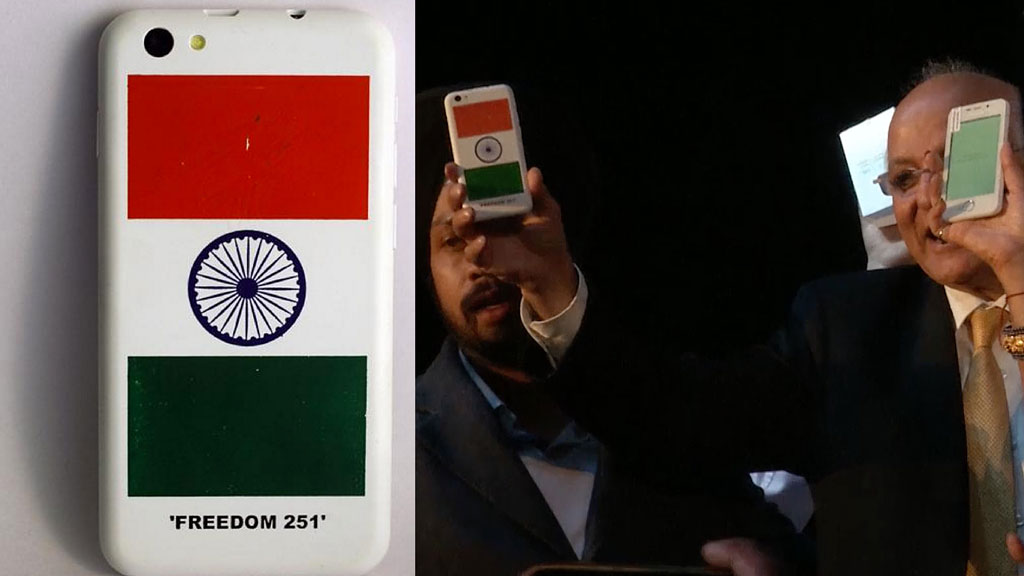
Ringing Bells, the Indian makers of a $4 (Rs 264 approx) smartphone, hope its low price will allow millions of the poorest people to own a mobile phone in a market with only 10 percent penetration.
But labour rights campaigners worry that the push to churn out cheap handsets and tablets may lead to increased abuse of workers' rights in India, the world's fastest-growing smartphone market.
Ringing Bells' Freedom 251 smartphone, whose launch in February crashed the company's website, is priced at 251 rupees – possibly the cheapest Android smartphone in the world.
Ringing Bells pays fair wages to its workers and its pricier models will help offset the cost of the $4 phone, said Mohit Goel, Director of Ringing Bells, in defence of his business model.
With only one in 10 Indians owning a mobile phone, there is enormous potential – much of it at the lower end of the market, where dozens of local and foreign brands are vying for customers, with some handsets selling for less than $25.
However, the pressure to keep costs low is pushing manufacturers to pay low wages, rely on cheaper contract labour and insist on unpaid overtime, activists say.
Responsibility of the supply chain and workers lies with brand companies. Our regulations simply aren't strong enough to ensure workers in the electronics industry are taken care of.Gopinath Parakuni, General Secretary, Cividep
Who Pays the Price?
Last month Cividep and Amsterdam-based GoodElectronics issued a report on Samsung Electronics, the leader in India's mobile market, which found that Samsung workers were poorly paid with no way to effectively have their grievances addressed.
A Samsung India spokesperson said the company complies by all relevant labour laws and regulations wherever it operates.
Fairness and respect for all are the values that form the foundation of our business,” the spokesmanSamsung India spokesperson
The “Make in India” drive to boost manufacturing is aimed at luring more investment, raising economic growth and creating jobs in industries such as electronics and apparel.
But these efforts lack sufficient checks and balances for millions of workers who face archaic labour laws, low wages, few benefits and little job security in businesses that often flout laws on safety or underage workers, activists say.
In India's electronics industry, working conditions are “among the worst”, according to a 2013 report by Hong Kong-based labour rights non-profit Asia Monitor Resource Centre.
(This piece has been published in an arrangement with Reuters India.)

-
Unhedged Position: Can India See An Indonesia-Style Time Correction?

The Nifty is trading below levels it first clocked in 2024. Is there, then, as I have suggested in the headline, potential that the current time correction drags on painfully for the next three-five, even ten years?
-
Navigating Friction And Energy Realities: An Analysis Of Marco Rubio's October Visit To India
Occurring at a critical juncture marked by stalled trade negotiations and escalating geopolitical pressures over global energy supplies, the visit offers a profound window into modern US-India relations.
-
India Exports Capital. Why Not Export Trusteeship?
The big question, then, is whether India can build an institution that global borrowers, investors, banks, and lawyers can trust, even without an Indian connection.
-
France's Economy & Politics Are In Crisis | The Reason Why
Let's look at how the French economy and politics evolved under Nicolas Sarkozy, Franois Hollande and Emmanuel Macron.
-
You May Inherit The Business. You Must Earn Its Credibility.
Succession tests the founder's ability to share authority as much as it tests the next generation's readiness to assume it.
-
Signing Deals Is One Thing; Making Them Work Is Another | The Week In Whys
Sometimes, things don't turn out as planned. Indian companies have lost some bids to rivals, some projects won't produce until 2030.
-
FOMC Wall, PERM Suspension, Hospital Stocks | Talking Points This Week
A PERM suspension would directly affect green-card sponsorship rather than H-1B visas, so the near-term earnings impact could remain relatively limited. The key question is whether this marks a new phase in US scrutiny of Indian IT.
-
Everything, Everywhere, All At Once: Dalal Street's Week To Forget | Joining The Dots
Visa curbs, a Starlink spat and cancer drug caps: what connects this week's shocks for Indian markets
-
India Is Going Abroad For Critical Minerals. But It May Take Years To Pay Off | The Reason Why
Although India's steps are in the right direction, they remain modest compared with India's growing dependence.
-
When Everyone Has AI, What Gives You An Edge?
India's young workforce is entering an uncertain world of work where powerful AI tools are becoming widely accessible. The advantage will belong to those who combine deep expertise with digital fluency, and the distinctly human capabilities that technology cannot manufacture.