Four Innovators At GES 2017 Who Want To Change The World
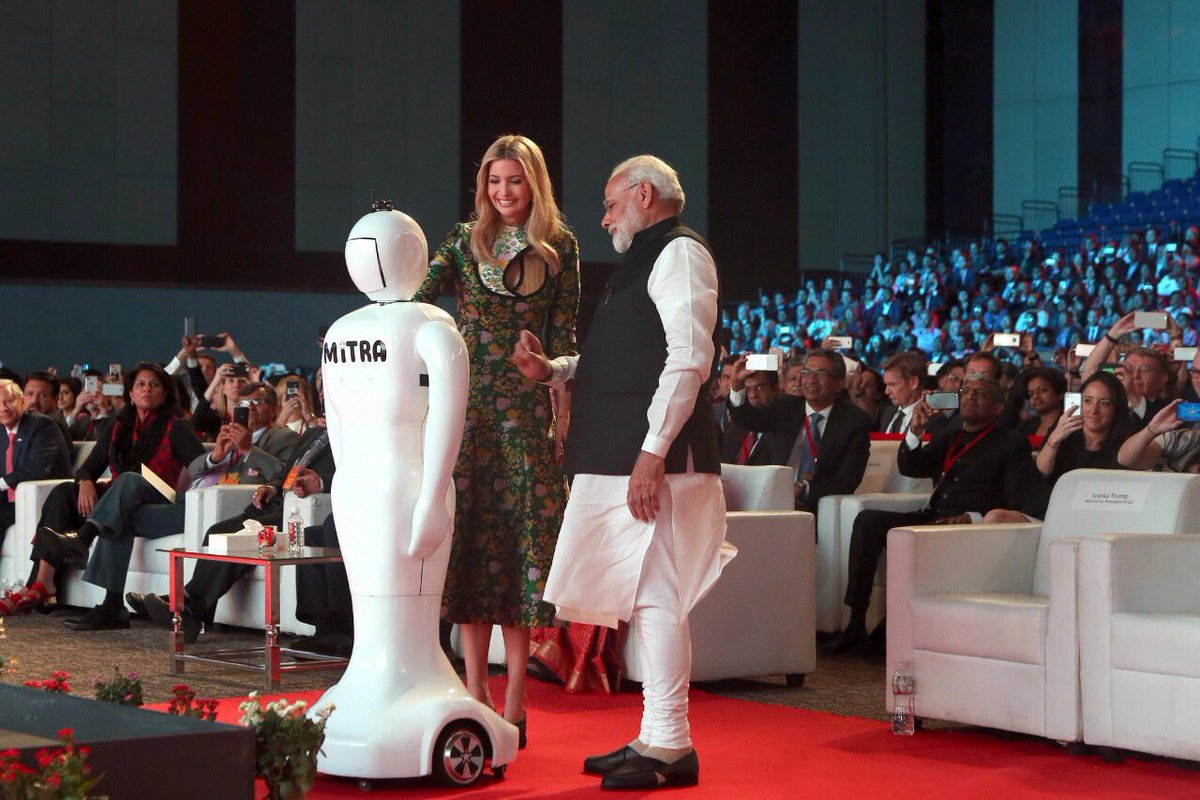
An futuristic ambulance catering to rural heathcare, a company which makes biodegradable sanitary napkins and a 13-year old boy who wants to save the environment and teach people about autism through his apps. While India-U.S. diplomatic ties may have been the highlight of the the Global Entrepreneurship Summit 2017 in Hyderabad, at its heart were the thousands of innovators trying to build businesses which are also socially conscious.
The three-day summit, inaugurated by Prime Minister Narendra Modi and attended by Ivanka Trump, advisor to U.S. President Donald Trump, was aimed at bringing innovators and entrepreneurs under one roof and saw a plethora of interesting stories.
Here are the highlights:
A Cart-Like Ambulance To Aid Rural Healthcare
Retired Wing Commander Dr. Lavanian showcased his ‘ambupod'. The low cost carrier works as a mobile ambulance which can provide basic critical care and be used as a basic dispenser of medical services in rural areas. Its narrow frame allows maneuverability in the narrowest of lanes. At Rs 5 lakh, it is priced at one fifth the cost of a regular ambulance, claims Dr Lavanian. The carrier can be hooked to a car, a motorbike or even a pack of dogs!
A Safer Alternative To Regular Sanitary Napkins
At Rs 20 per napkin, Saathi's biodegradable sanitary napkins are more expensive than the regular brands available in the market. Tarun Bothra, Co Founder of Saathi, who makes these biodegradable sanitary napkins from banana fiber, said the product is available at subsidised rates for women in rural areas who don't have access to sanitary napkins .
“Sanitary napkins stand in landfills for 500 years because most of them are made out of plastic while this is made out of agrowaste”, Bothra said. Saathi's environment-friendly version will not only turn into biomass within six months but also provide additional income to banana farmer, he added.
Also Read: GES 2017: A 5D Printer That Could Redefine Manufacturing
Turning Ads Into Educational Content
Vijay Kantheria wants to reduce the impact of harmful advertisements on children. The founder of Cerebroz Edu Tree came to GES 2017 looking for funding for his device which replaces advertisements with educational content.
“We are not an ad blocker,” explains Kantheria. “We want to replace something negative with something positive”. The device is currently available at Rs 9,400.
A 13-Year-Old Veteran Of Five Apps
That a spirit of innovation that can truly make a change was perhaps best reflected in the enthusiasm of 13-year-old Hamish Finlayson. The serial entrepreneur already has 5 apps to his credit including one to save turtles, clean up beaches and create awareness about autism. Hamish and his father suffer from autism and want to educate the world so that ‘autistic people are not treated like monsters'. His next project is a video game that teaches children how to cross the road safely.
Also Read: Meet Mitra, The Made In India Robot Launched At GES 2017

-
Navigating Friction And Energy Realities: An Analysis Of Marco Rubio's October Visit To India

Occurring at a critical juncture marked by stalled trade negotiations and escalating geopolitical pressures over global energy supplies, the visit offers a profound window into modern US-India relations.
-
India Exports Capital. Why Not Export Trusteeship?
The big question, then, is whether India can build an institution that global borrowers, investors, banks, and lawyers can trust, even without an Indian connection.
-
France's Economy & Politics Are In Crisis | The Reason Why
Let's look at how the French economy and politics evolved under Nicolas Sarkozy, Franois Hollande and Emmanuel Macron.
-
You May Inherit The Business. You Must Earn Its Credibility.
Succession tests the founder's ability to share authority as much as it tests the next generation's readiness to assume it.
-
Signing Deals Is One Thing; Making Them Work Is Another | The Week In Whys
Sometimes, things don't turn out as planned. Indian companies have lost some bids to rivals, some projects won't produce until 2030.
-
FOMC Wall, PERM Suspension, Hospital Stocks | Talking Points This Week
A PERM suspension would directly affect green-card sponsorship rather than H-1B visas, so the near-term earnings impact could remain relatively limited. The key question is whether this marks a new phase in US scrutiny of Indian IT.
-
Everything, Everywhere, All At Once: Dalal Street's Week To Forget | Joining The Dots
Visa curbs, a Starlink spat and cancer drug caps: what connects this week's shocks for Indian markets
-
India Is Going Abroad For Critical Minerals. But It May Take Years To Pay Off | The Reason Why
Although India's steps are in the right direction, they remain modest compared with India's growing dependence.
-
When Everyone Has AI, What Gives You An Edge?
India's young workforce is entering an uncertain world of work where powerful AI tools are becoming widely accessible. The advantage will belong to those who combine deep expertise with digital fluency, and the distinctly human capabilities that technology cannot manufacture.
-
Wrong Labels, High Pesticide Residues Holding Back Agri Exports | The Reason Why
India needs stronger domestic food-safety and labelling standards, with best practices becoming part of everyday business for farmers, traders and food companies.










