Does Kim Jong Un Love His Mac More Than His Nukes?
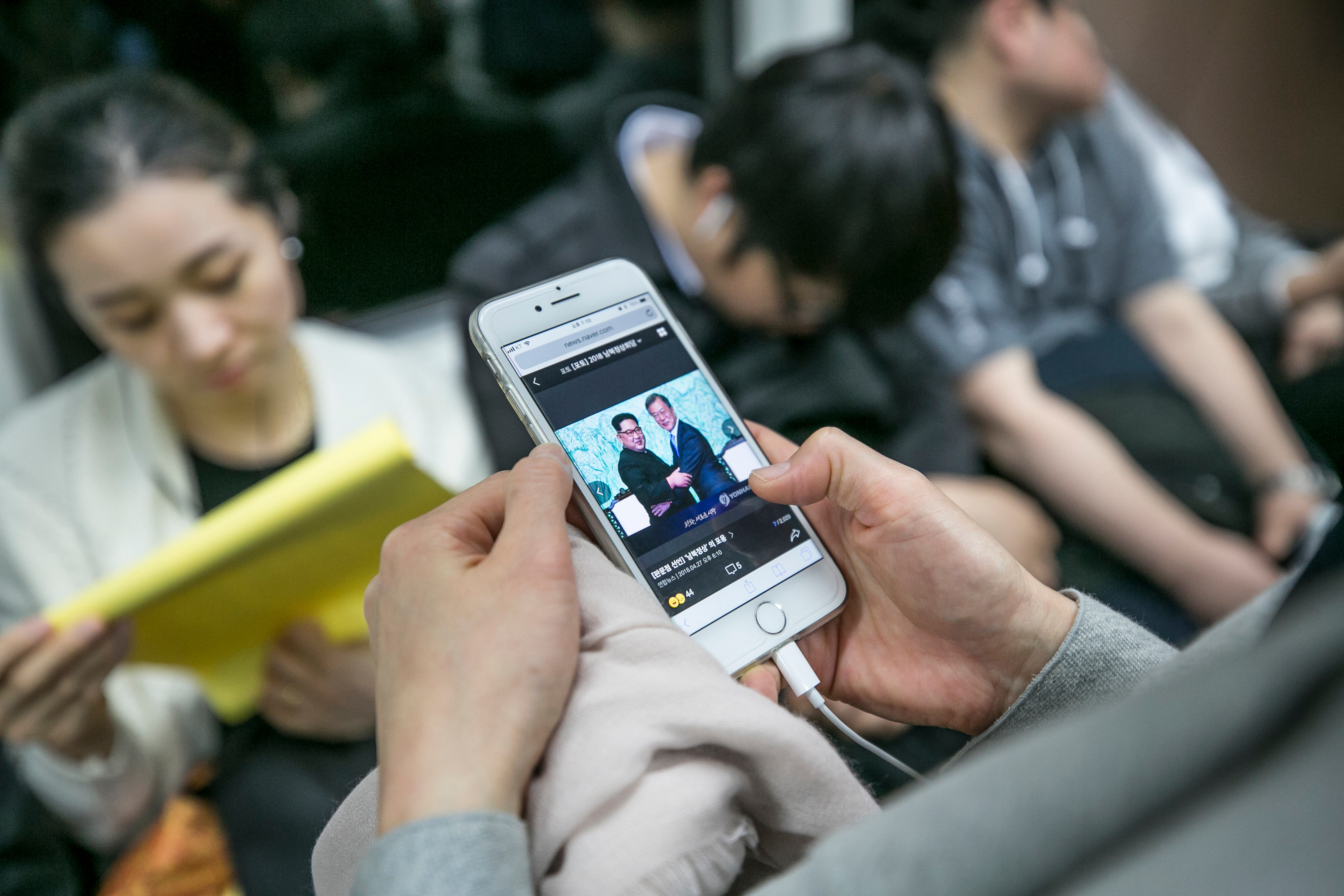
(Bloomberg) -- If Donald Trump and Kim Jong Un are texting each other, it's likely being done using a device made by an American company.
This week, the two leaders met in person, kicking off a significant summit between the nations and marking the first face-to-face encounter between a U.S. president and a leader of North Korea. As they spoke, they probably checked emails, texts and made phone calls on something like an iPhone, according to research from U.S. cybersecurity firm Recorded Future.
“Our analysis reveals the overwhelming presence of American hardware and software on North Korean networks and in daily use by senior North Korean leaders,” the report says. Most North Koreans, by contrast, only have access to a limited number of sites using state-sanctioned tools —though the design of those tools is often distinctly Mac-like.
In particular, Kim Jong Un himself seems to be an avid Apple user. The leader has been photographed several times using devices from the tech giant, here with an iMac and here with a MacBook Pro. That's particularly notable considering the wealth of electronics now coming out of China, North Korea's largest trading partner.
The profusion of American products comes despite strict sanctions. And for some security experts, it has raised alarm bells that U.S.-made technology could be being used in North Korea's cyber-espionage activities. While some electronics are likely smuggled, hundreds of thousands have been exported legally in previous years. Those exports reached a peak in 2014, when the U.S. sold $215,862 worth of computers and electronic products to North Korea, according to Recorded Future, which also said that many of the devices it detected in the country are older models or are running older software.
Now, it looks like Kim may get that software update after all. As of Tuesday afternoon in Singapore, the two leaders said they had decided to "leave the past behind," and signed what they called a "comprehensive document." The agreement, according to Trump, will put North Korea on a path to denuclearization "very quickly." In exchange, the U.S. could loosen its sanctions —maybe even on iPhones.
And here's what you need to know in global technology news
The dispute between Apple and Qualcomm is seriously heating up.
Amazon is revamping its TV studio, and here is a look at the woman behind it.
A bunch of startups are suddenly launching bank accounts for their customers, becoming a little bit more like the banks they're promising to disrupt.
Xiaomi's IPO is a big deal. The Chinese smartphone maker is selling $10 billion worth of its shares, with half of that in the form of Chinese depositary receipts.
To contact the editor responsible for this story: Anne Vandermey at avandermey@bloomberg.net
©2018 Bloomberg L.P.

-
Talking Points This Week: Tech Nerves, FII Buying, And A Faraway Banking Shock

The global markets are not shining this Diwali. The exception in the large markets is, India.
-
Midterm Rally Lasted A Day. The Hard Reality Of A Divided US May Last Two Years | Opinion
Between a contested AI boom, a debt ceiling that arrives in 2027 and a president with every incentive to act alone, the next two years may prove more volatile than the first day's rally suggests.
-
Blue Wave Will Derail the AI Trade but Won't Dismantle the AI Era | Unhedged Position
The Democrats' sweep of the US Congress will see politics collide with economic forces both over the long and short term.
-
It's Time To Take The GST Council's Bet On Trust Global
Payment records can prove India's services exports, and clear, proportionate rules can bring foreign digital sellers into the tax net.
-
Opinion | India at 38: From Innovation Overperformer to Innovation Powerhouse
India now has 453 VC-backed deep science startups, 18 of them late-stage, after 117 percent growth since 2020. Laurus Labs, at USD 9.3 billion, is the most valuable deep science company in any middle-income economy outside China.
-
Navigating Energy Crossroads: S Jaishankar's Call For Diversified Supply Chains At G20 Ministerial Meeting
As geopolitical fault lines continue to test maritime trade routes and commodity flows, Jaishankar's message remains pertinent: true economic resilience requires open markets, protected transit lines, and a genuine commitment to multilateral cooperation rather than coercion.
-
Indians Are Travelling, But Not Every Journey Is A Holiday | The Week In Whys
Pilgrims, patients and working women are the real travellers, and the system hasn't quite caught up with them.
-
Getting To Work Costs Women More | The Reason Why
It is not just about women paying more than men. It is about women paying much more in cities than in villages.
-
AI Bias In Investing Cannot Be Eliminated, But It Can Be Governed
Framing is a particularly important example as identical financial information presented in terms of gains rather than losses can lead an LLM to reach a different assessment.









