England Cricket Star Ben Stokes Says Saudi Money Is Unbeatable
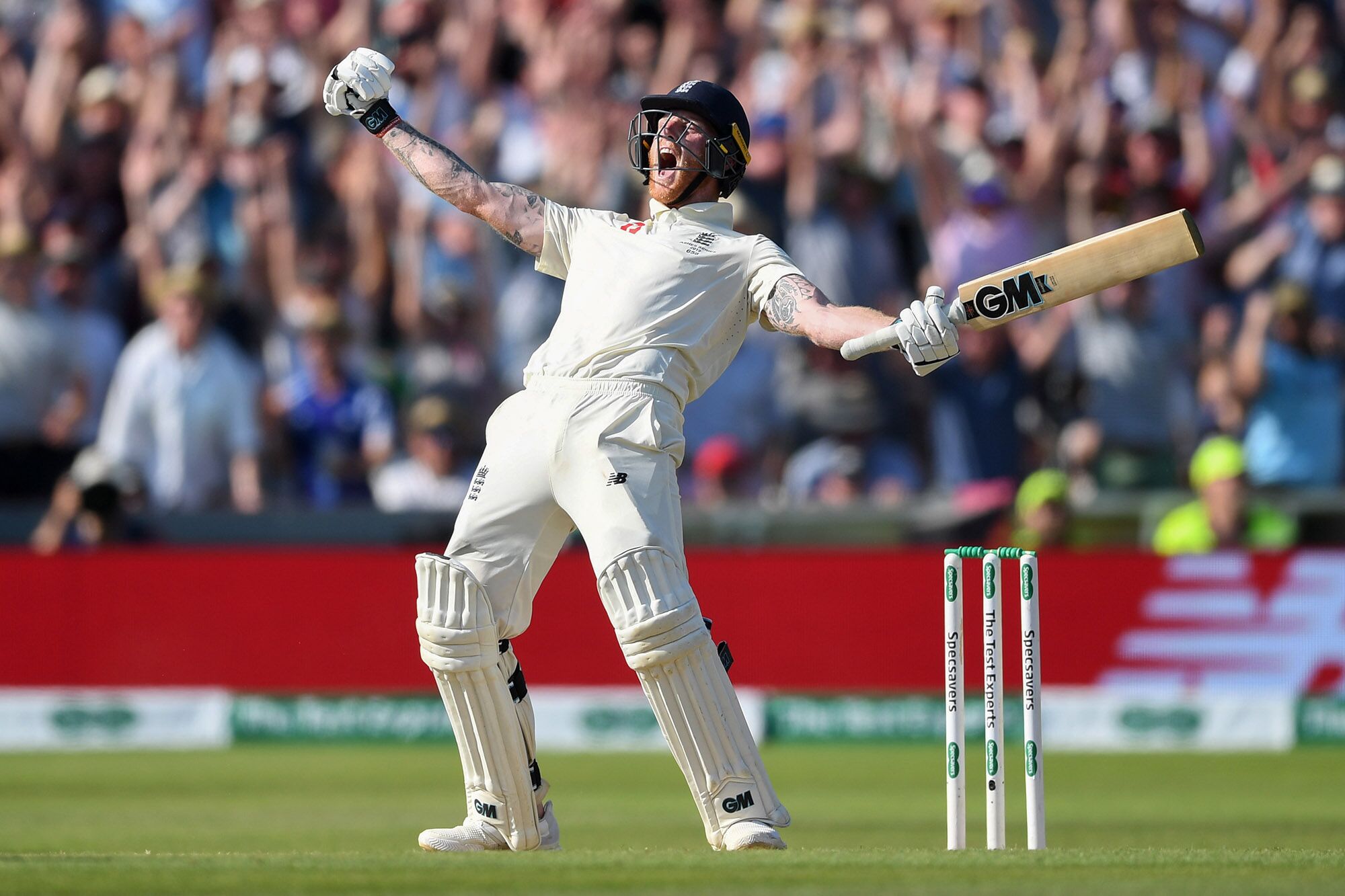
(Bloomberg) -- England cricket captain Ben Stokes said Saudi Arabia's billions will continue to transform sport, and his one could be next if players are lured by massive contracts.
After establishing the controversial LIV Golf tour and splashing out on superstars such as Cristiano Ronaldo and Neymar for its football clubs, the kingdom is setting its sights on cricket. The chairman of the Saudi cricket board, Prince Saud bin Mishal al-Saud, has said he wants to turn the nation into a “global cricketing destination.”
“You can't compete with money, especially the money that Saudi Arabia is throwing around to certain people,” Stokes, among the top players in the world, said in an interview. “People can be at different points in their lives and different points in their careers, where other things matter more to them than other things.”
Cricket is the world's most popular sport after football and is gaining traction in places like the US, where a new league with teams backed by some prominent billionaires just got started, and the United Arab Emirates is also shaking things up with its new competition. The Indian Premier League is currently the most lucrative, though, attracting players including Stokes. But that could change given the financial firepower of Saudi Arabia.Read More: New Rising Stars Are Powering Gulf's $50 Billion Spending Spree
Its Public Investment Fund, the driver of Crown Prince Mohammed bin Salman's transformation of the kingdom's oil-based economy, has pumped money into Formula One motor racing and boxing as well as golf and football. It owns English Premier League club Newcastle United, propelling it to Champions League qualification for the first time in two decades.
It was reported earlier this year by Australian newspapers the Sydney Morning Herald and The Age that Saudi Arabia was considering launching its own lucrative cricket tournament to attract some of the sport's biggest players. Saudi oil giant Aramco last year announced a partnership with cricket's global governing body and will sponsor the World Cup due to start in October.
Stokes said the entire world of sport could be transformed in the coming years. “I think Saudi Arabia over the next five to ten years is going to interesting to see where they take sport,” he said. “Not just for cricket, football, rugby, golf, it will be interesting to see how the world of sport actually changes.”
Read More: PGA Golf Merger Is Saudi Arabia's Biggest Soft Power Win Yet
When it comes to money, Stokes also has his eyes on investment. He was speaking with Bloomberg over Zoom last week after he was unveiled as one of the athletes backing a new £40 million ($51 million) venture capital firm, allowing sports stars to team up and invest in consumer-facing startups.
Stokes said associating himself with fledgling companies would help them thrive. He compared the role with Hollywood actor Ryan Reynolds, who has revived Wrexham football club after buying the Welsh team with fellow actor Rob McElhenney in 2020 and created a whole new fan base in the US through a television series on Disney+.
“They're not, like, an amazing football team, but everyone now knows who they are because of Ryan Reynolds,” said Stokes, a partner in the new Players Fund. “I think people are understanding, ‘actually I can use my profile to actually make something successful because my name's attached to it.' It's not arrogant, it's not cocky, it's just actually the reality of it.”
A global superstar himself, Stokes, 32, played a starring role in England's World Cup win in 2019 and has helped transform England's beleaguered Test cricket team since becoming captain in April last year. England recovered to draw this summer's Ashes series against Australia, the oldest rivalry in Test cricket, the long format of the game.

The Players Fund was organized by former footballer Fergus Bell and his brother Ruari, an ex rugby player. It will invest in consumer-facing startups with a focus on four areas: the future of sport, new-age media, digital communities and smart commerce. Others involved in The Players Fund include Stokes's teammate Jos Buttler, freshly retired England cricketer Stuart Broad, and footballers Chris Smalling, Serge Gnabry and Hector Bellerin.
But having a big-name backer is no guarantee of success, as Raheem Sterling found out this month. The England footballer was unveiled in March as an investor and brand ambassador of Oja, an online food delivery startup, but the company has already collapsed. Soaring interest rates have put unprofitable startups under intense pressure.
There are about 20 athletes in The Players Fund, but only seven named. All are male, although the message from Stokes is to watch this space. “There's no doubt that women's sport has progressed so much over the last five years in particular,” he said. “We all know that everything is better with a woman involved. They can do things that men can't. And we want to bring women on into our business plans.”
Stokes has already become a multi-millionaire from playing in the Indian Premier League, but he wouldn't be drawn on whether he'd be tempted by a Saudi tournament. What he does know is that he will always have some involvement in cricket.
“I know some athletes have just retired and they've never been seen on a sporting field ever again,” said Stokes. “But I don't think that will be the case with me. I think I'll somehow still be attached to cricket, whilst also doing this kind of stuff.”
More stories like this are available on bloomberg.com
©2023 Bloomberg L.P.

-
Navigating Energy Crossroads: S Jaishankar's Call For Diversified Supply Chains At G20 Ministerial Meeting

As geopolitical fault lines continue to test maritime trade routes and commodity flows, Jaishankar's message remains pertinent: true economic resilience requires open markets, protected transit lines, and a genuine commitment to multilateral cooperation rather than coercion.
-
Indians Are Travelling, But Not Every Journey Is A Holiday | The Week In Whys
Pilgrims, patients and working women are the real travellers, and the system hasn't quite caught up with them.
-
Getting To Work Costs Women More | The Reason Why
It is not just about women paying more than men. It is about women paying much more in cities than in villages.
-
AI Bias In Investing Cannot Be Eliminated, But It Can Be Governed
Framing is a particularly important example as identical financial information presented in terms of gains rather than losses can lead an LLM to reach a different assessment.
-
Joining The Dots | Dark Skies, Steady Diya: Why Hope Holds This Diwali
With war, a weak rupee and foreign outflows weighing on sentiment, policymakers at the NDTV World Summit and market veterans at NDTV Profit Ignite: Diwali Edition offered the same advice: stay invested and filter out the noise.
-
The Curious Case of Equitas Small Finance Bank And A CEO Who Quit For Stock
PN Vasudevan believes persistent investor concerns over a perceived conflict of interest had become a governance overhang on Equitas Small Finance Bank's stock, even as the lender improved profitability and asset quality.
-
Talking Points This Week: AI Cash Burn, A Tiger Comeback And An India That Still Finds Its Own Path
India is not immune to higher oil or tighter global liquidity, yet its earnings base is broader, its domestic policy levers are still available.
-
Foreign Investors Own Half Of HDFC Bank and ICICI Bank. An LTCG Cut Could Matter Most Here
Foreign portfolio investors have US$115 billion parked in HDFC Bank, ICICI Bank. If the government cuts long-term capital gains tax, Jefferies says returning foreign money could land here first.
-
'Never Seen This Level Of Negativity': Sandeep Tandon Says The Next Rally May Be Closer Than You Think
Veteran investor Sandeep Tandon says foreign selling is easing, large-caps are due a comeback and mid-caps are crowded, while he turns positive on gold, power and pharma this Diwali.
-
Indians Stay With Family, Not In Hotels | The Reason Why
India still lacks enough clean, reliable and affordable hotels for budget-conscious travellers.










