Olympics 2024: The Alarming Economic Reality Of The Sporting Event
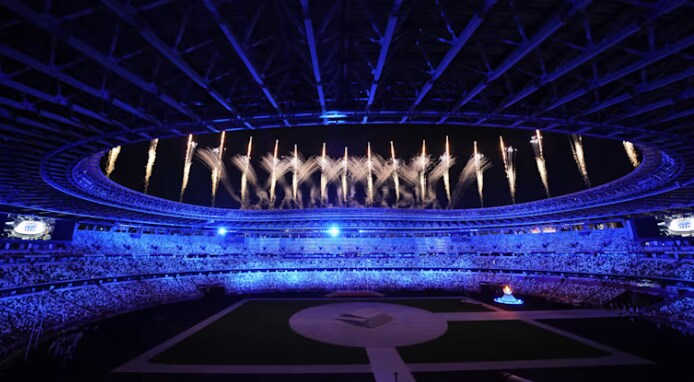
Events cost money and a look at the balancesheet of the biggest sporting event on the planet reveals that they are often loss making exercises. Historically, cities that have hosted the Olympics end up spending more than their estimated budget.
The Olympics have the second highest average cost overrun of any type of megaproject at 159%, according to the study, "Oxford Olympics Study 2024: Are cost and cost overrun at the games coming down?"
In fact, every Olympic host has spent more than the estimated budget since at least 1960. This overspending has led to many cities withdrawing from the Olympics bid for hosting rights.
Painful Cost Overruns
The expenditure has led to excruciating economic pain for some of the host countries in the past.
The paper highlighted that "cost overruns and associated debt from the Athens 2004 Games weakened the Greek economy and contributed to the country's deep financial and economic crises, beginning in 2007 and still playing out almost a decade later".
It also mentioned the startling case of Rio de Janeiro, host of the 2016 games, where the situation deteriorated to such extremes that the city had to declare a state of emergency and pull out funds from its natural disaster reserves.
Potential hosts of the Olympics 2024 withdrew from their bids on similar grounds. In 2015, apart from Paris, Budapest, Hamburg, Los Angeles, and Rome submitted their first-stage bids for hosting the 2024 Olympics. But eventually, all of them backed out amid a lack of economic support and the potential for debt.
This led to only Paris and Los Angeles remaining on the hosting platform and hence, they were unconventionally awarded the 2024 and 2028 editions of the Games without a proper bidding process.
Presently, cost escalation for the 2024, 2028, and 2032 Summer Games is already above the 10-15% level of the contingency amount that host countries set aside for the international sports gala.
Paris Tests Cost Cuts
Paris, the city of love and the destination of the 2024 Olympics, is in fact the first city to fully test cost-cutting reforms as introduced by the International Olympic Committee in 2019.
The city's central argument in its bid for hosting rights was that reusing existing sporting facilities would help it avoid the steep capital investment that inflicted lasting economic pain on cities such as Athens and Rio de Janeiro.
Still, it will end up spending at least $8.87 billion—about 115% above the initial estimate.
Tokyo's budget for the 2020 Olympics, which were postponed during the Covid-19 pandemic to 2021, increased nearly fourfold, and London's 2012 Olympic spending more than tripled its bid.
In fact, even the budgets of future games like Los Angeles 2028 have escalated from $5.3 billion to $6.8 billion.
The Most Expensive Summer And Winter Games
The most expensive Summer Games to date are Rio 2016 at $23.6 billion, followed by London 2012 at $16.8 billion and Tokyo 2020 at $13.7 billion.
On the other hand for the Winter Games, Sochi 2014 was the most expensive at $28.9 billion, followed by Beijing 2022 at $8.7 billion and Torino 2006 at $4.7 billion.
"For the Summer Games, the largest cost overrun was found for Montreal 1976 at 720% in real terms, followed by Rio 2016 at 352%," the study said. "Whereas the largest cost overruns are Lake Placid 1980 at 324% in real terms, followed by Sochi 2014 at 289%."
What's The Fix?
The paper suggested some key solutions to prevent this gigantic cost overrun:
Better Planning Or 'Decision Hygiene': This advocates the use of historical data on costs and cost overruns. To do this, the International Olympics Committee should transparently capture data on the cost of the Games.
Considering Inflationary Pressures: The Olympic Games are planned about seven years in advance. Therefore, inflation should also be a mandated component of future Games budgets, or the budgets will continue to be misleading.
Realistic Vision: Planners need to be more realistic about the uncertainties that projects as large as the Olympics face.

-
High US Salaries, No Green Card Certainty: The Financial Calculation Facing Indian H-1B Families

The suspension of PERM processing at eight technology employers does not cancel existing H-1B visas. What it does is force a question many Indian families have been avoiding: is the US salary worth tying your career and family plans to one employer?
-
Swiggy vs Eternal: Food Delivery's Two Rivals Are No Longer In The Same Race
Eternal is building a private AI assistant, dark.ai. Swiggy is still working out how to make Instamart pay, with an operating loss of Rs 895 crore in the July-September quarter while Blinkit stayed profitable.
-
Where You Live Shapes How You Get To Work | The Reason Why
Two-wheelers are the most popular way to get to work in India, accounting for nearly 43% of workplace commutes.
-
Unhedged Position: Can India See An Indonesia-Style Time Correction?
The Nifty is trading below levels it first clocked in 2024. Is there, then, as I have suggested in the headline, potential that the current time correction drags on painfully for the next three-five, even ten years?
-
Navigating Friction And Energy Realities: An Analysis Of Marco Rubio's October Visit To India
Occurring at a critical juncture marked by stalled trade negotiations and escalating geopolitical pressures over global energy supplies, the visit offers a profound window into modern US-India relations.
-
India Exports Capital. Why Not Export Trusteeship?
The big question, then, is whether India can build an institution that global borrowers, investors, banks, and lawyers can trust, even without an Indian connection.
-
France's Economy & Politics Are In Crisis | The Reason Why
Let's look at how the French economy and politics evolved under Nicolas Sarkozy, Franois Hollande and Emmanuel Macron.
-
You May Inherit The Business. You Must Earn Its Credibility.
Succession tests the founder's ability to share authority as much as it tests the next generation's readiness to assume it.
-
Signing Deals Is One Thing; Making Them Work Is Another | The Week In Whys
Sometimes, things don't turn out as planned. Indian companies have lost some bids to rivals, some projects won't produce until 2030.
-
FOMC Wall, PERM Suspension, Hospital Stocks | Talking Points This Week
A PERM suspension would directly affect green-card sponsorship rather than H-1B visas, so the near-term earnings impact could remain relatively limited. The key question is whether this marks a new phase in US scrutiny of Indian IT.









