Trump Wants $1 Billion For Private-Sector-Led Mars Exploration
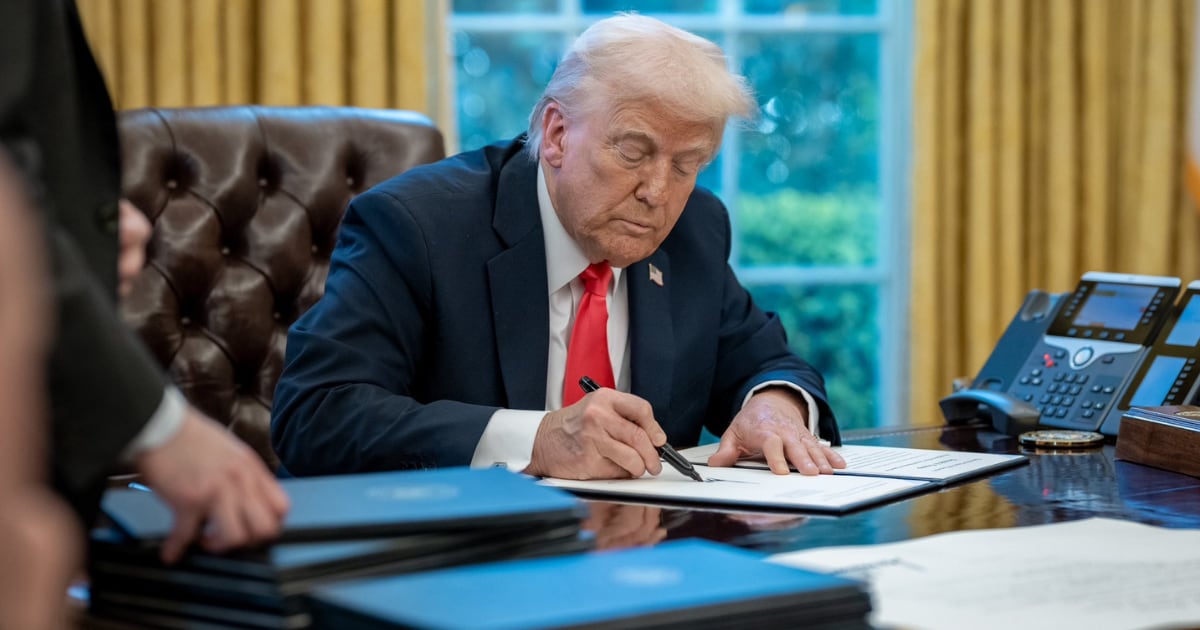
US President Donald Trump wants to tap the private sector to pave the way for human missions to Mars in a proposal that closely aligns with the goals of Elon Musk.
The White House's 2026 budget proposal, released late on Friday, calls for allocating more than $1 billion for Mars exploration, including a new NASA initiative called the Commercial Mars Payload Services Program (CMPS). Under the proposal, NASA would award contracts to companies developing spacesuits, communications systems and a human-rated landing vehicle to foster exploration of the Red Planet.
Trump's proposed $18.8 billion NASA budget would cut the agency's funding by about 25% from the year before, with big hits to its science portfolio. The fleshed-out request on Friday builds upon a condensed budget proposal released earlier this month.
“We must continue to be responsible stewards of taxpayer dollars,” NASA Acting Administrator Janet Petro wrote in a letter included in the request. “That means making strategic decisions — including scaling back or discontinuing ineffective efforts.”
The new Mars scheme is modeled after NASA's Commercial Lunar Payload Services program that has benefitted Intuitive Machines LLC, Firefly Aerospace Inc. and Astrobotic Technology Inc., though it has achieved mixed results.
According to the budget, the contract to land on Mars would build upon existing lander contracts. Musk's SpaceX is already developing a version of its Starship rocket to take Americans back to the moon's surface under the agency's Artemis program. Musk laid out a grandiose vision for a sprawling settlement on Mars during a talk earlier this week with SpaceX employees.
Subscribe Now: The Business of Space newsletter covers NASA, key industry events and trends.
Trump's pick to run NASA, tech billionaire Jared Isaacman, told lawmakers the agency could pursue the moon and Mars in parallel.
The administration's proposed cuts, particularly changes to NASA's science portfolio, have generated criticism from people in the space industry and lawmakers, including from former Republican Congressmen like Newt Gingrich and Bob Walker. Isaacman himself said the science cuts wouldn't be an “optimal outcome.”
The administration earlier revealed plans to phase out the Boeing Co.-built Space Launch System rocket and the Lockheed Martin Corp. Orion crew capsule, parts of which have been in development for years, after three flights.
Instead, the budget details a strategy for new, private sector-led trips back to the moon, which the White House said would minimize costs and reduce schedule risks. It would be modeled on a NASA program that helped to fuel development of SpaceX's Falcon 9 rocket and Northrop Grumman Corp.'s cargo-hauling Cygnus.
The budget proposal is likely to run into resistance from veteran members of Congress, like Texas Republicans Senator Ted Cruz and Representative Brian Babin, who have fiercely defended the current plans for going back to the moon.

-
Opinion | India at 38: From Innovation Overperformer to Innovation Powerhouse

India now has 453 VC-backed deep science startups, 18 of them late-stage, after 117 percent growth since 2020. Laurus Labs, at USD 9.3 billion, is the most valuable deep science company in any middle-income economy outside China.
-
Navigating Energy Crossroads: S Jaishankar's Call For Diversified Supply Chains At G20 Ministerial Meeting
As geopolitical fault lines continue to test maritime trade routes and commodity flows, Jaishankar's message remains pertinent: true economic resilience requires open markets, protected transit lines, and a genuine commitment to multilateral cooperation rather than coercion.
-
Indians Are Travelling, But Not Every Journey Is A Holiday | The Week In Whys
Pilgrims, patients and working women are the real travellers, and the system hasn't quite caught up with them.
-
Getting To Work Costs Women More | The Reason Why
It is not just about women paying more than men. It is about women paying much more in cities than in villages.
-
AI Bias In Investing Cannot Be Eliminated, But It Can Be Governed
Framing is a particularly important example as identical financial information presented in terms of gains rather than losses can lead an LLM to reach a different assessment.
-
Joining The Dots | Dark Skies, Steady Diya: Why Hope Holds This Diwali
With war, a weak rupee and foreign outflows weighing on sentiment, policymakers at the NDTV World Summit and market veterans at NDTV Profit Ignite: Diwali Edition offered the same advice: stay invested and filter out the noise.
-
The Curious Case of Equitas Small Finance Bank And A CEO Who Quit For Stock
PN Vasudevan believes persistent investor concerns over a perceived conflict of interest had become a governance overhang on Equitas Small Finance Bank's stock, even as the lender improved profitability and asset quality.
-
Talking Points This Week: AI Cash Burn, A Tiger Comeback And An India That Still Finds Its Own Path
India is not immune to higher oil or tighter global liquidity, yet its earnings base is broader, its domestic policy levers are still available.
-
Foreign Investors Own Half Of HDFC Bank and ICICI Bank. An LTCG Cut Could Matter Most Here
Foreign portfolio investors have US$115 billion parked in HDFC Bank, ICICI Bank. If the government cuts long-term capital gains tax, Jefferies says returning foreign money could land here first.










