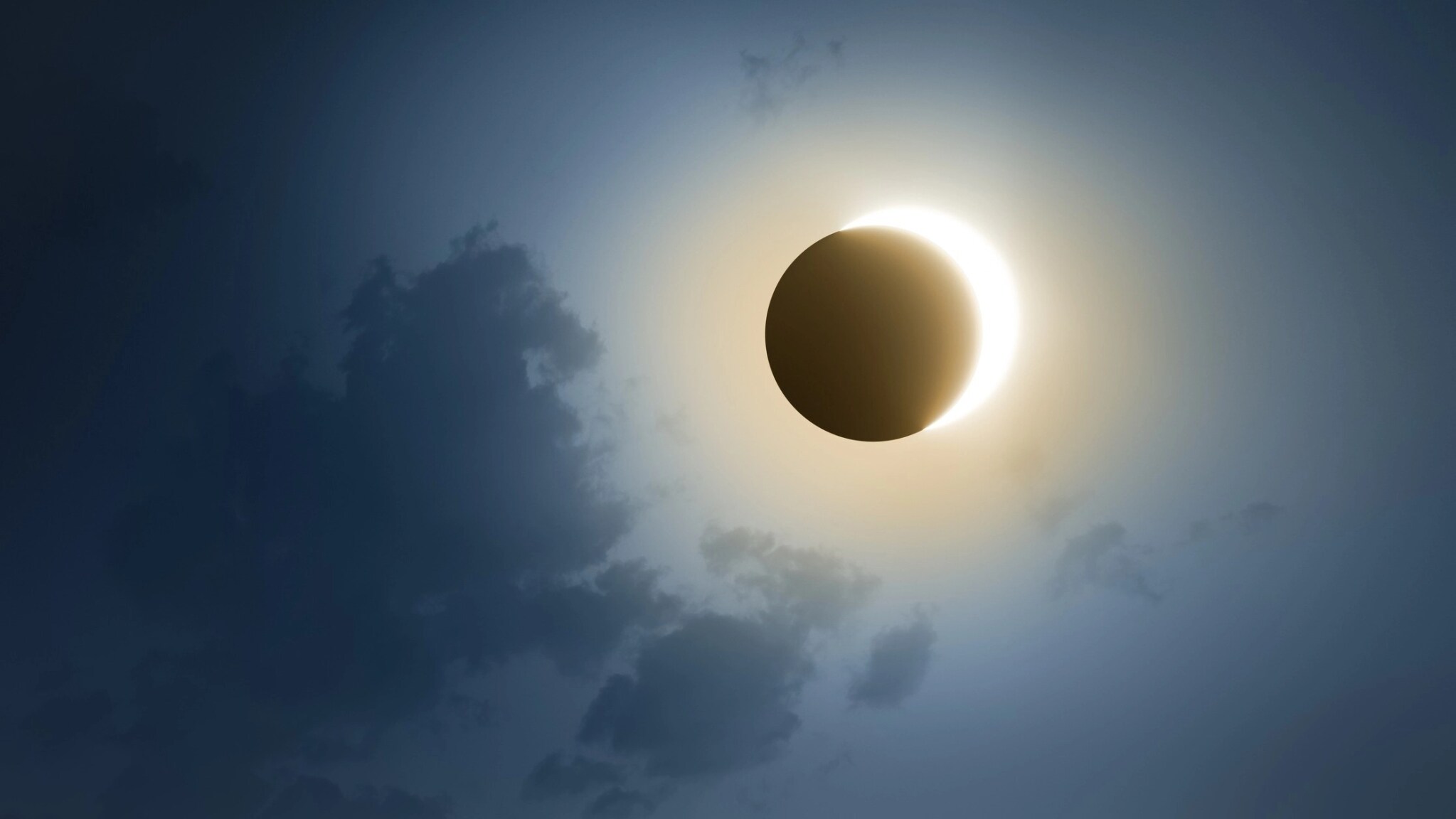
The first solar eclipse of 2025 is set to occur on March 29, offering a spectacular celestial display. This event will be a partial solar eclipse, where the Moon will obscure a portion of the Sun, creating a distinctive "bite" effect in the sky.
Where Will the Eclipse Be Visible?
The eclipse will be visible from regions across North America, Europe, Africa, and parts of Asia. In the United States, people in the northeastern states will be able to witness the event during sunrise. The eclipse will not be visible from India because the Moon's shadow won't cover any part of the country.
Timings Of The Eclipse (IST)
Start Time: 2:20 pm
Maximum Eclipse: 4:17 pm
End Time: 6:13 pm
Total Duration: Around 4 hours
How To Watch The Eclipse Safely?
Observing a solar eclipse without proper eye protection can cause severe damage to the eyes. To safely experience the event, experts recommend using ISO-certified eclipse glasses or solar viewers. If these are unavailable, a pinhole projector can be used to view the eclipse indirectly. Standard sunglasses, no matter how dark, are not safe for direct viewing.
Understanding The March 29 Eclipse
A solar eclipse takes place when the Moon moves between the Earth and the Sun, partially or completely blocking the Sun's light in certain regions. The extent of the eclipse depends on the alignment of these celestial bodies. Since this is a partial eclipse, the Sun will not be entirely covered, but a significant portion will be obscured, creating a striking visual phenomenon.
When Is The Next Solar Eclipse?
If you miss this one, the next solar eclipse will take place on 21 September 2025, visible from Australia, Antarctica, and parts of the Pacific and Atlantic Oceans. Over the next few years, both annular and total solar eclipses are expected worldwide.
Here are some of the upcoming eclipses:
Feb. 17: 2026: Annular Solar Eclipse
Aug. 2, 2026: Total Solar Eclipse
Feb. 6, 2027: Annular Solar Eclipse
Aug.2, 2027: Total Solar Eclipse
For those unable to witness the Mar. 29 eclipse in person, live streams will be available on platforms like NASA and various astronomy websites, ensuring that skywatchers worldwide can enjoy the event safely.
Essential Business Intelligence, Continuous LIVE TV, Sharp Market Insights, Practical Personal Finance Advice and Latest Stories — On NDTV Profit.