India Allows Some Shops Selling Non-Essential Goods To Open From Saturday
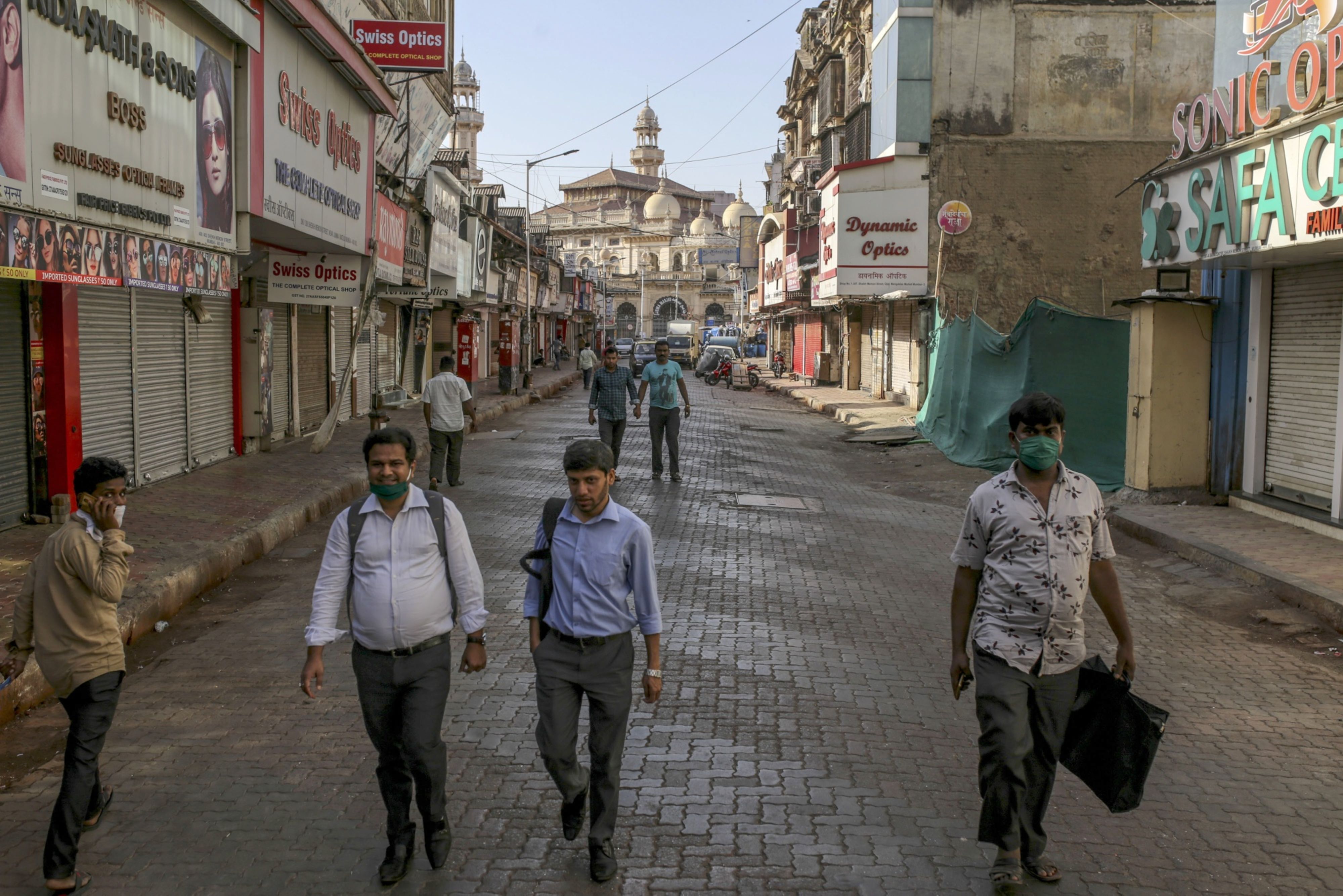
India has allowed shops providing non-essential goods and services to open from Saturday.
Amending its April 15 order in a notification, the Union Home Ministry said “all shops, including neighbourhood shops and standalone shops, shops in residential complexes, within the limits of municipal corporations and municipalities, registered under the Shops and Establishment Act of the respective State and UTs (union territories)” will be allowed to open during the lockdown.
However, the relief has not been extended to shops in market places, multi-brand, and single-brand malls located in municipality areas, coronavirus hotspots and containment areas.
Sale of liquor and other items specified in the National Directives for Covid-19 management continues to be prohibited.
The government also clarified that e-commerce companies will only be permitted to sell essential goods. Restaurants, salons and barber shops will continue to remain closed as they render services. Only shops which sell items will be allowed to open.
The opening of shops selling non-essential goods and services from Saturday will be subjected to the conditions that they will run with 50 percent strength of workers, wearing of masks and following social distancing.
The Retailers Association of India said in a statement that while it supports the government's efforts to open up the retail sector, it feels that the circular is open to interpretation.
The retail body has asked for clarification on terms like “market complexes” and has agreed to work with the government to make the process of opening retail easier.
“We would recommend that the government open up all channels of retail on a date that it feels safe with the social distancing norms clearly defined. Local authorities can ensure strict implementation and action” RAI said in a statement.
It also asked for permission to open malls in the country as they are professionally run and would be able to control the environment for safety and social distancing.
The Flipkart Group, in an email statement, has urged the government to consider gradual opening of delivery of non-essential goods through e-commerce platforms.

-
Talking Points This Week: Tech Nerves, FII Buying, And A Faraway Banking Shock

The global markets are not shining this Diwali. The exception in the large markets is, India.
-
Midterm Rally Lasted A Day. The Hard Reality Of A Divided US May Last Two Years | Opinion
Between a contested AI boom, a debt ceiling that arrives in 2027 and a president with every incentive to act alone, the next two years may prove more volatile than the first day's rally suggests.
-
Blue Wave Will Derail the AI Trade but Won't Dismantle the AI Era | Unhedged Position
The Democrats' sweep of the US Congress will see politics collide with economic forces both over the long and short term.
-
It's Time To Take The GST Council's Bet On Trust Global
Payment records can prove India's services exports, and clear, proportionate rules can bring foreign digital sellers into the tax net.
-
Opinion | India at 38: From Innovation Overperformer to Innovation Powerhouse
India now has 453 VC-backed deep science startups, 18 of them late-stage, after 117 percent growth since 2020. Laurus Labs, at USD 9.3 billion, is the most valuable deep science company in any middle-income economy outside China.
-
Navigating Energy Crossroads: S Jaishankar's Call For Diversified Supply Chains At G20 Ministerial Meeting
As geopolitical fault lines continue to test maritime trade routes and commodity flows, Jaishankar's message remains pertinent: true economic resilience requires open markets, protected transit lines, and a genuine commitment to multilateral cooperation rather than coercion.
-
Indians Are Travelling, But Not Every Journey Is A Holiday | The Week In Whys
Pilgrims, patients and working women are the real travellers, and the system hasn't quite caught up with them.
-
Getting To Work Costs Women More | The Reason Why
It is not just about women paying more than men. It is about women paying much more in cities than in villages.
-
AI Bias In Investing Cannot Be Eliminated, But It Can Be Governed
Framing is a particularly important example as identical financial information presented in terms of gains rather than losses can lead an LLM to reach a different assessment.









