Big Ticket Infra To Drive Small Home Sales? Real Estate Experts Bullish On Mumbai And Suburbs
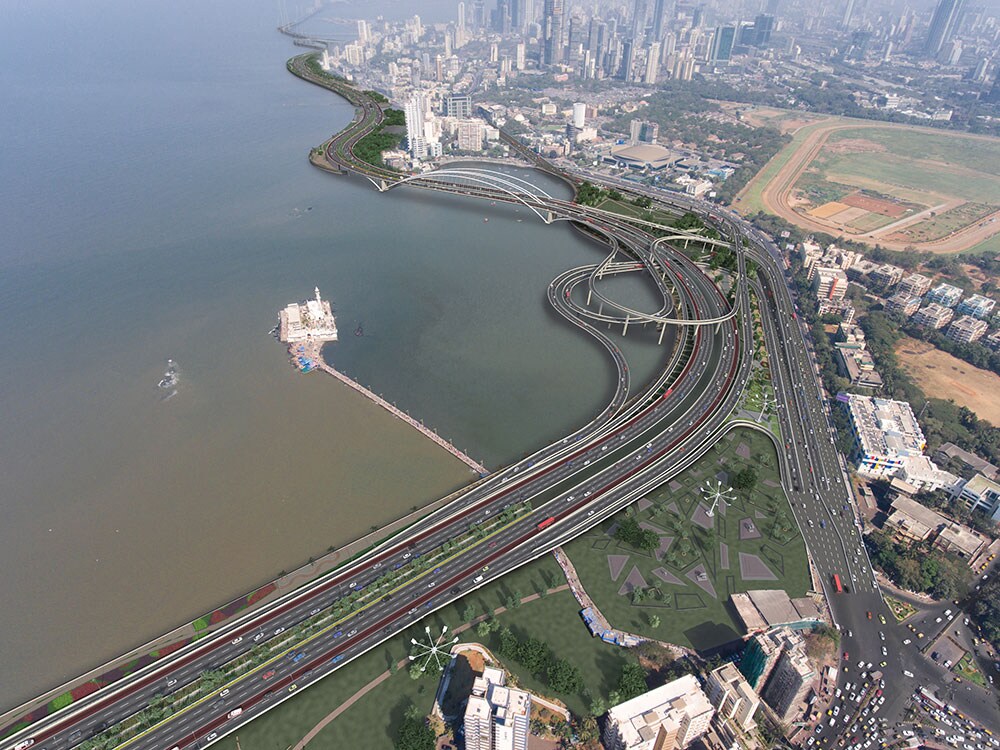
India's largest sea bridge Atal Setu, the Mumbai Coastal Road Project, the Mumbai Metro Line 3, and the soon-to-open Navi Mumbai International Airport and the Samruddhi Mahamarg — these are some of the large infrastructure projects transforming how Mumbai residents live and commute. The impact of these projects will soon be felt on housing, with affordable housing particularly likely to benefit, according to consultants and experts.
“The transformative impact of large-scale infrastructure projects on Mumbai's real estate landscape is both visible and measurable," said Prashant Sharma, president at National Real Estate Development Council, Maharashtra.
Projects like the Mumbai Coastal Road, the Mumbai Trans Harbour Link, and the Metro corridors are significantly reshaping the city's connectivity and urban planning narrative, he said. These developments are not only easing travel but are also unlocking new micro-markets, making previously underutilised or inaccessible locations viable for residential development, he added.
Major infrastructure projects typically tend to catalyse demand for both mid-market and affordable housing in areas that gain from improved connectivity, explained Anuj Puri, chairman at real estate consulting services company Anarock.
"We can expect such an uptick to become more visible once key phases of these projects come closer to completion and are finally completed," Puri said, adding that's when homebuyers will be able to reap tangible benefits. "In the short term, we can expect increasing interest, with growth broadening and becoming more sustained as these infrastructure projects begin to roll out and have their intended effect", Puri said.
Ulwe, Chirle, Karanjade and Panvel are expected to see some benefit from improving infrastructure and connectivity, according to Abhinav Joshi, head of research and associate executive director- India at CBRE.
CBD Belapur, Seawoods, Kharghar and Taloja are more established locations that are likely to see some magnitude of growth.
Affordable Housing To Benefit Most
When it comes to the affordable and mid-income housing segments, these infrastructure upgrades serve as critical catalysts, Sharma said. Improved connectivity reduces the travel-time penalty traditionally associated with peripheral locations, thereby enhancing their attractiveness for first-time homebuyers and middle-class families. As a result, areas such as Dahisar, Mira Road, Chembur, Wadala, and parts of Navi Mumbai are already witnessing renewed interest from developers and homebuyers alike, he said.
Affordable housing has seen a lull even as premium housing continues to outperform in the city. The RBI's rate cuts too are expected to help give the segment a leg up, Joshi said. The RBI Monetary Policy Committee has cut the benchmark lending rate by 50 basis points so far to 6%, with economists expecting another 50 basis points in further cuts on a cumulative basis. For someone paying an EMI of Rs 25,000 per month, the cost of the EMI rose by almost Rs 7,000-8,000 when the MPC had hiked lending rates from 4% to 6.5% in 2022 and early 2023, Joshi said.
Still, the pace of affordable housing growth also depends on policy support. The sector will require continued incentives—such as interest subsidies under schemes like PMAY, rationalised GST, single-window clearances, and reduction in input costs to truly flourish, he said.

-
High US Salaries, No Green Card Certainty: The Financial Calculation Facing Indian H-1B Families

The suspension of PERM processing at eight technology employers does not cancel existing H-1B visas. What it does is force a question many Indian families have been avoiding: is the US salary worth tying your career and family plans to one employer?
-
Swiggy vs Eternal: Food Delivery's Two Rivals Are No Longer In The Same Race
Eternal is building a private AI assistant, dark.ai. Swiggy is still working out how to make Instamart pay, with an operating loss of Rs 895 crore in the July-September quarter while Blinkit stayed profitable.
-
Where You Live Shapes How You Get To Work | The Reason Why
Two-wheelers are the most popular way to get to work in India, accounting for nearly 43% of workplace commutes.
-
Unhedged Position: Can India See An Indonesia-Style Time Correction?
The Nifty is trading below levels it first clocked in 2024. Is there, then, as I have suggested in the headline, potential that the current time correction drags on painfully for the next three-five, even ten years?
-
Navigating Friction And Energy Realities: An Analysis Of Marco Rubio's October Visit To India
Occurring at a critical juncture marked by stalled trade negotiations and escalating geopolitical pressures over global energy supplies, the visit offers a profound window into modern US-India relations.
-
India Exports Capital. Why Not Export Trusteeship?
The big question, then, is whether India can build an institution that global borrowers, investors, banks, and lawyers can trust, even without an Indian connection.
-
France's Economy & Politics Are In Crisis | The Reason Why
Let's look at how the French economy and politics evolved under Nicolas Sarkozy, Franois Hollande and Emmanuel Macron.
-
You May Inherit The Business. You Must Earn Its Credibility.
Succession tests the founder's ability to share authority as much as it tests the next generation's readiness to assume it.
-
Signing Deals Is One Thing; Making Them Work Is Another | The Week In Whys
Sometimes, things don't turn out as planned. Indian companies have lost some bids to rivals, some projects won't produce until 2030.
-
FOMC Wall, PERM Suspension, Hospital Stocks | Talking Points This Week
A PERM suspension would directly affect green-card sponsorship rather than H-1B visas, so the near-term earnings impact could remain relatively limited. The key question is whether this marks a new phase in US scrutiny of Indian IT.









