RBI Monetary Policy Preview: Another 'Hawkish' Pause Likely In October
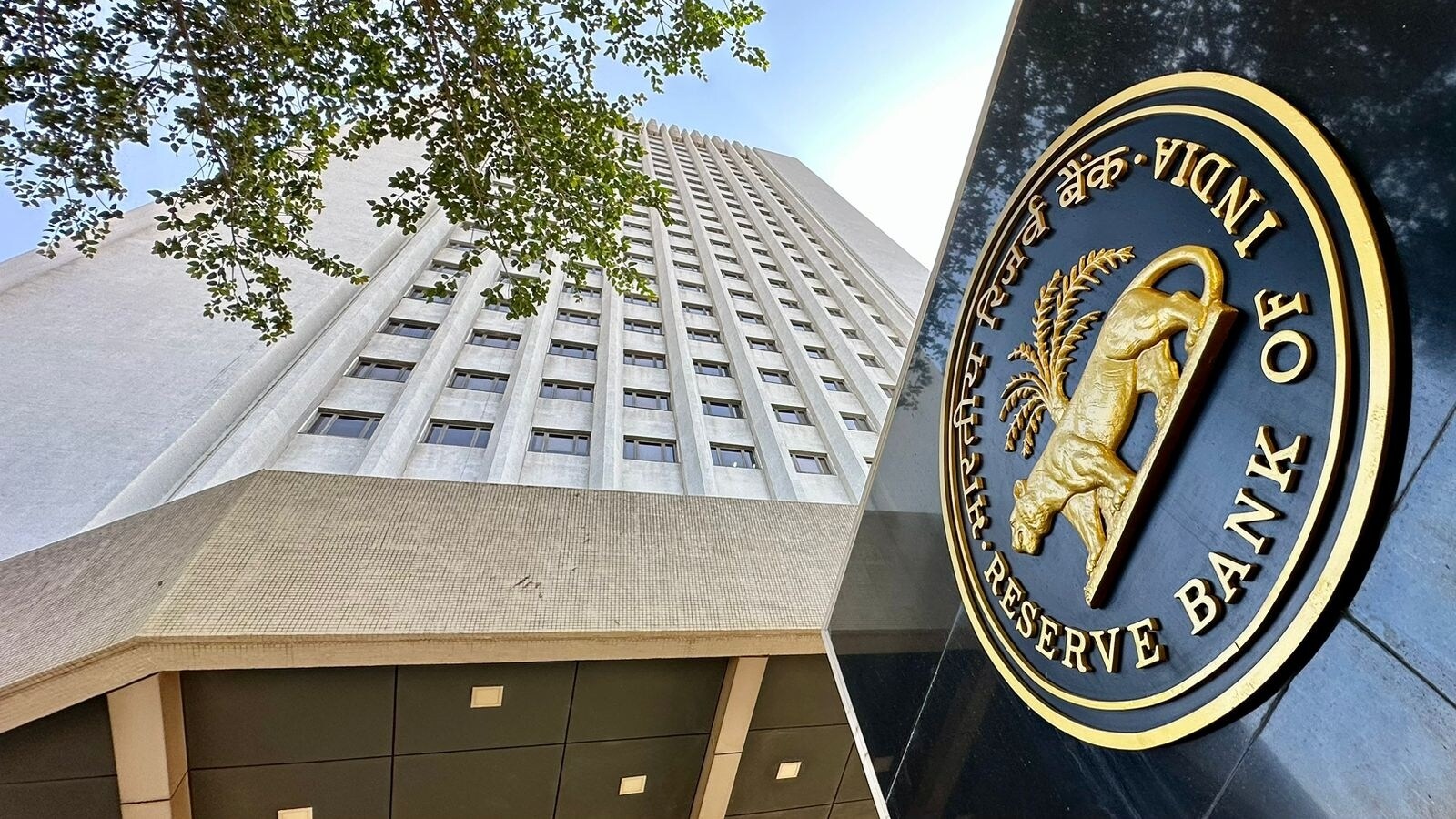
India's Monetary Policy Committee is likely to maintain the status quo on the RBI's key lending rate amid easing inflation and resilient economic activity even as headwinds from higher oil prices and erratic monsoons intensify.
All economists polled by Bloomberg expect the MPC to hold the rates on the Reserve Bank of India's repo rate on Friday. The benchmark policy repo rate currently stands at 6.50%.
"The RBI will have little reason to change the current policy settings, and we expect the MPC to keep the repo rate unchanged at 6.5% at the Oct. 6 meeting, flagging waning core inflation, steady economic activity, and some risks of more supply-related price shocks, providing little cue for a change in policy thinking," said Rahul Bajoria, chief economist at Barclays.
The rate hike cycle is likely to have peaked out in India even as the MPC has retained the option of hiking further, if the situation so warranted, Kaushik Das, chief India economist at Deutsche Bank, said. The focus has turned more to the evolving liquidity situation in the money markets and the strategy that the RBI is likely to adopt in dealing with both frictional and durable liquidity management, Das said.
CPI Inflation
Retail inflation eased but remained elevated at 6.83% in August. However, it is expected to decline in September, led by a steep correction in vegetable prices—particularly tomatoes.
Inflation in the July–September quarter is likely to be a little higher than the 6.2% the RBI currently projects, and an upward revision could be offset by a downward revision in the October–December quarter, said Bajoria from Barclays. "Still, the risk of higher oil prices and potentially sticky food prices may pose modest upward risks to the bank's annual inflation projections, but we do not believe the RBI is likely to materially revise inflation forecasts if it chooses to do so."
The RBI is likely to revise its FY24 CPI inflation forecast to 5.5–5.7%, up from 5.4% currently, according to Das from Deutsche Bank. This would incorporate some buffer for potential food price shocks in the months ahead, but if those shocks do not materialise, then FY24 CPI inflation will likely average around 5.3-5.4%, in line with the central bank's current forecast.
The impact of erratic south-west monsoons remains to be seen and could ultimately have some impact on inflation.
Rainfall across the entire country during the monsoon season (June to September) in 2023 was 94% of its long-period average, according to the IMD's southwest monsoon end-of-season report.
The overall sowing area is 0.2% higher than a year ago, covering a total of 1,107 lakh hectares as of Sept. 29, according to data published by the Department of Agriculture and Farmers Welfare.
However, for pulses, it's 4.2% below last year.
Even in terms of reservoir levels, the overall storage is seen to be lower than last year's and is also seen to be lower than the average storage of the last 10 years, and this might pose a risk to Rabi sowing.
Banking Liquidity
Liquidity in the banking system has been in deficit mode for the past fortnight, despite the phased unwinding of the Incremental-Cash Reserve Ratio, with the final release due late this week.
"The drawdown in the cash reserve ratio was being offset by advance tax and GST outflows, higher currency demand, delays in spending and intervention efforts, and keeping cash conditions tight," said Radhika Rao, economist at DBS Bank.
The current liquidity tightness is temporary or 'frictional' in nature and should reverse once the Incremental-Cash Reserve Ratio ends on Oct. 7 and the government starts spending in the first week of October, said Das from Deutsche Bank. In such a scenario, the 'durable liquidity' surplus will once again rise to about Rs 3-3.5 trillion, and the Mumbai interbank offered rate may trade lower than the repo rate.
Durable liquidity surplus will start to reduce organically in the Oct-Dec. 2023 quarter due to festival demand and bunched-up state elections, which will lead to a larger leakage in currency in circulation, at about Rs 1.3 trillion, according to Das.
While the organic depletion of surplus durable liquidity towards a neutral level through larger CIC leakage will happen gradually, a better option for the central bank might be to conduct longer-term VRRR at market-determined rates, Das said.
Brent Crude
International crude oil prices, since the last policy, have averaged about $89 per barrel, which is higher than the $85 per barrel factored into RBI estimates. It spiked to over $97 per barrel towards the end of September before easing to $90 per barrel early this month.
Factors responsible for this trend include tightened supplies with U.S. crude stockpiles and extended voluntary production cuts by OPEC Plus members ahead of the winter months, prospects of a soft landing of the U.S. economy, and pauses in rate hikes by major central banks, which in turn may aide demand, according to a research note by the Bank of Baroda.
The rise in oil prices is unlikely to dent India's macroeconomic fundamentals, despite posing risks to the outlook. While the impact on inflation remains contingent on oil marketing companies passing the cost to retailers, the impact on external sector vulnerability is expected to remain modest so far.
Business As Usual
"With growth doing well but slowing and inflation elevated but cooling, we currently estimate the window for rate cuts only opens up in H2 2024, when inflation will likely be consistently below 5% and the desire for a more balanced policy approach may increase," said Bajoria of Barclays.

-
Unhedged Position: Can India See An Indonesia-Style Time Correction?

The Nifty is trading below levels it first clocked in 2024. Is there, then, as I have suggested in the headline, potential that the current time correction drags on painfully for the next three-five, even ten years?
-
Navigating Friction And Energy Realities: An Analysis Of Marco Rubio's October Visit To India
Occurring at a critical juncture marked by stalled trade negotiations and escalating geopolitical pressures over global energy supplies, the visit offers a profound window into modern US-India relations.
-
India Exports Capital. Why Not Export Trusteeship?
The big question, then, is whether India can build an institution that global borrowers, investors, banks, and lawyers can trust, even without an Indian connection.
-
France's Economy & Politics Are In Crisis | The Reason Why
Let's look at how the French economy and politics evolved under Nicolas Sarkozy, Franois Hollande and Emmanuel Macron.
-
You May Inherit The Business. You Must Earn Its Credibility.
Succession tests the founder's ability to share authority as much as it tests the next generation's readiness to assume it.
-
Signing Deals Is One Thing; Making Them Work Is Another | The Week In Whys
Sometimes, things don't turn out as planned. Indian companies have lost some bids to rivals, some projects won't produce until 2030.
-
FOMC Wall, PERM Suspension, Hospital Stocks | Talking Points This Week
A PERM suspension would directly affect green-card sponsorship rather than H-1B visas, so the near-term earnings impact could remain relatively limited. The key question is whether this marks a new phase in US scrutiny of Indian IT.
-
Everything, Everywhere, All At Once: Dalal Street's Week To Forget | Joining The Dots
Visa curbs, a Starlink spat and cancer drug caps: what connects this week's shocks for Indian markets
-
India Is Going Abroad For Critical Minerals. But It May Take Years To Pay Off | The Reason Why
Although India's steps are in the right direction, they remain modest compared with India's growing dependence.
-
When Everyone Has AI, What Gives You An Edge?
India's young workforce is entering an uncertain world of work where powerful AI tools are becoming widely accessible. The advantage will belong to those who combine deep expertise with digital fluency, and the distinctly human capabilities that technology cannot manufacture.









