In Charts: The Economy Under Urjit Patel’s Governorship

Urjit Patel quit as the governor of the Reserve Bank of India about nine months before his three-year term ended. Patel's term spanned a period when inflation was relatively stable, but growth gyrated to decisions such as demonetisation and the implementation of goods and services tax.
Financial markets, over the last two years, responded to a host of factors domestically and globally. Bond yields and the currency markets have both seen bouts of volatility. Here's how the economy fared during Patel's term:
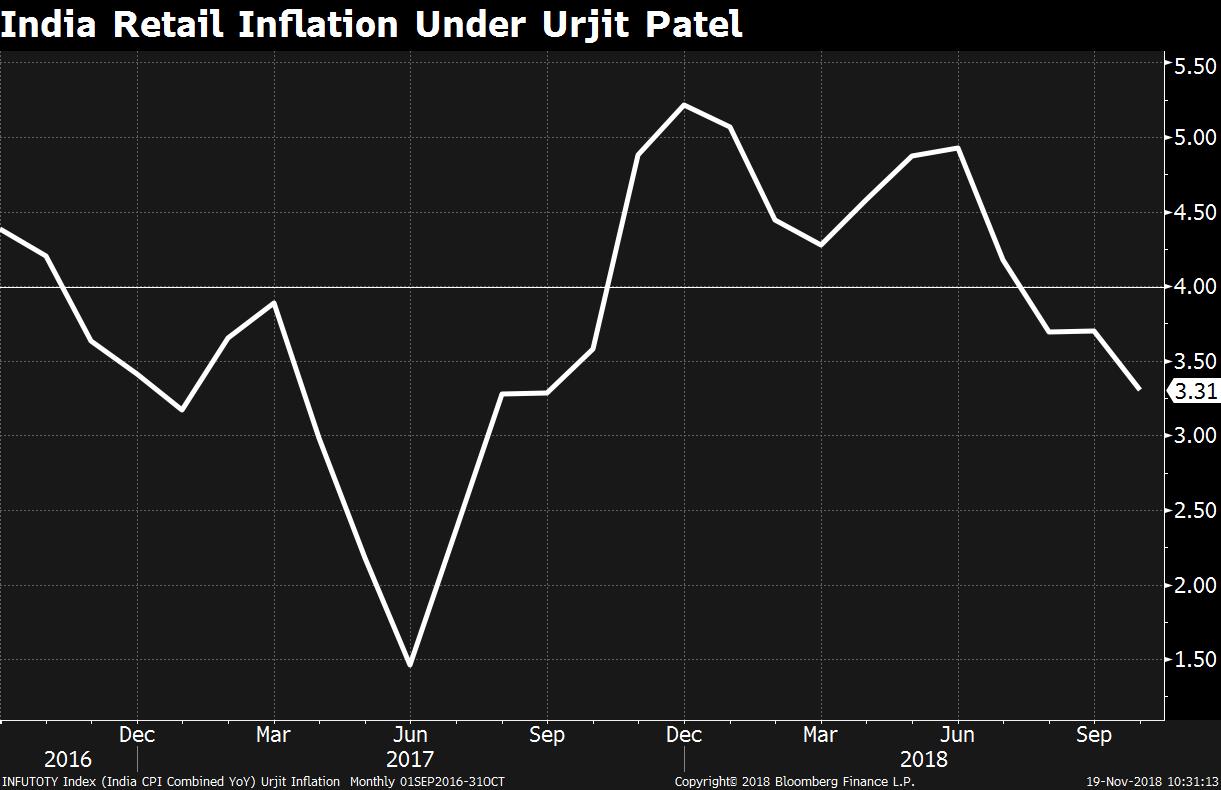
Range-Bound Inflation
Patel is the first governor to have presided over a monetary framework driven by the Monetary Policy Committee. Inflation over the last two years has been stable within the flexible inflation target of 4 (+/- 2) percent assigned to the committee. Lower oil prices for most of his tenure and subdued food price inflation, together with a moderation in inflation expectations have helped in keeping price pressures in check.
Ups & Downs Of Growth
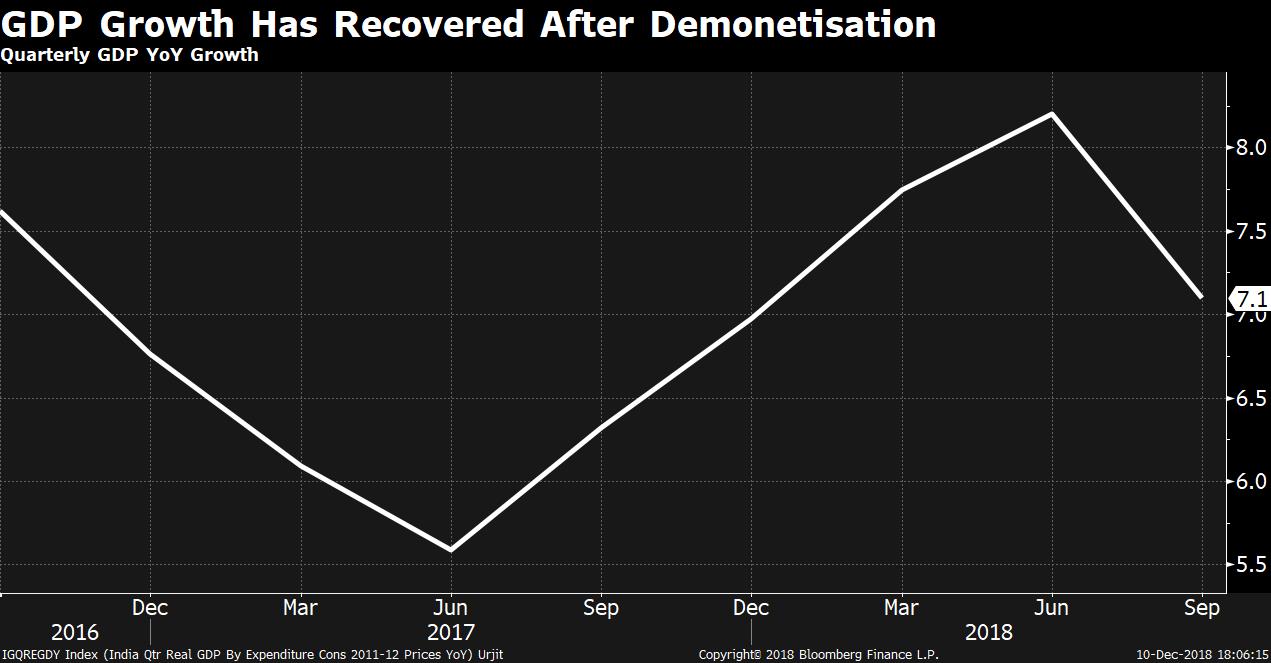
Growth trends have been more choppy.
GDP growth slipped to a three year low of 5.7 percent in the first quarter of 2017-18, impacted by the lingering impact of demonetisation and the teething problems during the implementation of GST.
Since then, growth has recovered. It shot up to 8.2 percent for the first quarter of the current financial year before moderating to 7.1 percent for the second quarter.
Rate Hikes Begin
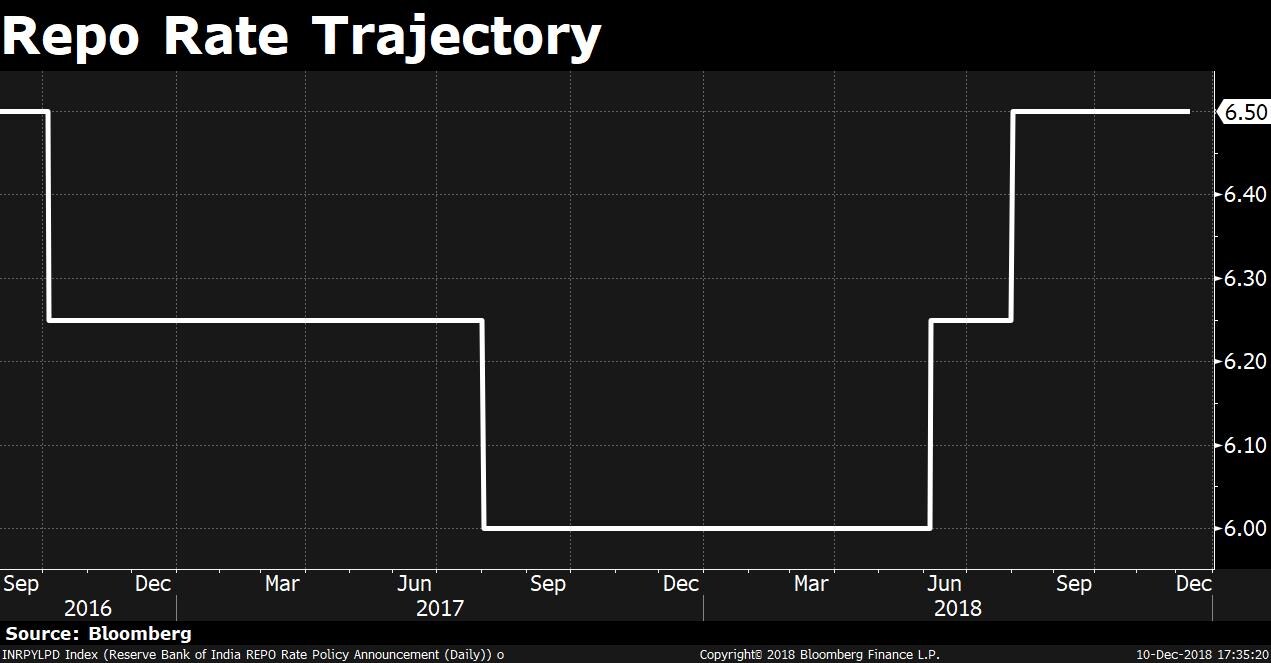
While inflation has been moderate compared to historical standards, the MPC started hiking rates earlier this year with the intention to bring down inflation to near the 4 percent mark.
Two rate hikes have been announced this year, after a period of steady interest rates. The monetary policy stance is one of calibrated tightening, suggesting further rate hikes can't be ruled out. However, recent downside surprises have led the MPC to maintain a status quo with the possibility of reverting to neutral stance in the MPC's next meeting in February 2019.
Banking Indicators Remain Worrying
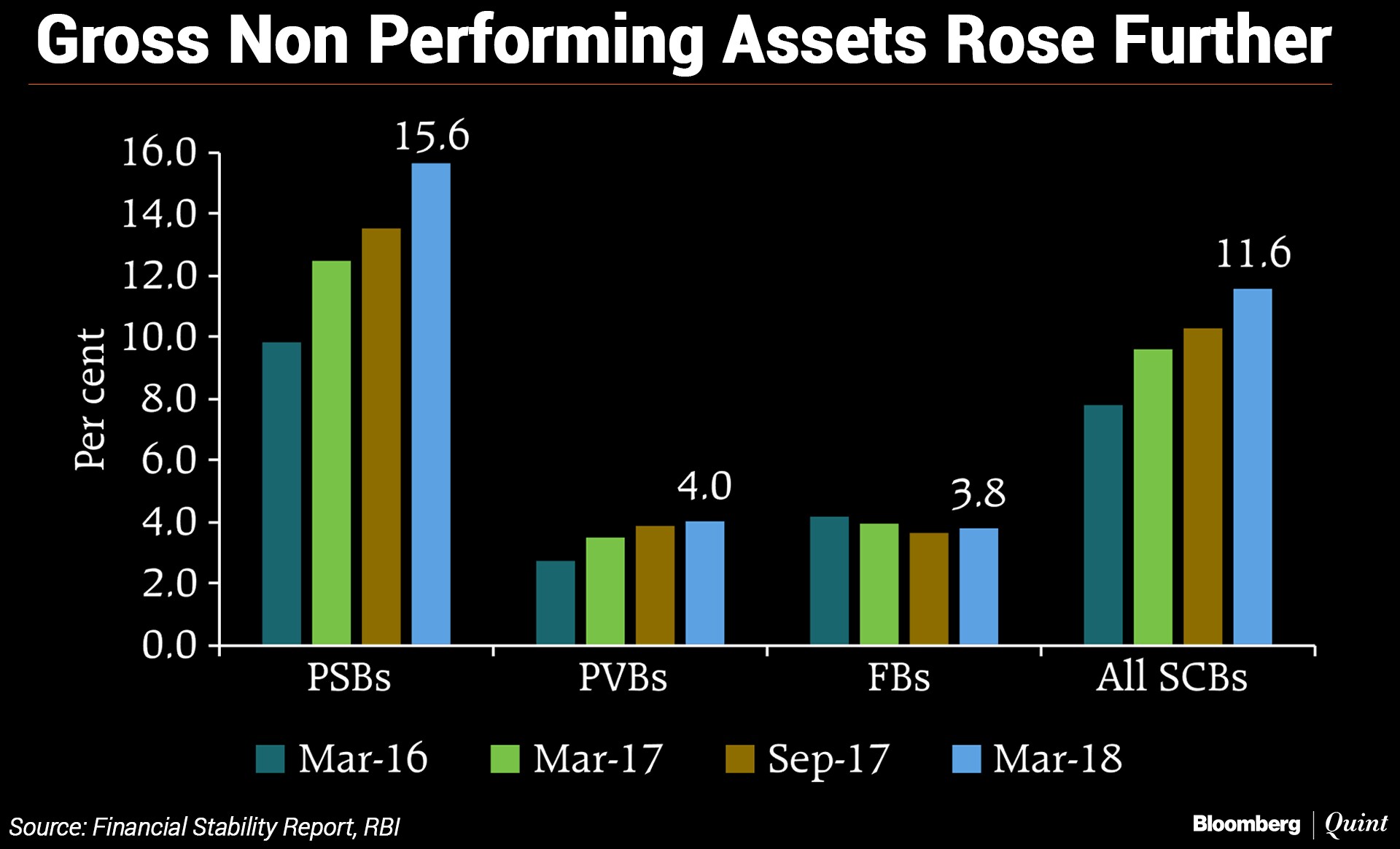
Patel has continued the process of cleaning up bank balance sheets which began under former Governor Raghuram Rajan. While the recognition of bad loans is in its final stages, resolution remains slows.
Gross non-performing assets of banks rose to 11.6 percent of the total advances in March 2018 from 10.2 percent a year ago, according to data from RBI's Financial Stability Report. In order to curb further weakness, the RBI has imposed a tougher stressed asset framework and a corrective action regime on banks—both of which have become points of dispute between the government and the central bank.
Bond Market Volatility
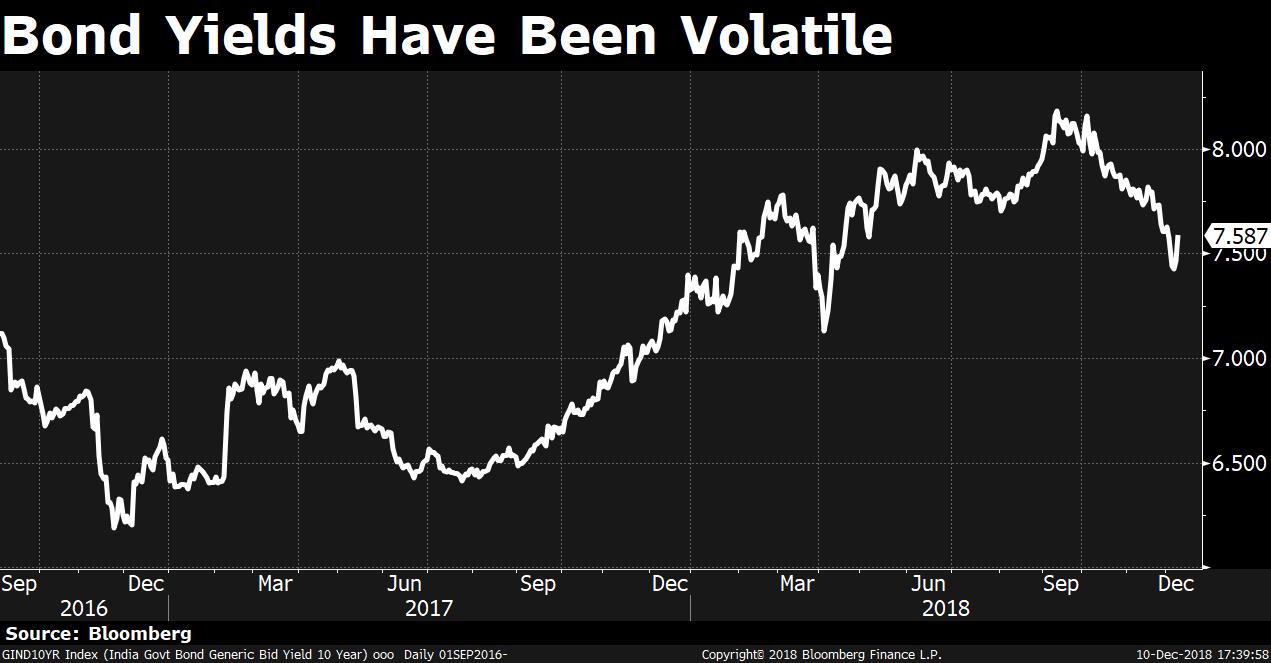
Bond markets were been volatile through Patel's tenure.
Demonetisation sent yields tumbling due to excess liquidity being parked in government bonds. As a consequence, bond yields hit a low of 6.18 percent in November 2016. Yields, however, rose after the cash deposited in banks was withdrawn.
In contrast yields surged starting the second half of last year due to concerns about fiscal slippage and rising inflation. Those concerns have eased partially in recent months with inflation falling below expectations and the government assuring markets that it intends to meet its fiscal deficit target of 3.3 percent of GDP for the current year.
Rupee: Record Lows Before Reversal
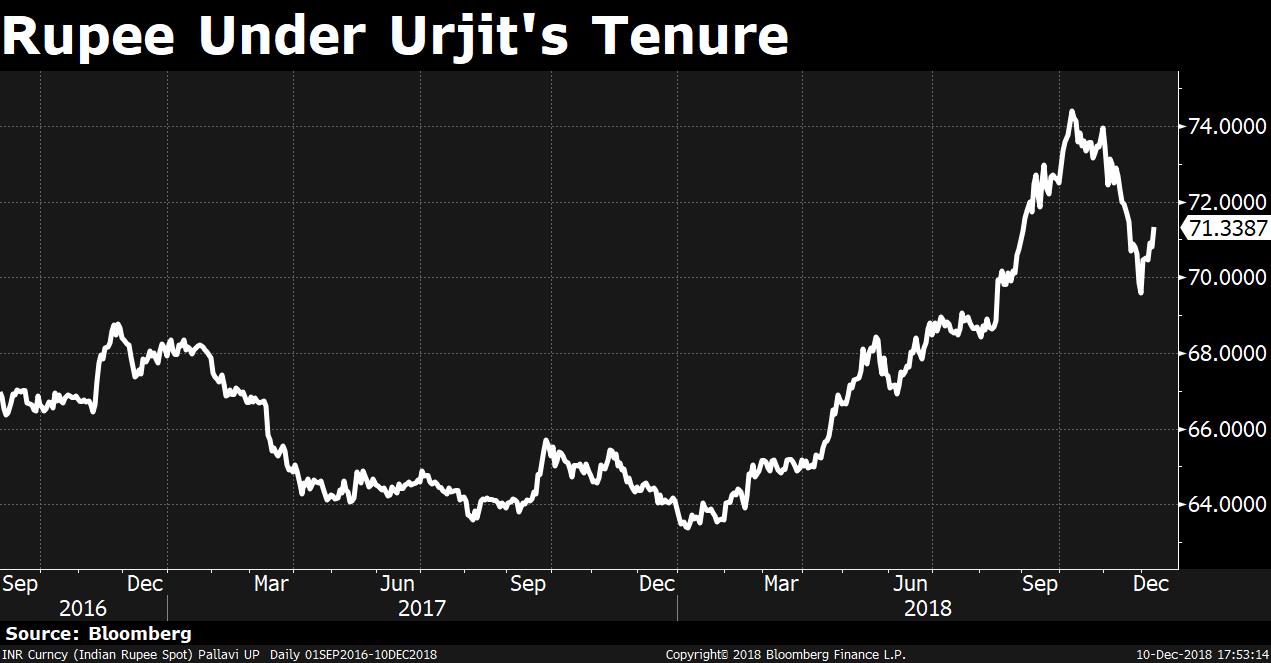
The rupee breached the 74 mark against the dollar for the first time this year, due to widening current account deficit and rising crude oil prices. With a 13 percent decline, the rupee has been among the worst performing Asian currencies this year before a reversal largely on account of fall in crude prices.
Contrary to expectations, the RBI has not stood in the way of rupee depreciation. While it has intervened through sale of forex reserves, the RBI has said that interest rates are not a tool for currency defence. No special measures like the foreign currency non-resident deposit scheme introduced in 2013 have been invoked yet either.

-
Ten Things I Learnt This Samvat

Patience can be a trap. Cheap stocks can stay cheap. Leverage can wipe you out. What did Samvat 2082 teach us? Niraj Shah writes on 10 lessons from the year gone by.
-
Talking Points This Week: Tech Nerves, FII Buying, And A Faraway Banking Shock
The global markets are not shining this Diwali. The exception in the large markets is, India.
-
Midterm Rally Lasted A Day. The Hard Reality Of A Divided US May Last Two Years | Opinion
Between a contested AI boom, a debt ceiling that arrives in 2027 and a president with every incentive to act alone, the next two years may prove more volatile than the first day's rally suggests.
-
Blue Wave Will Derail the AI Trade but Won't Dismantle the AI Era | Unhedged Position
The Democrats' sweep of the US Congress will see politics collide with economic forces both over the long and short term.
-
It's Time To Take The GST Council's Bet On Trust Global
Payment records can prove India's services exports, and clear, proportionate rules can bring foreign digital sellers into the tax net.
-
Opinion | India at 38: From Innovation Overperformer to Innovation Powerhouse
India now has 453 VC-backed deep science startups, 18 of them late-stage, after 117 percent growth since 2020. Laurus Labs, at USD 9.3 billion, is the most valuable deep science company in any middle-income economy outside China.
-
Navigating Energy Crossroads: S Jaishankar's Call For Diversified Supply Chains At G20 Ministerial Meeting
As geopolitical fault lines continue to test maritime trade routes and commodity flows, Jaishankar's message remains pertinent: true economic resilience requires open markets, protected transit lines, and a genuine commitment to multilateral cooperation rather than coercion.
-
Indians Are Travelling, But Not Every Journey Is A Holiday | The Week In Whys
Pilgrims, patients and working women are the real travellers, and the system hasn't quite caught up with them.
-
Getting To Work Costs Women More | The Reason Why
It is not just about women paying more than men. It is about women paying much more in cities than in villages.









