HUL Q1 Results: Profit Up 2%, Volume Growth Highest In Five Quarters
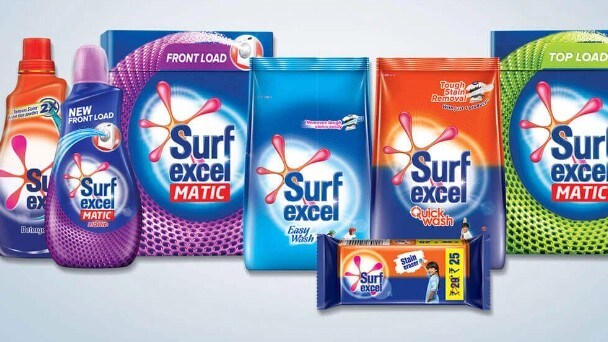
Hindustan Unilever Ltd.'s first-quarter profit rose, meeting analysts' estimates, driven by moderate uptick in volume even as revenue growth slowed on account of price cuts in the home and personal care divisions.
The consolidated net profit of India's largest consumer goods maker rose 2.2% year-on-year to Rs 2,612 crore in the quarter-ended June, according to an exchange filing. That compares with the Rs 2,601-crore consensus estimate of analysts tracked by Bloomberg.
HUL Q1 FY25 Key Highlights (Consolidated, YoY)
Revenue up 1.4% at Rs 15,707 crore (Bloomberg estimate: Rs 15,587 crore).
Ebitda up 2.2% at Rs 3,744 crore (Bloomberg estimate: Rs 3,690 crore).
Margin at 23.8% versus 23.7%. Analysts had pegged the metric at 23.7%.
Volume grew 4% over a year ago in Q1, as compared with 2% in the preceding three months, according to the company.
"The first quarter performance reflects our decisive actions of transforming our portfolio in high growth spaces aided by gradual recovery of rural markets," said Chief Executive Officer and Managing Director Rohit Jawa. The pace of improvement going forward will depend on how soon the rural market revives. "It will depend on employment generation, a good monsoon for the rest of the season and other macro factors like inflation."
Prices of key commodities, except tea, remained benign on a deflationary base during the quarter. Looking ahead, Jawa expects "near-zero" price growth, if input prices remain where they are.
He also expects to maintain operating margin at current levels.
Key Segment-Wise Highlights
Revenue from home care rose 4.6% to Rs 5,673 crore, with high-single digit volume growth.
Beauty and wellbeing grew 3.5% to Rs 3,281 crore, with mid-single digit volume growth.
Personal care revenue fell 4.4% to Rs 2,386 crore, but delivered low-single-digit volume growth.
Food and refreshments revenue grew 1.4% to Rs 3,850 crore, with flat volume growth.
The food business was impacted by a harsh summer season, according to the company. Its nutrition drinks—Horlicks and Boost—had subdued performance in the quarter. Tea sales were impacted because of lower production, but coffee delivered double-digit growth driven by pricing.
HUL's ice-cream delivered double-digit volume growth aided by strong launches during the summer season. The packaged consumer goods maker is still evaluating the future of this business that contributes less than 3% to its turnover. "We will be able to share the direction for the ice cream business in India by the end of this year," said Ritesh Tiwari, chief financial officer at HUL, during a post-earnings media briefing.
The skincare and colour cosmetics segment recorded muted volume growth with mass portfolio declining.
Jawa said that the company's strategy of premiumisation across its portfolio is yielding positive results. Over the past three years, the contribution from the premium portfolio has risen by 300 basis points.
Shares of HUL closed 1.09% higher ahead of the announcement, as compared with a flat benchmark S&P BSE Sensex.

-
Talking Points This Week: Tech Nerves, FII Buying, And A Faraway Banking Shock

The global markets are not shining this Diwali. The exception in the large markets is, India.
-
Midterm Rally Lasted A Day. The Hard Reality Of A Divided US May Last Two Years | Opinion
Between a contested AI boom, a debt ceiling that arrives in 2027 and a president with every incentive to act alone, the next two years may prove more volatile than the first day's rally suggests.
-
Blue Wave Will Derail the AI Trade but Won't Dismantle the AI Era | Unhedged Position
The Democrats' sweep of the US Congress will see politics collide with economic forces both over the long and short term.
-
It's Time To Take The GST Council's Bet On Trust Global
Payment records can prove India's services exports, and clear, proportionate rules can bring foreign digital sellers into the tax net.
-
Opinion | India at 38: From Innovation Overperformer to Innovation Powerhouse
India now has 453 VC-backed deep science startups, 18 of them late-stage, after 117 percent growth since 2020. Laurus Labs, at USD 9.3 billion, is the most valuable deep science company in any middle-income economy outside China.
-
Navigating Energy Crossroads: S Jaishankar's Call For Diversified Supply Chains At G20 Ministerial Meeting
As geopolitical fault lines continue to test maritime trade routes and commodity flows, Jaishankar's message remains pertinent: true economic resilience requires open markets, protected transit lines, and a genuine commitment to multilateral cooperation rather than coercion.
-
Indians Are Travelling, But Not Every Journey Is A Holiday | The Week In Whys
Pilgrims, patients and working women are the real travellers, and the system hasn't quite caught up with them.
-
Getting To Work Costs Women More | The Reason Why
It is not just about women paying more than men. It is about women paying much more in cities than in villages.
-
AI Bias In Investing Cannot Be Eliminated, But It Can Be Governed
Framing is a particularly important example as identical financial information presented in terms of gains rather than losses can lead an LLM to reach a different assessment.









