Debt Ceiling Catapults New Biden Budget Into Market Spotlight

(Bloomberg) -- President Joe Biden's budget proposal is an opening salvo in the looming impasse with Republicans over raising the debt ceiling and funding the US government.
Biden is expected to defy GOP calls for deep spending cuts, instead proposing new taxes on corporations and Americans making more than $400,000 a year as he seeks to shore up entitlement programs and address budget deficits.
The White House wants the plan, to be released in full on Thursday, to provide political leverage in the approaching standoff with House Republicans, when the $31.4 trillion debt limit must be raised to avoid a US default.
Here is what to watch for:
Deficits
Biden is expected to propose specific measures to cut the deficit by at least $2 trillion over 10 years — and possibly even more. But that reduction is aided by the phasing out of pandemic programs that ratcheted up federal borrowing.
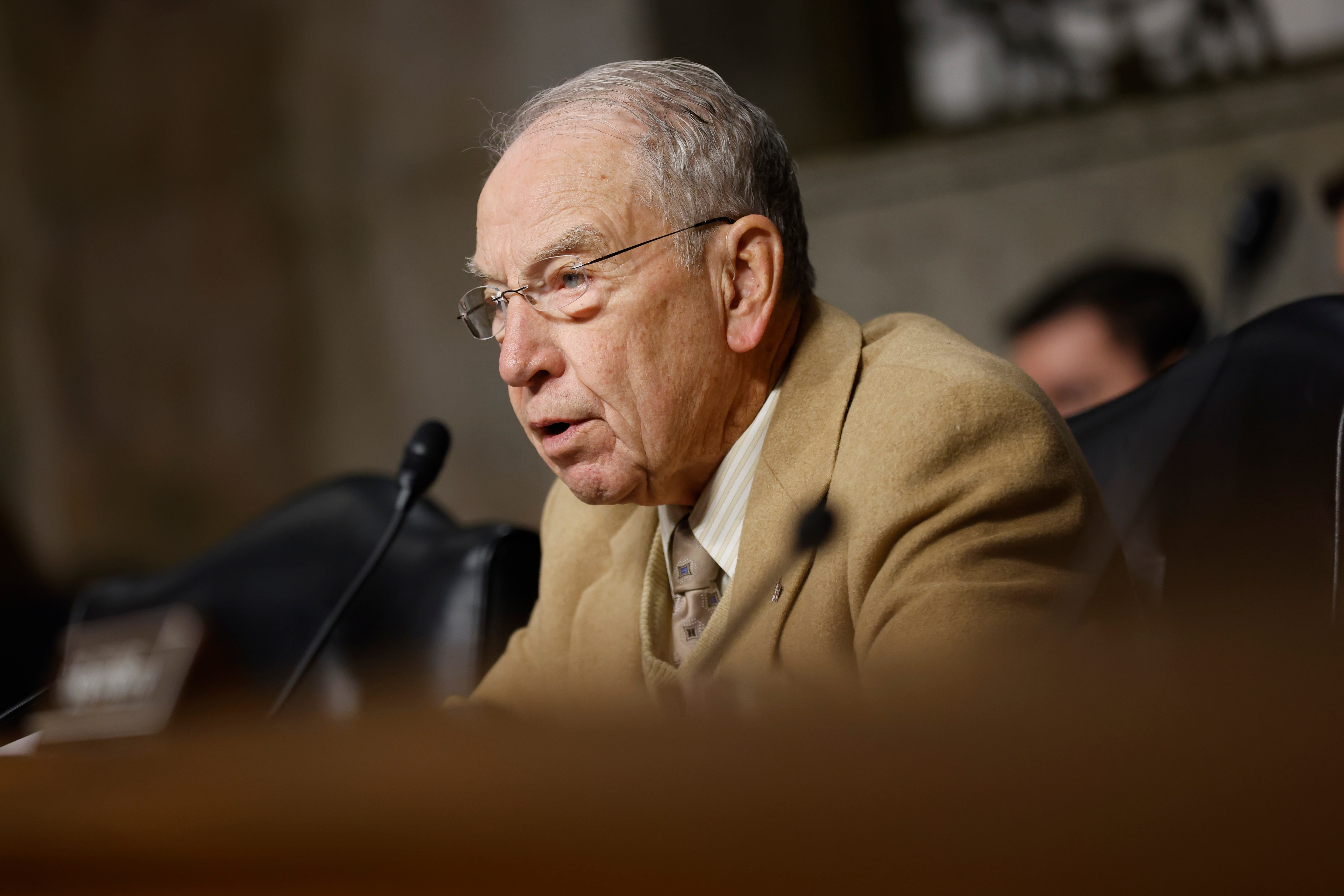
Republicans are certain to seize on whatever his budget proposes as deficit spending in the coming 2024 fiscal year to accuse the White House of gimmickry. Senator Chuck Grassley, the top budget committee Republican, said before the release that the president should propose to cut 2024 spending to 2020 levels plus inflation.
Republicans say they will seek at least a $150 billion in fiscal 2024 reductions, with the ultimate goal of eliminating budget deficits over 10 years — all without touching Social Security or Medicare. The Biden budget increases pressure for Republicans to detail their plans, and spell out what government services they would slash.
Taxes
Biden has already said his plan would raise Medicare taxes on wealthier Americans, and eliminate payroll tax loopholes for taxpayers who own businesses. He's likely to mirror those increases for Social Security taxes, and propose a surtax on billionaires and an expanded tax on stock buybacks, among possible others. While these proposals would be dead on arrival in the Republican-controlled House, they matter for the 2024 presidential campaign and could be enacted if control of Congress flips again.
Markets
Neither Biden's plan or whatever Republicans propose has any chance of coming to fruition, with next year's spending levels requiring compromise. Yet the gulf between them also underscores the substantial challenges the US faces in avoiding a summer default or autumn shutdown. While markets so far have shrugged off concern, Federal Reserve Chairman Jay Powell warned of the dangers of default Tuesday on Capitol Hill and Fitch Ratings said the high-stakes game of chicken could cause America's sovereign debt to be downgraded.
Economy
The budget will reveal the Biden team's thinking on whether the US will enter a recession this year and when inflation will cool. Last year, the administration came under heavy criticism for using outdated economic projections that predicted a 4.7% inflation rate in 2022 and a 2.3% inflation rate this year. If the numbers again differ markedly from economic consensus, that could open the White House to charges it's goosing the books to make the deficit look smaller.
Social Security
Biden has said his budget would protect the program. Without intervention, the trust fund for the Social Security retirement program will be insolvent by 2033, according to the latest official estimate. Biden could propose raising payroll taxes on high earners to address this.
Defense and Ukraine
The budget isn't expected to outline the next, large tranche of Ukraine assistance, which administration officials will pursue later this year after spending the roughly $45 billion appropriated by Congress late last year. But the defense budget includes a record $170 billion for weapons procurement and $145 billion for research and development. Overall, Biden's defense budget exceeds $835 billion — up from the $816 billion that Congress appropriated in the current fiscal year. That may anger progressives — and some Republicans who have called for cuts to Ukraine aid — while offering an olive branch to Republican hawks.
2024 Hints
Biden may also seek to highlight initiatives that could prove beneficial to a reelection campaign next year. The White House recently expressed support for overruling District of Columbia laws that would lower sentences for crimes like carjacking, and a substantial increase in policing grants could help blunt GOP efforts to tie him to progressive calls to defund the police. Biden is also likely to advocate for insulin price caps for Americans under 65 years old.
Domestic Discretionary Spending
A cut to non-defense, non-entitlement spending would send a clear signal that Biden is looking to strike a deal with the GOP, while an increase suggests the White House believes it has the advantage in negotiations — and that government shutdown fights could get ugly. Biden is unlikely to support deep spending cuts, since doing so could unwind legislative successes he achieved while Democrats controlled Congress. It'll be important to watch which proposals that didn't survive negotiations in the last Congress remain in Biden's budget, as an indication of where the White House is likely to focus its political capital.
New Programs
Biden unveiled ambitious proposals to expand the social safety net, fight climate change and inflation in his previous budgets. This year's version is likely to be more restrained, but the president might consider bipartisan priorities like opioid treatment, cancer research, and job training for veterans. Biden may also provide fresh details on his proposed overhaul of the nation's immigration system, as border towns brace for the lifting of pandemic-era protections.
More stories like this are available on bloomberg.com
©2023 Bloomberg L.P.

-
Blue Wave Will Derail the AI Trade but Won't Dismantle the AI Era | Unhedged Position

The Democrats' sweep of the US Congress will see politics collide with economic forces both over the long and short term.
-
It's Time To Take The GST Council's Bet On Trust Global
Payment records can prove India's services exports, and clear, proportionate rules can bring foreign digital sellers into the tax net.
-
Opinion | India at 38: From Innovation Overperformer to Innovation Powerhouse
India now has 453 VC-backed deep science startups, 18 of them late-stage, after 117 percent growth since 2020. Laurus Labs, at USD 9.3 billion, is the most valuable deep science company in any middle-income economy outside China.
-
Navigating Energy Crossroads: S Jaishankar's Call For Diversified Supply Chains At G20 Ministerial Meeting
As geopolitical fault lines continue to test maritime trade routes and commodity flows, Jaishankar's message remains pertinent: true economic resilience requires open markets, protected transit lines, and a genuine commitment to multilateral cooperation rather than coercion.
-
Indians Are Travelling, But Not Every Journey Is A Holiday | The Week In Whys
Pilgrims, patients and working women are the real travellers, and the system hasn't quite caught up with them.
-
Getting To Work Costs Women More | The Reason Why
It is not just about women paying more than men. It is about women paying much more in cities than in villages.
-
AI Bias In Investing Cannot Be Eliminated, But It Can Be Governed
Framing is a particularly important example as identical financial information presented in terms of gains rather than losses can lead an LLM to reach a different assessment.
-
Joining The Dots | Dark Skies, Steady Diya: Why Hope Holds This Diwali
With war, a weak rupee and foreign outflows weighing on sentiment, policymakers at the NDTV World Summit and market veterans at NDTV Profit Ignite: Diwali Edition offered the same advice: stay invested and filter out the noise.
-
The Curious Case of Equitas Small Finance Bank And A CEO Who Quit For Stock
PN Vasudevan believes persistent investor concerns over a perceived conflict of interest had become a governance overhang on Equitas Small Finance Bank's stock, even as the lender improved profitability and asset quality.










