Stay Away From Lure Of Cashback While Buying Insurance
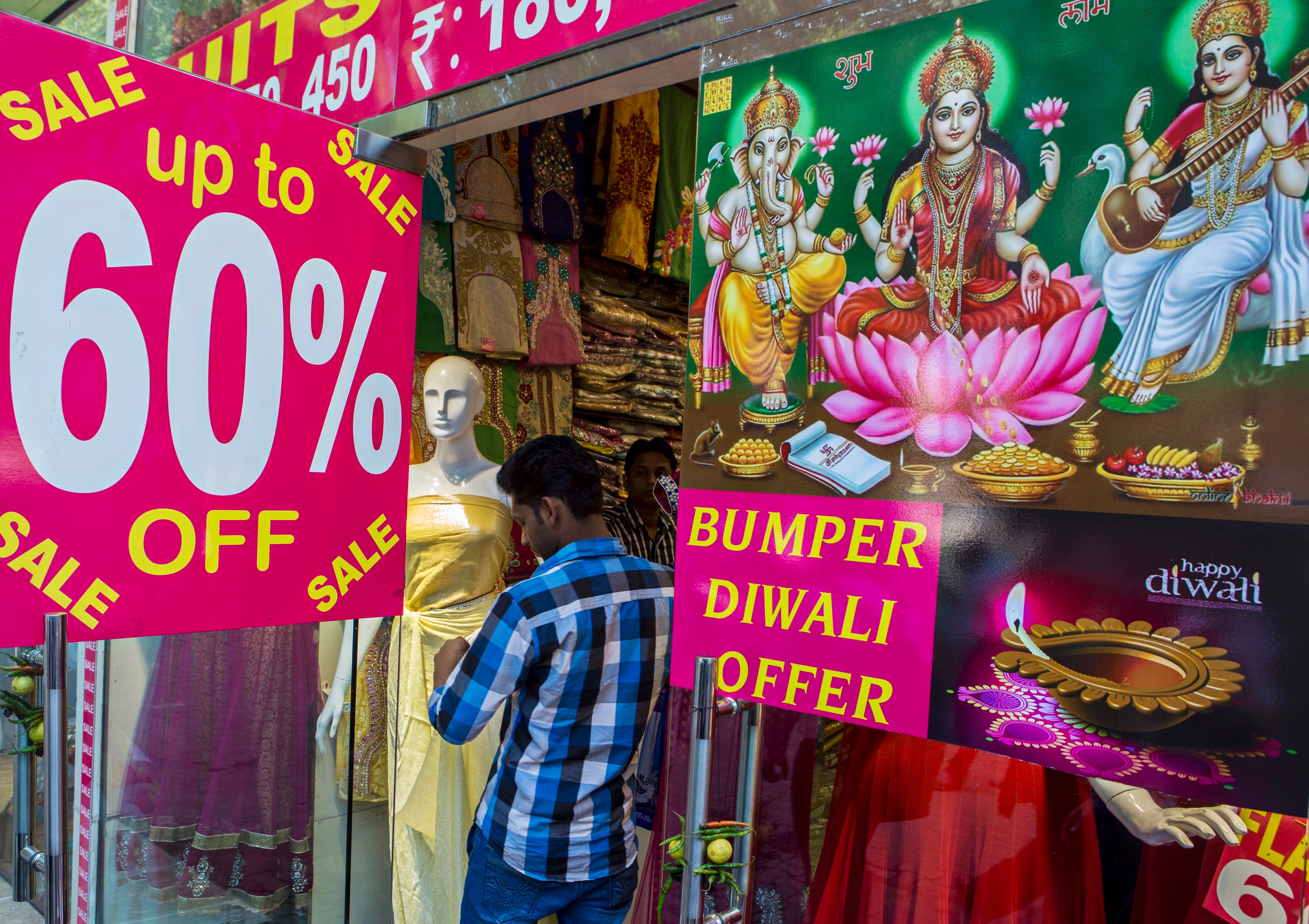
Do you love cashbacks?
Ask any shopper this question, and you need not wait to hear the answer. It is obvious, cash backs make the deal better. A cheaper offering or buying something at a discount to the fair price is always tempting. Many successful businesses are built on this premise, and many investors follow this concept to the ‘T'.
Read the paragraph above carefully, again. The ‘discount' is referred in terms of the ‘fair price', and not on the ‘list price'.
In order to attract new clients, several startups, from food delivery companies to e-commerce businesses, use this strategy very effectively to shore up their sales volumes. Since many of these goods are used or consumed on a day-to-day basis, we are aware of their ‘fair prices'. Hence, when a merchant offers a certain product below its ‘fair price', it's always a good bargain.
Why Do Such Discounts Exist?
- When someone has been able to source raw material or labour at an extremely low cost and the benefit is passed on to the buyer.
- When a business delivers sub-standard products, while the customer may have expected much better-quality.
- When a business sells the products at a loss, as part of a market-seeding strategy.
In most cases, in the recent times, it is because of the third option that we can avail all good quality products at a discounted price.
Over To The Financial Markets
The discussion so far has been in the context of physical goods. In the regulated financial markets, almost all products are standardised and there is no scope of diluting their quality. However, the stock of one company could be a poor investment choice in comparison to another; a certain health insurance policy may have lower cover or more exclusions; fixed deposit from a company could be of lower credit quality in comparison to another one.
Hence, in majority of the cases, when we are expecting something back, the chances are that we are taking higher risk, or we have paid more for a product and a part of it is being returned to us. In the financial markets, which are much-regulated, no extra benefit is offered to the customer without a catch.
Cashback In Life Insurance
The lure of cash-back works here too. Specially in the life insurance sector, there are two products that we would like to talk about in the context of cashback.
Money-Back Plans
Until a decade back, this product was pushed with the pitch that you would get back certain percentage of the money invested in a policy. This pitch made this product look attractive but over the years, it lost its sheen.
The problem is, although it combines insurance and investment in one, it fails to optimally satisfy either of the requirements.
Term Life Insurance Plans
In the last decade, attention has shifted to term life insurance products. They happen to be the cheapest product with the lowest premium range for risk cover.
It is this feature of the policy that makes it the cheapest, and it is the same reason why most stay away from such policies. “Kuchh toh wapas milna chahiye na”- is a very common argument.
This come from the psychology of expecting a cashback or feeling good about buying something at a discount. Similar happiness is witnessed when one gets an income tax refund, although it is the refund of one's own money – extra tax (an extra advance tax paid or extra tax deducted at source) that was paid to the Income Tax Department.
So, insurance companies have come up with a variant of a term plan where the premium is paid back at the end of the term, or on maturity. The buyers of such a policy seem to think that they are getting the best of both worlds – a low-cost insurance product and also the premium they had paid over the years. A closer scrutiny, however, suggests that this makes the product sub-optimal on many counts.
What the policyholder gets is a costly product – in terms of premium paid for the risk cover, and the return on investment is zero, since the only return is the premium paid.
Insurance is not the right marketplace to ask for cash backs. It makes the insurance policy costlier, and not cheaper. The money to be returned and the cost attached to the process are bundled in the premium payable for the same amount of risk cover.
It is better to consider a life insurance product as a train ticket – you need it while you are travelling, and it becomes useless once you finish the journey. Do we expect a cashback after we reach our destination? Similarly, a term life insurance policy is valid for the term. It is low cost, and hence affordable, and has no value after the term is over.
Consider a policy on its merits, and not because you are getting some cash-back.
How To Evaluate A Policy's Merit
One of the things you need to look at is the premium you need to pay for the life cover you are buying. Lower the premium, cheaper the policy. Also, check the claim settlement ratio.
- Is there a minimum lock-in period before which you are not allowed to withdraw?
- Even after that period is over, are there any withdrawal charges? Check the surrender value and do the investment returns calculation.
Take a wise decision, as the mind loves to play tricks. One of the easiest ways to be fooled is to look at partial information, e.g. a discount or a cashback, that blinds us from checking all the other details.
Amit Trivedi is an author and trainer, owner of Karmayog Knowledge Academy and author of Riding The Roller Coaster, Personal Finance Lessons from the ICU, and The Whole Thing Is That Ki Bhaiya Sabse Bada Rupaiya.
The views expressed here are those of the author, and do not necessarily represent the views of BloombergQuint or its editorial team.

-
Opinion | India at 38: From Innovation Overperformer to Innovation Powerhouse

India now has 453 VC-backed deep science startups, 18 of them late-stage, after 117 percent growth since 2020. Laurus Labs, at USD 9.3 billion, is the most valuable deep science company in any middle-income economy outside China.
-
Navigating Energy Crossroads: S Jaishankar's Call For Diversified Supply Chains At G20 Ministerial Meeting
As geopolitical fault lines continue to test maritime trade routes and commodity flows, Jaishankar's message remains pertinent: true economic resilience requires open markets, protected transit lines, and a genuine commitment to multilateral cooperation rather than coercion.
-
Indians Are Travelling, But Not Every Journey Is A Holiday | The Week In Whys
Pilgrims, patients and working women are the real travellers, and the system hasn't quite caught up with them.
-
Getting To Work Costs Women More | The Reason Why
It is not just about women paying more than men. It is about women paying much more in cities than in villages.
-
AI Bias In Investing Cannot Be Eliminated, But It Can Be Governed
Framing is a particularly important example as identical financial information presented in terms of gains rather than losses can lead an LLM to reach a different assessment.
-
Joining The Dots | Dark Skies, Steady Diya: Why Hope Holds This Diwali
With war, a weak rupee and foreign outflows weighing on sentiment, policymakers at the NDTV World Summit and market veterans at NDTV Profit Ignite: Diwali Edition offered the same advice: stay invested and filter out the noise.
-
The Curious Case of Equitas Small Finance Bank And A CEO Who Quit For Stock
PN Vasudevan believes persistent investor concerns over a perceived conflict of interest had become a governance overhang on Equitas Small Finance Bank's stock, even as the lender improved profitability and asset quality.
-
Talking Points This Week: AI Cash Burn, A Tiger Comeback And An India That Still Finds Its Own Path
India is not immune to higher oil or tighter global liquidity, yet its earnings base is broader, its domestic policy levers are still available.
-
Foreign Investors Own Half Of HDFC Bank and ICICI Bank. An LTCG Cut Could Matter Most Here
Foreign portfolio investors have US$115 billion parked in HDFC Bank, ICICI Bank. If the government cuts long-term capital gains tax, Jefferies says returning foreign money could land here first.










