Searching For The Mona Lisa Smile? You May Not Be Able To Afford It

Unlike stocks and other asset classes, people do not buy art to become rich, but the rich buy art, said Santosh Joseph, founder of Germinate Investment Services LLP. As this line captures accurately, this exquisite asset class is not for everyone.
Be it for passion, display, or sometimes profitability, this asset class has been an exclusive space for the crème de la crème of wealthy individuals.
"Art is a great alternative investment but the kind of art you buy is very important. Prices have appreciated for a certain kind and quality of art," said Vaishnavi Murali, founder of Eikowa Art Gallery and Art Investment Advisory Services.
Price points of paintings today can be Rs 3 lakh and higher, and auction prices can add up to a couple of crores. Though retail investors may not have the bandwidth to buy art as an investment, the space has seen steady takers for years.
Understanding The System
Now, to start investing in art, one needs to work with an art gallery. After discussing budget and objectives, the sale can be done via the gallery.
"Buying directly from an artist is useless without building a connection with them. People try to buy on their own and come to consultancies to help them sell. The relationship built with a gallery starts from the beginning," said Murali.
The industry works on relationships as advice and connection steer the trajectory of the investment.
"When you make gains, it is with the help of someone's advice. Being transactional will not benefit anyone but building a relationship will help make investments with better value," she added.
Protecting The Precious Pieces
For collectors who have accumulated precious pieces in their portfolio over the years, the need for insuring these pieces might come up. However, finding insurance for art is not an easy task, especially in India.
"Insurance for art is hard because underwriters find it difficult to assess the value. When it comes to art, it is paint and canvas for everyone, unlike other valuables with a clear measure of value," said Murali.
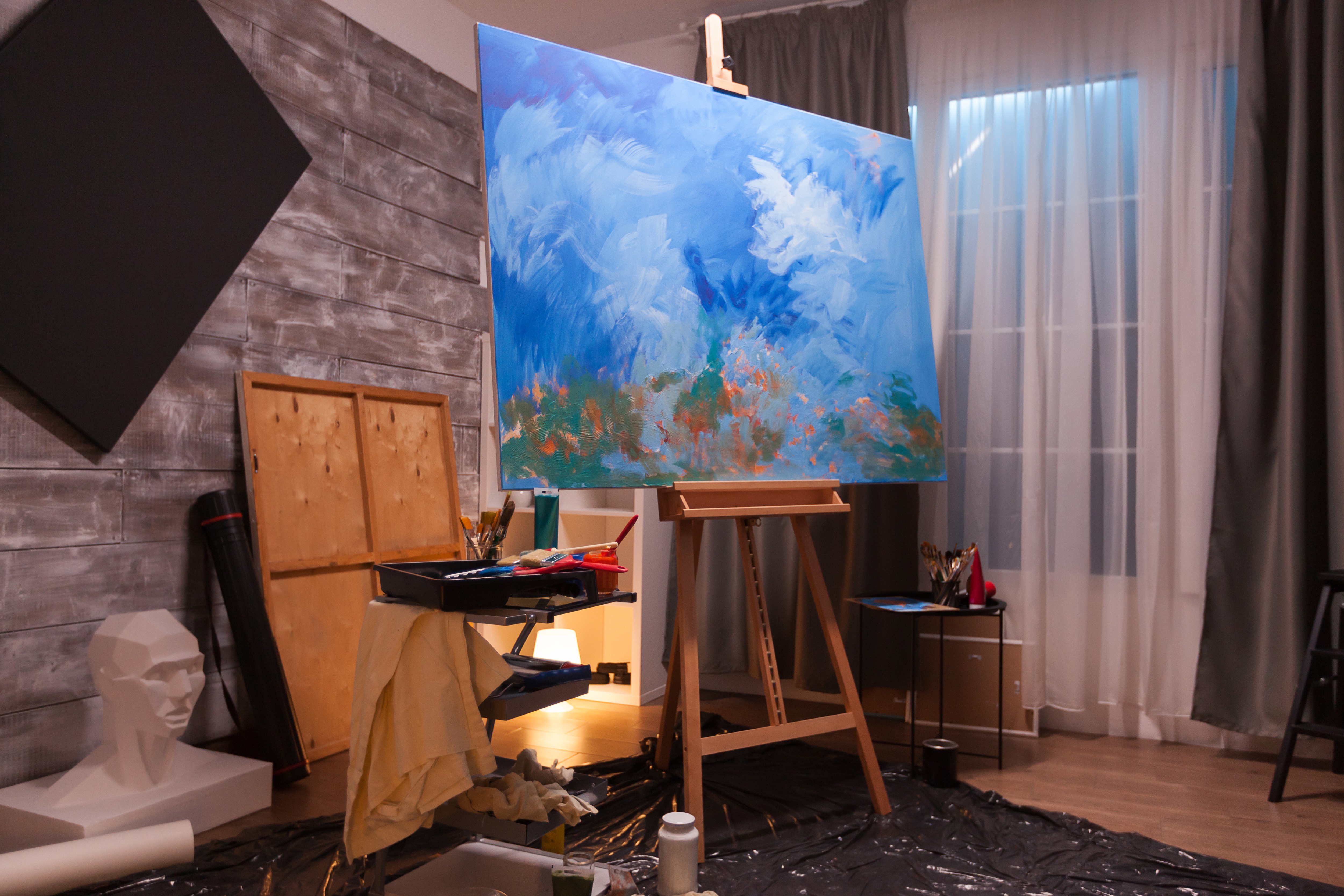
Even though it has a certain amount of liquidity and profitability, the objective of the investment remains murky and personal for people who invest in art
(Photo Source: Dragos Condrea/Envato)
Art As An Investment
It is when one wants to look at art as an investment that it becomes tricky.
The concept of making investments for returns alone does not always apply to this asset class. Even though it has a certain amount of liquidity and profitability, the objective of the investment remains murky and personal for people who invest in art.
"Art has liquidity benefits depending on what one is buying, when there are good investments and depends on what you are sitting on. I think there has always been a section that was interested in art as an asset class," said Murali. There is no influx of people putting money into art they have no clue about, according to Murali but the market is growing.
Art is taxed at 12% and there are capital gains that apply for this asset class, according to Murali. A person starting off needs a guide and an understanding of art itself is required.
Advisor's Voice
Clearly, this is not for everyone but art has always been an interesting asset class, especially for ultra-high net worth individuals. Essentially, this is usually beyond the reach of affluent people also, according to advisors.
"In the ultra-wealthy section, this is savoured both as a passion and as an investment. Unless your portfolio has a Rs 100 crore bandwidth, this may not be possible," said Shalini Sekhri, chief growth officer at Renaissance Investment Managers.
The sense of luxury attached to art roots from the concept of art being high up on the needs of hierarchy.
"Not even a lot of wealthy people have access to art. Only the super affluent have access," said Joseph. As things stand, only a very small section accesses this market in India.
"(The) issue with art was liquidity. Because of the low volume of trade, there is a certain amount of circulation that needs to happen for art to appreciate. It's about demand and liquidity at a higher price," he said.
When a person makes an investment, the objective is to make maximum returns. However, in this space, that is not always the case, as the people who can afford to access it are not necessarily chasing returns.

-
India Exports Capital. Why Not Export Trusteeship?

The big question, then, is whether India can build an institution that global borrowers, investors, banks, and lawyers can trust, even without an Indian connection.
-
France's Economy & Politics Are In Crisis | The Reason Why
Let's look at how the French economy and politics evolved under Nicolas Sarkozy, Franois Hollande and Emmanuel Macron.
-
You May Inherit The Business. You Must Earn Its Credibility.
Succession tests the founder's ability to share authority as much as it tests the next generation's readiness to assume it.
-
Signing Deals Is One Thing; Making Them Work Is Another | The Week In Whys
Sometimes, things don't turn out as planned. Indian companies have lost some bids to rivals, some projects won't produce until 2030.
-
FOMC Wall, PERM Suspension, Hospital Stocks | Talking Points This Week
A PERM suspension would directly affect green-card sponsorship rather than H-1B visas, so the near-term earnings impact could remain relatively limited. The key question is whether this marks a new phase in US scrutiny of Indian IT.
-
Everything, Everywhere, All At Once: Dalal Street's Week To Forget | Joining The Dots
Visa curbs, a Starlink spat and cancer drug caps: what connects this week's shocks for Indian markets
-
India Is Going Abroad For Critical Minerals. But It May Take Years To Pay Off | The Reason Why
Although India's steps are in the right direction, they remain modest compared with India's growing dependence.
-
When Everyone Has AI, What Gives You An Edge?
India's young workforce is entering an uncertain world of work where powerful AI tools are becoming widely accessible. The advantage will belong to those who combine deep expertise with digital fluency, and the distinctly human capabilities that technology cannot manufacture.
-
Wrong Labels, High Pesticide Residues Holding Back Agri Exports | The Reason Why
India needs stronger domestic food-safety and labelling standards, with best practices becoming part of everyday business for farmers, traders and food companies.
-
India Is Easy To Enter, Harder To Attract | The Week In Whys
The question is no longer just whether India can attract companies and capital. It is how much value they create here, how deeply they invest, and whether India remains relatively attractive when they have plenty of other options.










