Truss’ Move To Distance Sunak Supporters May Be Short-Sighted
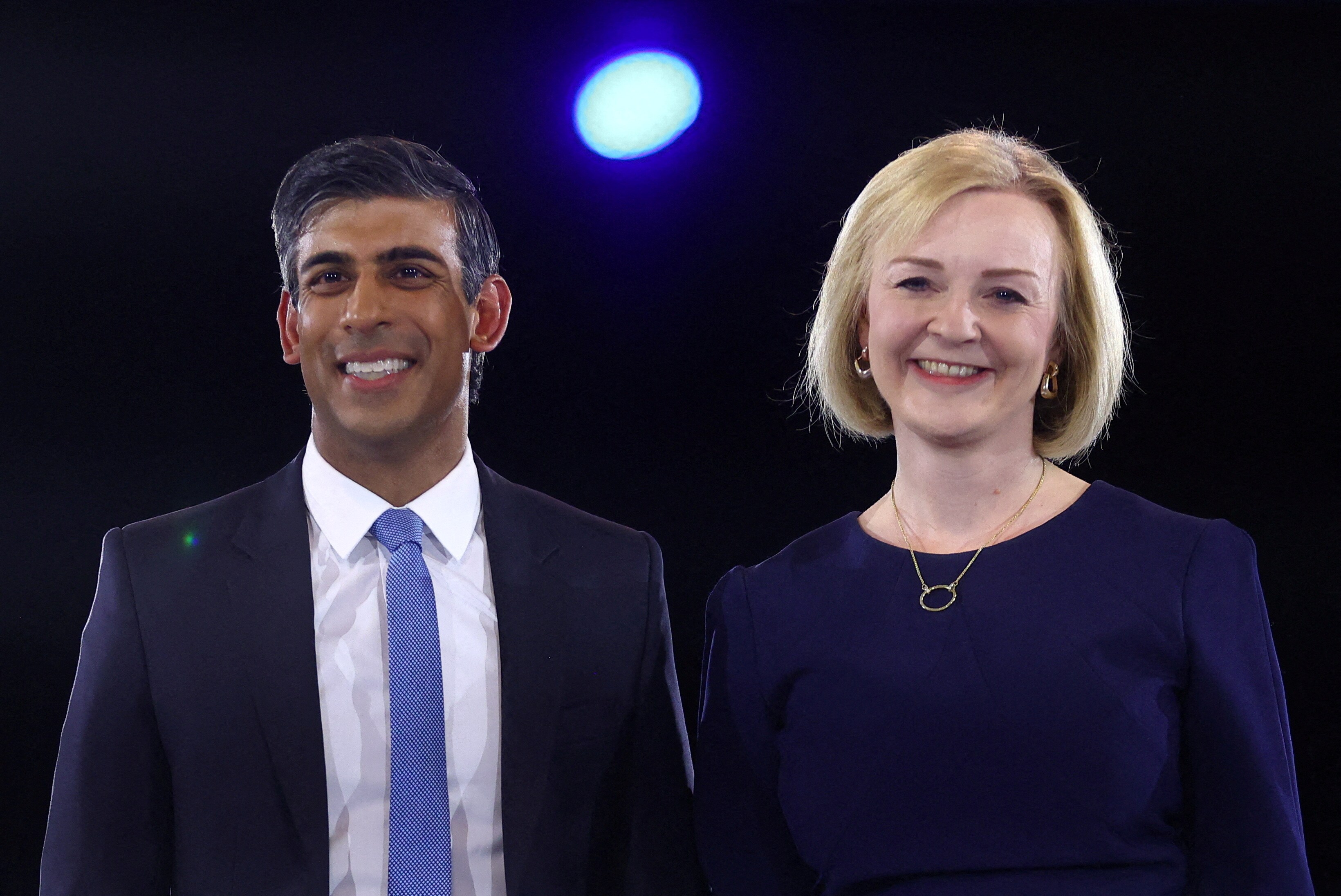
The task at hand is mammoth for the new U.K. Prime Minister Liz Truss and alienating her key competitor and former chancellor, or finance minister, Rishi Sunak has the potential to backfire. Truss has played to the idea of diversity, that Sunak thrived on, by appointing the most ethnically diverse top cabinet in the history of U.K.. However, none of the senior politicians that endorsed Sunak have meaningful portfolios in the current regime.
Sunak led the selection among members of parliament, but when it came to voting within the Conservative Party lost out. Even so, Truss ascended to the top spot with the least margin against her competitor in nearly 20 years. She won the election on Monday with 81,326 votes, ahead of Rishi Sunak's 60,399 votes.
Sunak is an excellent orator with age on his side, ran an effective campaign and large supporter base. It is, therefore, good for the party to keep him involved. That, in turn, hints at a potential comeback when the time is ripe.
Even as Sunak endorses a unified face for the party in tow of Liz Truss, he is likely to air contrarian views when the policy of the premier falters. The two have held extremely divergent views and some of what Truss will undertake, would undo moves Sunak made as chancellor; for instance, reversing the ‘green levy' on energy.
Lower Taxes
Truss' proposals seem in line with an earlier British economic approach of the trickle-down effect. The tax cuts and corporate relief measures she has proposed have invoked an evenly mixed response of agreement and otherwise.
The move in the past spurred the economy into action, which is what historically led to strength in the British currency and has held the country in good stead. Economic growth to reverse the current downturn may be the need of the hour. Still, critics say that the move will merely put more money in the hands of those who already have it.
It also increases liquidity in the market and is at cross-purposes with the Bank of England, which has pushed for historically high interest rate increases to contain inflation. The Bank of England's lending rate has risen from 0.1% in 2020 to 1.75%, in less than two years. A review from the central bank is due on Sept. 15, which could include another rate increase.
Sunak opposed tax cuts because of their impact on inflation and the ability of the government to repay over a longer period.
Effervescent Energy
Energy cost is a major concern for British households as the winter sets in. The macro environment and rising cost of gas as Russia throttle's supply to the rest of Europe is driving the price up.
One of the first actions of Truss, who has argued vociferously in favour of containing the rise in households' energy bills, is expected to be a cap on energy spend at £2,500 per year. The amount is forecast to rise to £6,000, a gap that the exchequer would need to plug.
This, in addition to the already announced cash subsidy of £400 per household, analysts forecast to cost the nation between £90 billion and £200 billion.
Sunak's proposal was comparatively moderate. He had offered to cut the value-added tax on energy, which would have meant a much smaller revenue gap for the exchequer but perhaps would alleviate the impact on consumers to a lesser degree.
Furthermore, Truss is expected to reverse the “green levy” that forms about 7% of the average energy bill that was put in place by Sunak as chancellor. The levy was designed to subsidise environment friendly means of electricity production, including the nuclear power generation projects. What's to be seen is whether the projects continue and where the funds would come from.
The money could come from a windfall tax on energy companies that have profited from the sudden price rise on the inventories and hedges they already held. Truss, however, is not in favour of such a tax. Even as the newly appointed PM, she argued that the move would be detrimental to business investment in the U.K.
Of course, the nature of the tax cuts are to be determined but Truss seems firm.
Healing Health Services
The Covid-19 crisis and exodus of the workforce owing to Brexit has put enormous pressure on the National Health Service or NHS, which offers free treatment for emergency ailments to British citizens. The increase of routine procedures, hospitalisation and Covid vaccinations led to a high burnout among health workers. There is a looming shortage of staff and overwhelming patient backlogs. NHS is a crown jewel of the success of governance in the U.K.
Sunak, as chancellor, had already begun the NHS reform with a national insurance rate hike of 1.25% since April this year. The additional amount was earmarked to increase wages of health workers and recruit more to fill vacant spots.
Truss has, however, proposed to reverse the former chancellor's move and remains silent on the alternatives to address the issue. It will be one that contributes to her report card when the time comes.
Of course, her navigation around the precarious breakup with the European Union, and the decision to overlook a contract signed by the Boris Johnson administration over the trade accord with Northern Ireland, will also be closely watched. The U.K. has been dependent on trade and labour from the region and diplomatic peace to keep a continuum is critical to the economic recovery Truss is stressing on.
Raising funds for the U.K. treasury will not be a challenge in the short term. Truss' short-term measures to address the cost of living crisis may work, but would that be just kicking the bucket down the road? It is this that holds the key to elections of January 2025, one in which Sunak or his ideas could make a return. Or an anti-incumbency buildup could open the field for other parties.
At least both agree on their support for Ukraine's sovereignty and doubling down on efforts to rebuild the war-hit country. Truss made a beginning on that one with a call to the Ukrainian president on her first day in office to reiterate the island nation's long-term commitment.
Deepali Gupta is a senior business journalist and the author of `Tata Vs Mistry: The Battle for India's Greatest Business Empire'.
The views expressed here are those of the author's and do not necessarily represent the views of BQ Prime or its editorial team.

-
Blue Wave Will Derail the AI Trade but Won't Dismantle the AI Era | Unhedged Position

The Democrats' sweep of the US Congress will see politics collide with economic forces both over the long and short term.
-
It's Time To Take The GST Council's Bet On Trust Global
Payment records can prove India's services exports, and clear, proportionate rules can bring foreign digital sellers into the tax net.
-
Opinion | India at 38: From Innovation Overperformer to Innovation Powerhouse
India now has 453 VC-backed deep science startups, 18 of them late-stage, after 117 percent growth since 2020. Laurus Labs, at USD 9.3 billion, is the most valuable deep science company in any middle-income economy outside China.
-
Navigating Energy Crossroads: S Jaishankar's Call For Diversified Supply Chains At G20 Ministerial Meeting
As geopolitical fault lines continue to test maritime trade routes and commodity flows, Jaishankar's message remains pertinent: true economic resilience requires open markets, protected transit lines, and a genuine commitment to multilateral cooperation rather than coercion.
-
Indians Are Travelling, But Not Every Journey Is A Holiday | The Week In Whys
Pilgrims, patients and working women are the real travellers, and the system hasn't quite caught up with them.
-
Getting To Work Costs Women More | The Reason Why
It is not just about women paying more than men. It is about women paying much more in cities than in villages.
-
AI Bias In Investing Cannot Be Eliminated, But It Can Be Governed
Framing is a particularly important example as identical financial information presented in terms of gains rather than losses can lead an LLM to reach a different assessment.
-
Joining The Dots | Dark Skies, Steady Diya: Why Hope Holds This Diwali
With war, a weak rupee and foreign outflows weighing on sentiment, policymakers at the NDTV World Summit and market veterans at NDTV Profit Ignite: Diwali Edition offered the same advice: stay invested and filter out the noise.
-
The Curious Case of Equitas Small Finance Bank And A CEO Who Quit For Stock
PN Vasudevan believes persistent investor concerns over a perceived conflict of interest had become a governance overhang on Equitas Small Finance Bank's stock, even as the lender improved profitability and asset quality.










