There Was Once An IDBI
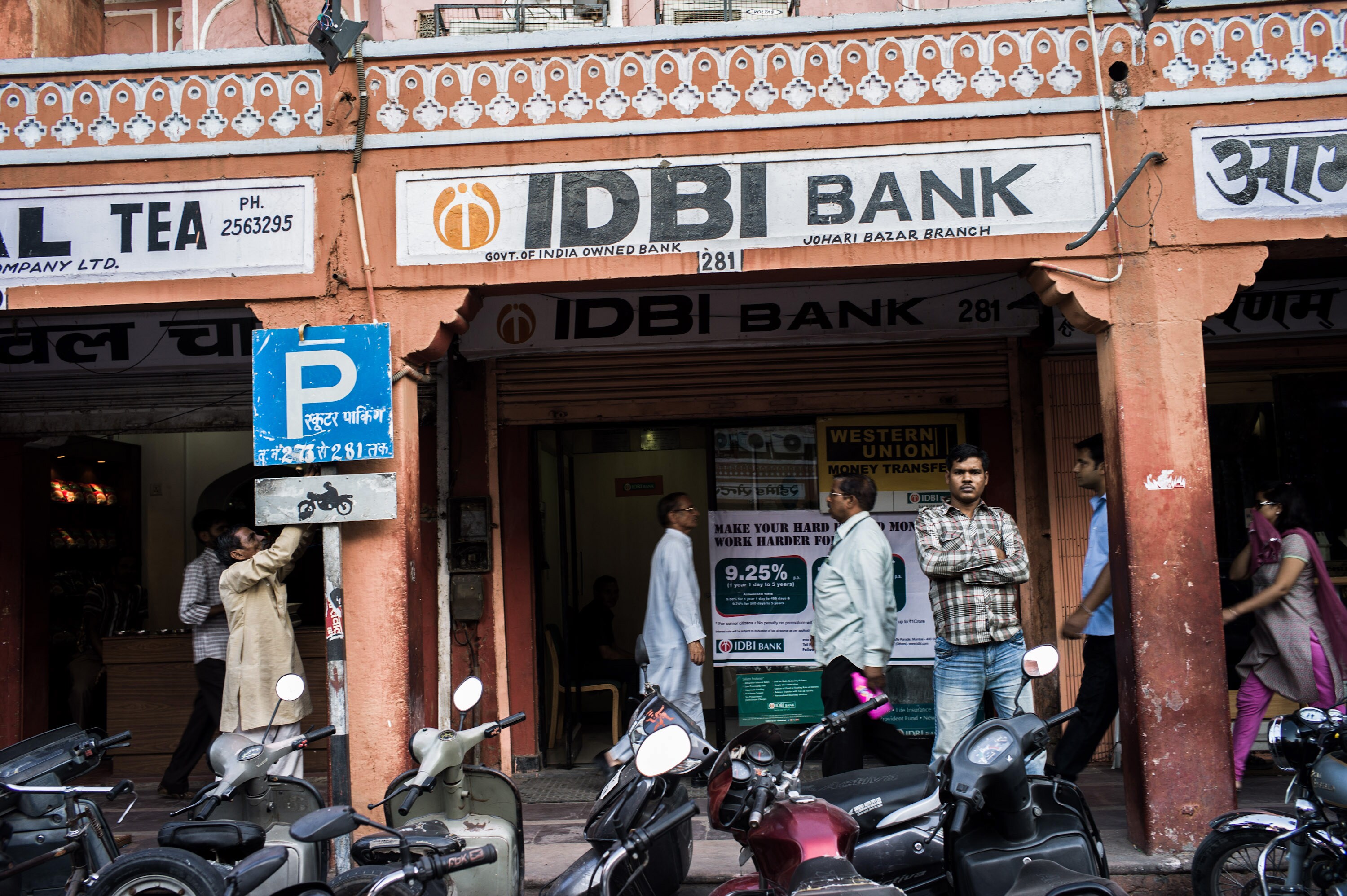
In 2018, the Life Insurance Corporation of India decided to buy a 51 percent stake in IDBI Bank. On Feb. 4, 2019, the bank's board informed the stock exchanges that its management had proposed a change in the name of the bank. The first choice is ‘LIC-IDBI Bank' and the alternative, ‘LIC Bank'. The change will occur once shareholders of both companies approve the proposal, followed by clearance from the Reserve Bank of India.
Analysts and experts have dissected the merits and demerits of this decision. What is lost in this narrative is the history of IDBI, charting the mercurial rise and fall of yet another financial institution.
Why IDBI Was Set Up
RBI's second volume of history (1951-67) records that by the start of the 1960s, India had three development finance institutions:
- The first was the Industrial Finance Corporation of India (IFCI) which was formed by the government in 1948.
- The second was the National Industrial Development Corporation (NIDC) in 1954, after then Commerce Minister TT Krishnamachari expressed the need for the state to play a more entrepreneurial role in areas where private investors were unwilling to enter. Assets created under this corporation would later be sold to private investors.
- The third was the Industrial Credit and Investment Corporation of India (ICICI) in 1955, which was owned by several shareholders including foreign investors.
Despite these three, by the 1960s, the government found the need for a DFI for long-term funding. The government-owned IFCI was reliant on government support for additional lending.
TT Krishnamachari suggested to then-RBI Governor PC Bhattacharya that the central bank set up its own financial institution. The idea was that RBI could do a better job at channelising funds towards industry via commercial banks for long-term needs. Over time, the government planned to stop providing finances, with this new bank doing most of that work.

Apart from financing, the new bank was asked to undertake a ‘positive promotional role' by commissioning research and techno-economic surveys to evaluate investment prospects in order to plan programmes. The hope was this would stimulate investment and entrepreneurship in new lines of activity. The bank was to connect a central pool of technical consultants with service term-lending institutions, particularly state financial corporations, which might not otherwise be in a position to engage such specialist advisers.
To provide continuous finance to this new entity, the RBI would transfer funds from its profits to a reserve named National Industrial Credit (Long-Term Operations) Fund. IDBI, in turn, would use these funds for long-term lending, acquiring shares and debentures of industrial borrowers as well as long-term lending agencies. The Reserve Bank also proposed that it should also rediscount eligible paper based on the development bank's loans to direct lending institutions for periods up to five years.
A Rapid Launch
The idea moved forward quickly. In his budget speech on Feb 29, 1964, TT Krishamachari proposed establishing the bank:
“The House will also be considering the Bill for the establishment of a Development Bank which is intended to make an additional contribution to the resources for the development of our industrial economy.”
The Industrial Development Bank of India Bill was passed by Lok Sabha on April 30, 1964, by the Rajya Sabha on May 7, 1964, and secured Presidential assent on May 16, 1964. The IDBI Act came into effect on June 30, 1964, and the bank came into existence on July 1, 1964.
It had taken just eight months from the time the governor submitted the blueprint, to the bank being established.
This was an example of how when a government wants something done, it can work around a problem even quicker than the private sector.
IDBI started as a fully-owned subsidiary of the RBI, with an authorised share capital of Rs 50 crore and paid-up capital of Rs 10 crore. It had a mandate of providing financial assistance to industry and financial institutions engaging in industrial development.
Just as the RBI had started with a structure similar to that of the Bank of England, IDBI started with a structure similar to the RBI. The RBI governor became the ex-officio chairperson of the IDBI board and a deputy governor was nominated as the vice-chairperson. Till IDBI came about, RBI had three deputy governors.
It is because of IDBI that RBI expanded to four deputy governors, with one of them responsible for managing IDBI and focusing on industrial development.
The RBI didn't just provide the initial staff to IDBI but also recruited staff for future needs. Governor Bhattacharya saw IDBI to ‘indeed be the reserve or apex bank of industry'.
IDBI's Heydays
The period of 1967-81 was quite eventful for IDBI and is documented in the third volume of RBI's history. The bank grew into becoming a key financer to industrial development in the country.
- Just after IDBI was formed, the government devalued the Rupee in 1966 and IDBI provided assistance to import-substituting and exporting industries.
- The economy went into a recession in 1967-68, and IDBI partnered with the government to revive industries.
- In 1968-69, it also encouraged banks to cut the discounting rate by 1 percent and pass on benefits to purchasers of machinery, thus becoming a ‘Reserve Bank of Industry' as proposed by former governor Bhattacharya.
IDBI also began appointing its nominees on boards of industrial companies to which it had given high-volume loans.
As IDBI grew in stature, it played a key role along with the Planning Commission on the upliftment of backward regions by providing cheaper finance. IDBI sanctioned 363 projects worth Rs 540 crore during 1967-76, of which 130 projects amounting to nearly 50 percent of the total amount were in backward regions.
Under New Ownership
However, this quick rise eventually led to discomfort in the circles of power. Discussions began on delinking IDBI from RBI and transferring its ownership to the government. Those in favour of the delinking argued that IDBI had become an associate of RBI and needed to build its own management cadre. Those against cited the opposite reasons; that IDBI would become inefficient and bureaucratised.
Governments usually win such battles and eventually, IDBI's share capital was transferred to the government in February 1976.

Despite these changes, RBI continued to provide funds to IDBI. RBI's official history documents this situation as the government “had its cake and eaten it too.”
In the 1980s, IDBI set up a textiles modernisation fund to assist exporting units, issued a capital gains bond and made the single-window clearance more effective.
However, the share of IDBI in assistance from development finance loans had declined from about 46 percent in 1966 to 20 percent in 1989.
Despite this decline, it remained an apex industrial bank till 1990 given its standing via both the government and RBI.
Paradigm Shift
However, things changed during the 1991 reforms.
- The Narasimham Committee on financial sector reforms suggested transferring the direct-lending function of IDBI to a separate agency while retaining its apex and refinancing role.
- It was also decided that RBI would not fund IDBI via the National Industrial Credit (Long-term Operations) Fund and instead make a token transfer of Rs 1 crore to the fund.
- RBI also imposed capital adequacy norms on IDBI and other DFIs.
- Under the reforms, it was also decided that industries and banks will carry out more financing via public markets. Accordingly, IDBI listed on the stock exchange in 1995, bringing government shareholding down to 72.7 percent from 100 percent.
- The interest rate structure also became more market-driven compared to the fixed differential interest rates of the pre-reform era.
Another way in which IDBI contributed to financial market reforms was in the expertise of its executives. Key executives from IDBI were drawn in to build India's new financial institutions, especially its executive director RH Patil who single-handedly built institutions like the National Stock Exchange of India and the Clearing Corporation of India.

But then, development finance institutions lost their pre-reform eminence and gradually became full-fledged banks. ICICI Bank launched operations in 1998, while IDBI was reclassified as a ‘scheduled bank' in 2004, and was renamed IDBI Bank. While a merger with United Western Bank gave IDBI Bank access to more branches, ICICI managed this transition much better than IDBI. After the sale to LIC, the name could be lost to oblivion, especially if it is rechristened LIC Bank. Once a landmark in Mumbai's Cuffe Parade, IDBI Tower has faded into the financial capital's skyline.
The history of IDBI resonates with several other financial institutions who had a similar journey.
This article, admittedly, documents more of its successes than its mistakes, as the parts of the RBI's official history detailing IDBI's progress run only till 1997. A detailed account of IDBI's history to help understand its journey and problems after 1997 would help policymakers as well as the rest of the financial sector. In 2017, India debated establishing wholesale finance banks whose basic structure resembles that of DFIs. The lessons from IDBI will help us design these new institutions better and avoid making the same mistakes.
Amol Agrawal is a faculty member at Ahmedabad University. He has a PhD in Indian Banking History and writes the Mostly Economics blog. (Disclaimer: The author has, in the past, worked at subsidiaries of IDBI)
The views expressed here are those of the author and do not necessarily represent the views of BloombergQuint or its editorial team.

-
Unhedged Position: Can India See An Indonesia-Style Time Correction?

The Nifty is trading below levels it first clocked in 2024. Is there, then, as I have suggested in the headline, potential that the current time correction drags on painfully for the next three-five, even ten years?
-
Navigating Friction And Energy Realities: An Analysis Of Marco Rubio's October Visit To India
Occurring at a critical juncture marked by stalled trade negotiations and escalating geopolitical pressures over global energy supplies, the visit offers a profound window into modern US-India relations.
-
India Exports Capital. Why Not Export Trusteeship?
The big question, then, is whether India can build an institution that global borrowers, investors, banks, and lawyers can trust, even without an Indian connection.
-
France's Economy & Politics Are In Crisis | The Reason Why
Let's look at how the French economy and politics evolved under Nicolas Sarkozy, Franois Hollande and Emmanuel Macron.
-
You May Inherit The Business. You Must Earn Its Credibility.
Succession tests the founder's ability to share authority as much as it tests the next generation's readiness to assume it.
-
Signing Deals Is One Thing; Making Them Work Is Another | The Week In Whys
Sometimes, things don't turn out as planned. Indian companies have lost some bids to rivals, some projects won't produce until 2030.
-
FOMC Wall, PERM Suspension, Hospital Stocks | Talking Points This Week
A PERM suspension would directly affect green-card sponsorship rather than H-1B visas, so the near-term earnings impact could remain relatively limited. The key question is whether this marks a new phase in US scrutiny of Indian IT.
-
Everything, Everywhere, All At Once: Dalal Street's Week To Forget | Joining The Dots
Visa curbs, a Starlink spat and cancer drug caps: what connects this week's shocks for Indian markets
-
India Is Going Abroad For Critical Minerals. But It May Take Years To Pay Off | The Reason Why
Although India's steps are in the right direction, they remain modest compared with India's growing dependence.
-
When Everyone Has AI, What Gives You An Edge?
India's young workforce is entering an uncertain world of work where powerful AI tools are becoming widely accessible. The advantage will belong to those who combine deep expertise with digital fluency, and the distinctly human capabilities that technology cannot manufacture.









