Prime Minister Abe Failed To Put His Own Stamp On Abenomics
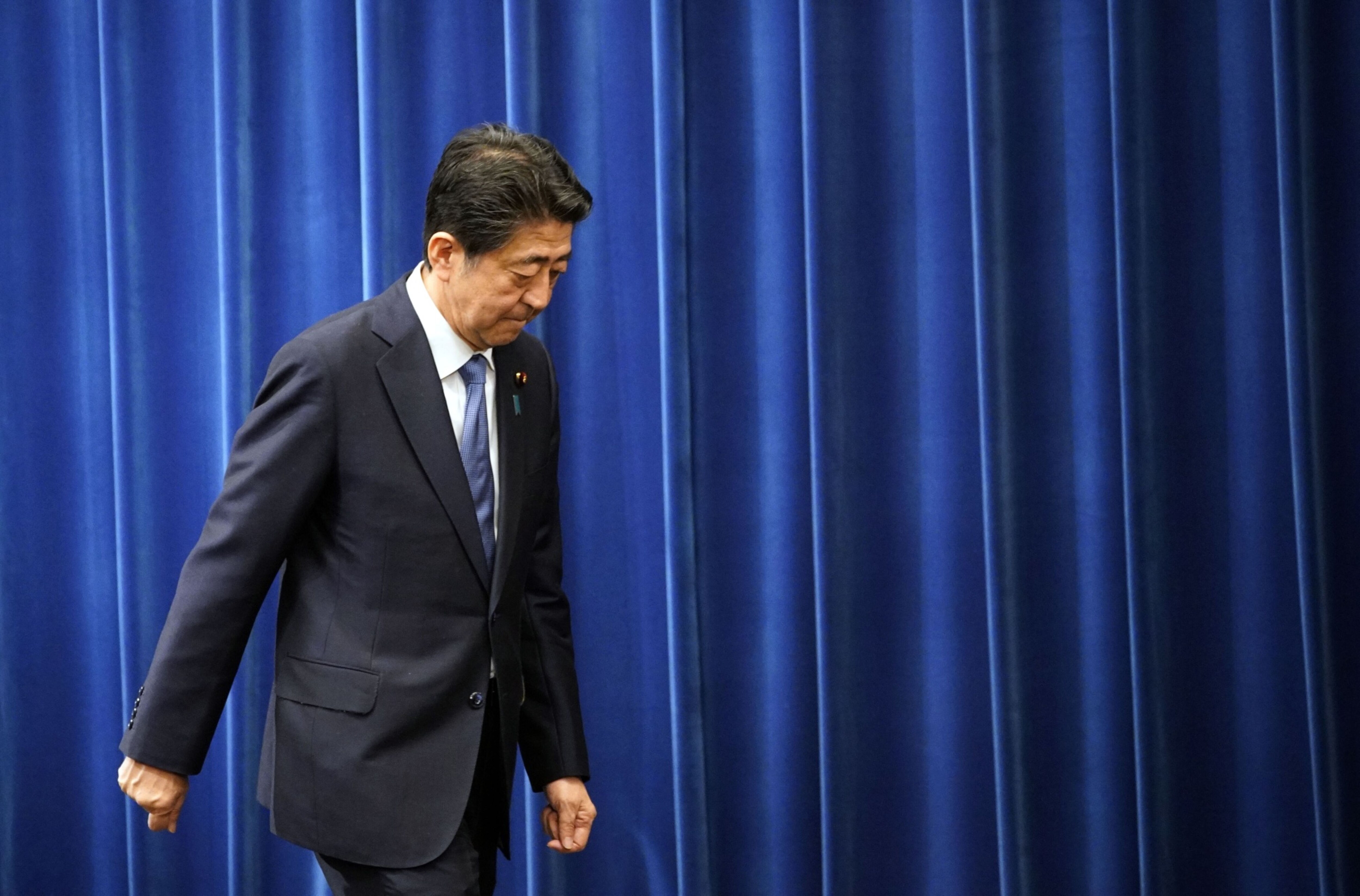
Assessments of Japanese Prime Minister Shinzo Abe's ‘Abenomics' agenda have been favorable. After a string of lackluster administrations, Prime Minister Abe Mark II breathed life into Japanese politics and put the country back on the international map. But there is an untold story of the genesis of Abenomics and its true fiscal purpose, that speaks more to Abe's political marketing skills than it does to his economic policy nous.
The conventional assessment of Abe's macroeconomic policy achievements lauds his success in engineering a dramatic reflationary policy shift at the Bank of Japan, and deservedly so, but notes that his pushing ahead with two hikes in the consumption tax rates may have been a mistake. It was a policy error to double the consumption tax rate, but it was the whole point of Abenomics.
Go back to early 2012, when the euro area sovereign debt crisis was in full swing. Faced with ever-rising government debt levels, the fiscal hawks in Japan saw a chance to push through consumption tax rate hikes, seen as the lynchpin of funding rising social security expenditures, on the far-fetched grounds that “Japan could be the next Greece.”
There was a big hurdle to being able to do so: Japan was in a chronic deflation and the Bank of Japan was refusing to pull out the monetary stops. The central bank argued that insufficiently aggressive monetary policy was not the reason for Japan's economy staying in deflation: a falling real potential growth rate was. Without the BOJ changing its tune and policy stance, there was no way that the fiscal hawks could win political agreement for deflationary consumption tax hikes.
The political resolution came in the fine print of the consumption tax legislation passed in August 2012, the crowning legislative achievement of the short-lived Democratic Party of Japan administration of Prime Minister Yoshihiko Noda. This legislation, passed with bipartisan support but tied to an early election being called, authorised the government to raise the consumption tax rate in two steps (to 8% in April 2014, then to 10% in October 2015), but made the implementation conditional on the economy being given a big lift.

To wit, policies would need to be put in place that raised the average nominal GDP growth rate to 3% over the coming decade, comprising 2% real GDP growth and a GDP deflator of 1%. At the time, the GDP deflator had averaged -1.3% over the prior decade and real growth had averaged just 0.8%. So, a precondition for the legislated consumption tax rate hikes to go ahead was for policies to be put in place that would both end deflation and spur real growth, and in a big way.
This was nothing but a numerical encapsulation of the policy thrust of the “three arrows” of Abenomics. But all this was happening while Abe was still in the political wilderness: the genesis of Abenomics had nothing to do with Abe! Only in the next month did he unexpectedly return as leader of the Liberal Democratic Party, then in opposition, and only in December of 2012 did he win back the premiership in an election that was called, eight months early, because of the consumption tax hike deal.
This casts the policy shift that Abe skillfully engineered at the Bank of Japan, by installing former Ministry of Finance official Haruhiko Kuroda as governor in March 2013, in a new light. The ensuing dramatic policy shift was the alibi that the fiscal hawks needed. It is not so much that the associated fiscal headwinds stymied some of the monetary stimulus as that the monetary stimulus was needed to provide cover for the contractionary fiscal actions.

Abe gave shape to and marketed the policy shifts needing to flow from the consumption tax legislation brilliantly and with great effect, but what could he have done differently to put his stamp on its substance? Consistent with the ‘second arrow' of Abenomics, ‘flexible fiscal policy', he could and should have resisted the fiscal hawks and made implementing the consumption tax hikes conditional on the Bank of Japan first achieving its 2% inflation target.
Such a move would have aligned fiscal policy with monetary policy and bolstered rather than thwarted the power of the latter. It would also have created a favorable macroeconomic backdrop to pursue growth-enhancing structural reforms more aggressively.
As Shinzo Abe leaves political center-stage he deserves accolades. But he did not grasp or act on the deep economic truth that it is the ‘third arrow' reforms' raising of Japan's potential growth rate, not the draining of current household purchasing power, that stands to secure the future prosperity of its aging population. A prime minister who did would have gone down in the history books as a truly great one.
Paul Sheard is a research fellow at Harvard Kennedy School and former chief economist at Lehman Brothers, Nomura Securities, and S&P Global.
The views expressed here are those of the author and do not necessarily represent the views of BloombergQuint.

-
Navigating Energy Crossroads: S Jaishankar's Call For Diversified Supply Chains At G20 Ministerial Meeting

As geopolitical fault lines continue to test maritime trade routes and commodity flows, Jaishankar's message remains pertinent: true economic resilience requires open markets, protected transit lines, and a genuine commitment to multilateral cooperation rather than coercion.
-
Indians Are Travelling, But Not Every Journey Is A Holiday | The Week In Whys
Pilgrims, patients and working women are the real travellers, and the system hasn't quite caught up with them.
-
Getting To Work Costs Women More | The Reason Why
It is not just about women paying more than men. It is about women paying much more in cities than in villages.
-
AI Bias In Investing Cannot Be Eliminated, But It Can Be Governed
Framing is a particularly important example as identical financial information presented in terms of gains rather than losses can lead an LLM to reach a different assessment.
-
Joining The Dots | Dark Skies, Steady Diya: Why Hope Holds This Diwali
With war, a weak rupee and foreign outflows weighing on sentiment, policymakers at the NDTV World Summit and market veterans at NDTV Profit Ignite: Diwali Edition offered the same advice: stay invested and filter out the noise.
-
The Curious Case of Equitas Small Finance Bank And A CEO Who Quit For Stock
PN Vasudevan believes persistent investor concerns over a perceived conflict of interest had become a governance overhang on Equitas Small Finance Bank's stock, even as the lender improved profitability and asset quality.
-
Talking Points This Week: AI Cash Burn, A Tiger Comeback And An India That Still Finds Its Own Path
India is not immune to higher oil or tighter global liquidity, yet its earnings base is broader, its domestic policy levers are still available.
-
Foreign Investors Own Half Of HDFC Bank and ICICI Bank. An LTCG Cut Could Matter Most Here
Foreign portfolio investors have US$115 billion parked in HDFC Bank, ICICI Bank. If the government cuts long-term capital gains tax, Jefferies says returning foreign money could land here first.
-
'Never Seen This Level Of Negativity': Sandeep Tandon Says The Next Rally May Be Closer Than You Think
Veteran investor Sandeep Tandon says foreign selling is easing, large-caps are due a comeback and mid-caps are crowded, while he turns positive on gold, power and pharma this Diwali.
-
Indians Stay With Family, Not In Hotels | The Reason Why
India still lacks enough clean, reliable and affordable hotels for budget-conscious travellers.










