A Tale Of Two Bandits: Naxals And The Indian State
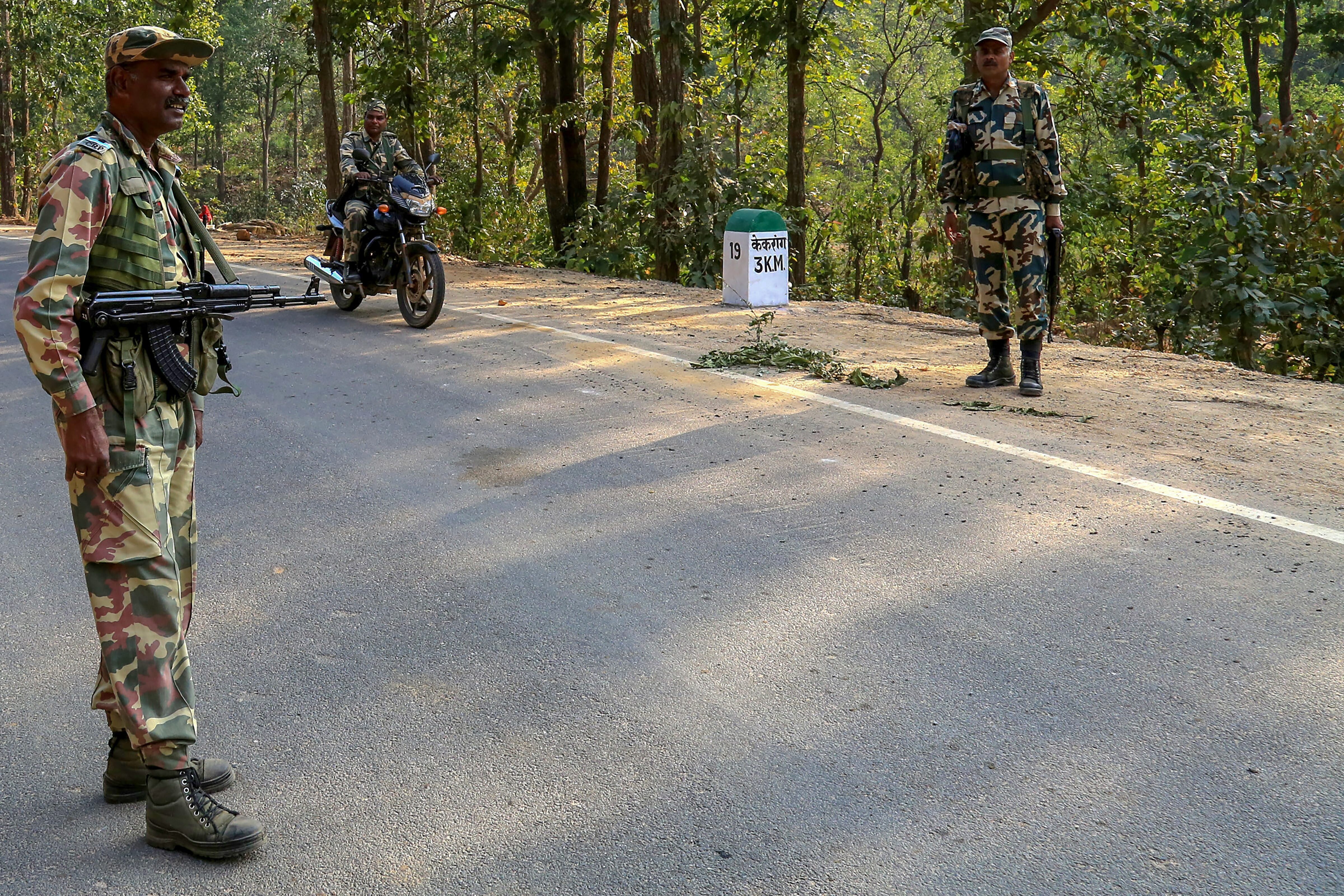
Nandini Sundar's book, The Burning Forest, begins with a stirring scene. It's early in the morning, and a young girl named Hungi is lying on a khatiya outdoors, looking at the stars. It is still dark, but it will soon be time to get up. Her mother has gone into the fields to defecate. Her father is warming his hands around a fire. It's the calm before a day begins – when a 16-year-old village sentry runs through the village shouting, “The Judum is coming.”
Hungi grabs her baby brother and runs off into the forest. Her father gathers some grain in a cloth bag, unties the cattle, and follows. Soon, the village is deserted, and “400 men dressed in camouflage fatigues, some with black scarves around their heads, carrying Kalashnikovs,” enter the village. They destroy everything, and burn every house down.
But wait, the village isn't quite deserted yet. In Sundar's words:
“Jogi's house on the western edge of the neighbouring hamlet was shielded by a grove of mango and tamarind trees. She had been out since 4:30 am, gathering the mahua flowers used to make the local liquor, and had just come home. Jogi's father, Hunga, had a bad leg after he had fallen off a tree some years ago. As he did most afternoons, he was sitting outside the house making a bamboo basket. When the forces came, neither Jogi nor her father was prepared. Two of the men hit Hunga with rifle butts, and when Jogi ran to save him, she was caught and pushed inside the house. After they had finished raping her, the soldiers shot Jogi. That evening, back in camp, the force commander called a press conference. He proudly displayed a woman's corpse dressed in an olive-green uniform. A guerrilla squad commander, he said, captured after a heavy encounter in which both sides fired several rounds.”

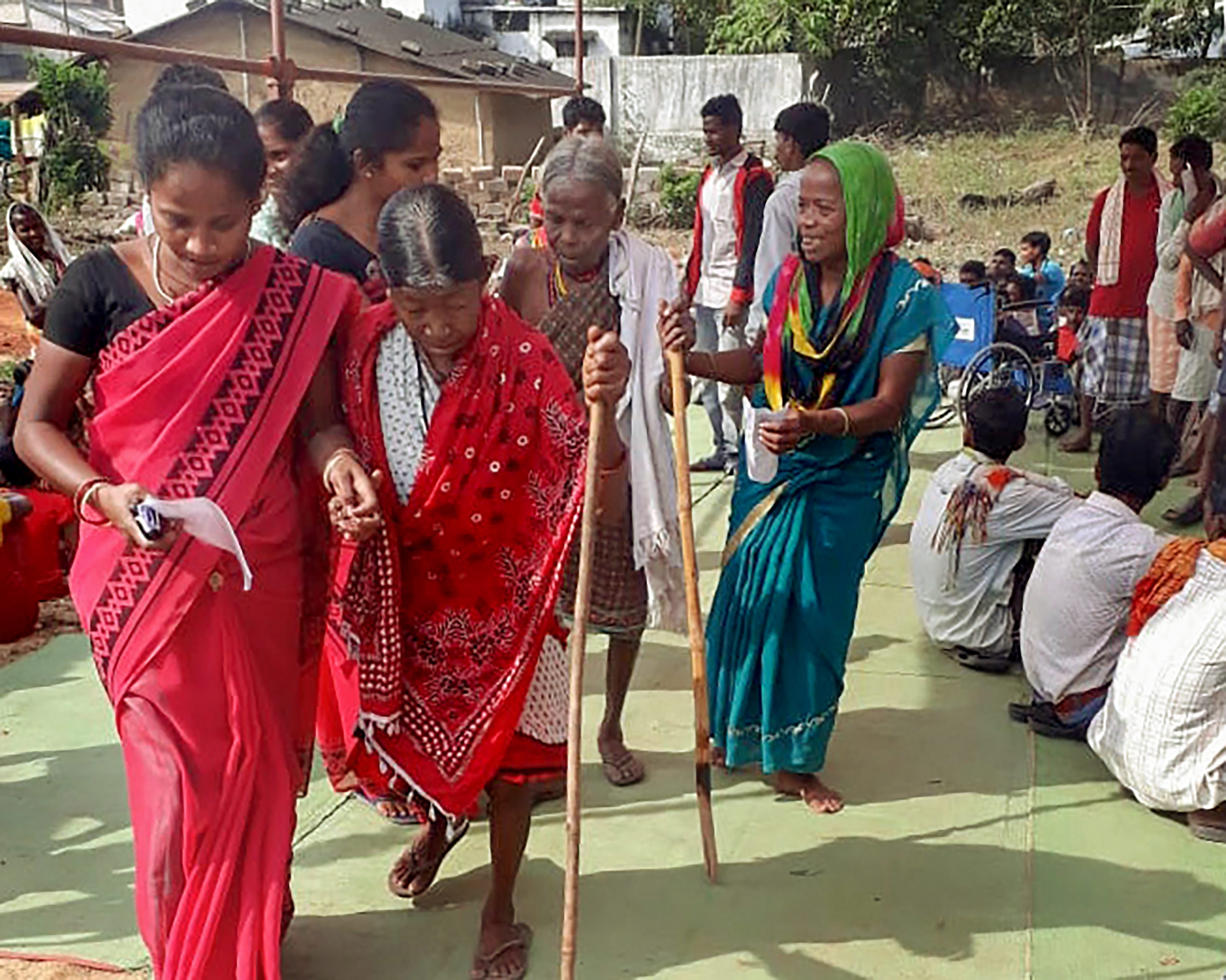
Sundar's evocative book is about “India's war in Bastar,” and it takes a close look at Salwa Judum, the militia put together by the Indian government to counter the Maoist forces it could not defeat. I recommend you read it in conjunction with another fine book I read this week: Nightmarch by Alpa Shah. An anthropologist from London, Shah wanted to study the lives of adivasis in India, and chose to do so through what anthropologists call “participant observation”: in her case, actually living their life with them over an extended period of time, instead of watching from the outside. While the title of her book refers to a march she undertook with her Maoist subjects that took place over several nights, the book has many layers. It covers the history of the Naxalite movement in India, the motivations of its leaders, the incentives that drive adivasis to become their foot soldiers, the contradictions within the movement, the social churn among the adivasis themselves, and the many ways in which academics like Shah regard these groups.
It also illustrates, though Shah surely did not intend it that way, a core concept in Public Choice Economics: that of Roving Bandits and Stationary Bandits.
Roving Bandits And Stationary Bandits
These terms were described by the American economist Mancur Olson in his 2000 book, Power and Prosperity. Say a group of people live in anarchy, or under some kind of mutually understood social order. They could be villagers, maybe, or tribals. But there is no state, and no rule of law. This group is, thus, vulnerable to bandits. Groups of bandits attack them once in a while. They rape, pillage, destroy, and go away. They don't care about the people or their property. They are merciless. Because they don't stay, Olson calls them Roving Bandits.
Now, imagine a group of bandits that do decide to stay. Their incentives are rather different. Instead of destroying everything, they have an incentive to build and tax. They can steal a little at a time, instead of rendering their victims destitute with one blow. They can nurture these geese that lay golden eggs by building infrastructure and looking after them. They can also protect them from Roving Bandits. Olson called this group Stationary Bandits.
In a recent podcast with me, the writer Matt Ridley emphasised that the origin of the state is as a protection racket. Take over an area, seize the monopoly on violence, crush competitors, and then respond to the incentives of a Stationary Bandit. Look after your subjects to the extent that they stick with you as their bandit of choice, and you can milk them slowly.
Before I read about Indian Naxalism, I imagined that the Indian state, like all states, was a Stationary Bandit, and the Maoists were a threat to their power. But books like The Burning Forest and Nightmarch have convinced me that in many parts of the country, our state behaves like a Roving Bandit. The rule of law is absent. The people, and their resources, exist only to be exploited.
The Roving State And The Stationary Naxal
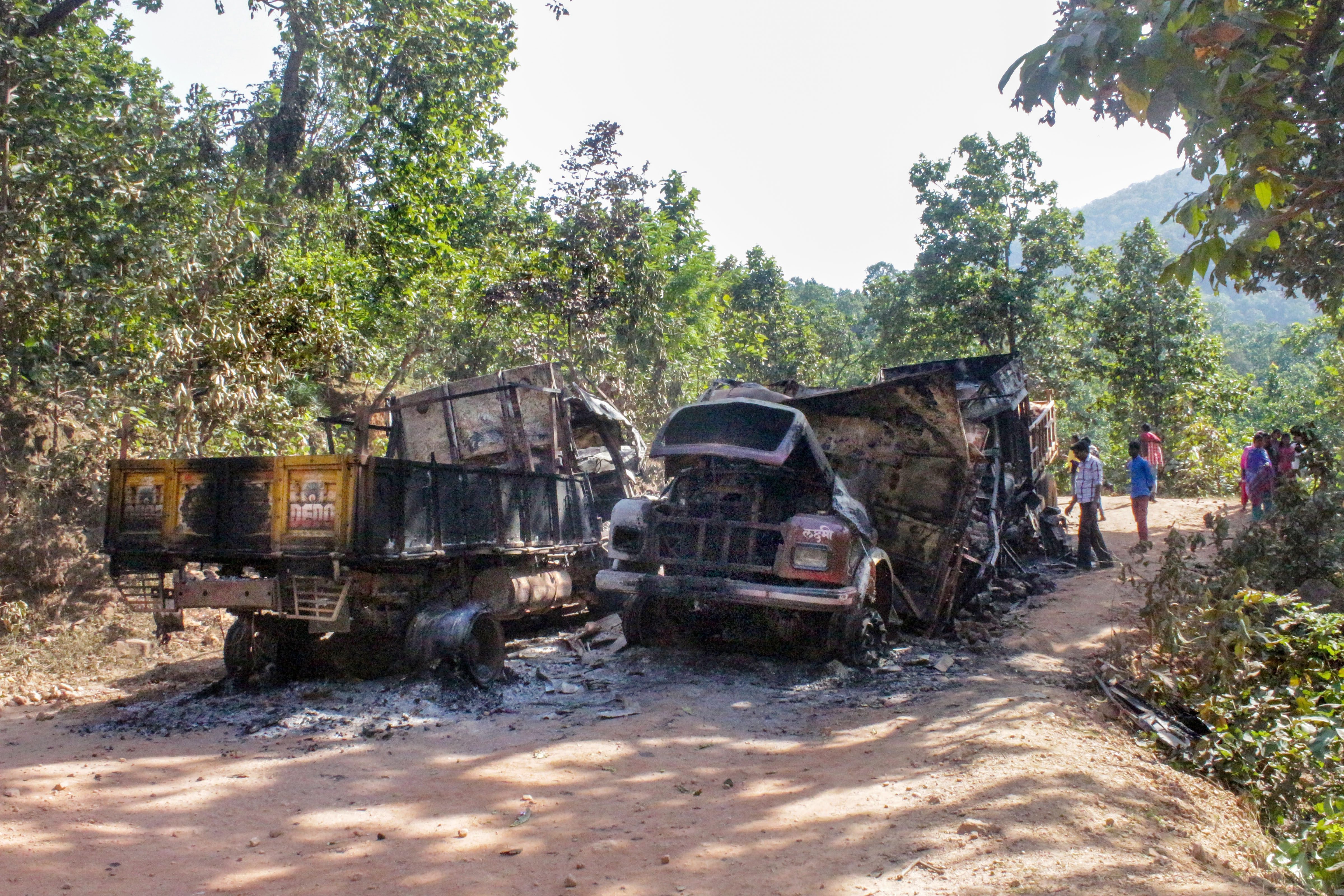
“Neither the British Raj nor the Indian state,” writes Shah in Nightmarch, “made substantive attempts to develop basic infrastructure for the people who lived in these regions.” Education, healthcare, even the police are often absent. The adivasis, especially, are treated so brutally that they become a breeding ground of resentment, which Maoists then feed into. Enabled by the alternating absence and brutality of the Indian state, the Maoists of India were the third-most prolific terrorist group in 2016, after ISIS and the Taliban. In the absence of a Stationary Bandit with the capacity to protect the people, they competed for the people's loyalty with the Indian state.
Shah writes that to begin with, she viewed the Maoists “as protection racketeers, not unlike the Sicilian Mafia, extorting money from state development schemes and big business in return for safeguarding against their own violence.” But her immersion in that region changed her mind. I won't summarise the nuances she reveals – read the book for that – but one learning I took away from it was that the Maoists, noting the absence of the state, would sometimes try to slip into the role of the Stationary Bandit.
They would open schools, provide rule of law, even take over exploitive rent-seeking functions, trying to be the state. The ideological underpinnings of the movement became irrelevant. Maoism in India, as lived by the foot soldiers, is a dual battle for survival and power. This is a battle between two Roving Bandits, the Maoists and the Indian state, with innocent people caught in the crossfire.
So, What Should The Indian State Do?
The answer is simple: stop being a Roving Bandit, and become a Stationary Bandit. Win the people to your side by ensuring the rule of law, and all the essential services that a state should provide. And most of all, don't be brutal with innocent villagers, as the Salwa Judum was in Bastar at the start of Sundar's book, or as the state is all through Nightmarch.
When Maoists began making inroads into Bihar by wooing Dalits, Shah writes, upper caste landlords retaliated. “They wreaked havoc in the villages that sympathised with the Naxalites by forming private armies or militias which went by names such as Ranvir Sena, Bhumi Sena, and Sunlight Sena. The Senas (armies) came with their own war cry: ‘There is only one remedy for the Naxalites, cut them down by six inches.' Dalits, in particular, were massacred overnight. They were often decapitated, as the slogan promised, to make them six inches shorter.”
Once you are the Stationary Bandit in charge of an area, the worst possible way to fight an insurgency is to create more insurgents. The Indian state needs to move from the mentality of a Roving Bandit to a Stationary Bandit. Of course, it will remain a bandit – but every state is one, and there seems to be no way around that. It is smarter to be a stationary one, though – and better for the people.
Amit Varma is a writer based in Mumbai. He has been a journalist for a decade-and-a-half, and has won the Bastiat Prize for Journalism twice. He edits the online magazine Pragati, writes the blog India Uncut and hosts the podcast The Seen and the Unseen.
The views expressed here are those of the author and do not necessarily represent the views of BloombergQuint or its editorial team.

-
Navigating Friction And Energy Realities: An Analysis Of Marco Rubio's October Visit To India

Occurring at a critical juncture marked by stalled trade negotiations and escalating geopolitical pressures over global energy supplies, the visit offers a profound window into modern US-India relations.
-
India Exports Capital. Why Not Export Trusteeship?
The big question, then, is whether India can build an institution that global borrowers, investors, banks, and lawyers can trust, even without an Indian connection.
-
France's Economy & Politics Are In Crisis | The Reason Why
Let's look at how the French economy and politics evolved under Nicolas Sarkozy, Franois Hollande and Emmanuel Macron.
-
You May Inherit The Business. You Must Earn Its Credibility.
Succession tests the founder's ability to share authority as much as it tests the next generation's readiness to assume it.
-
Signing Deals Is One Thing; Making Them Work Is Another | The Week In Whys
Sometimes, things don't turn out as planned. Indian companies have lost some bids to rivals, some projects won't produce until 2030.
-
FOMC Wall, PERM Suspension, Hospital Stocks | Talking Points This Week
A PERM suspension would directly affect green-card sponsorship rather than H-1B visas, so the near-term earnings impact could remain relatively limited. The key question is whether this marks a new phase in US scrutiny of Indian IT.
-
Everything, Everywhere, All At Once: Dalal Street's Week To Forget | Joining The Dots
Visa curbs, a Starlink spat and cancer drug caps: what connects this week's shocks for Indian markets
-
India Is Going Abroad For Critical Minerals. But It May Take Years To Pay Off | The Reason Why
Although India's steps are in the right direction, they remain modest compared with India's growing dependence.
-
When Everyone Has AI, What Gives You An Edge?
India's young workforce is entering an uncertain world of work where powerful AI tools are becoming widely accessible. The advantage will belong to those who combine deep expertise with digital fluency, and the distinctly human capabilities that technology cannot manufacture.
-
Wrong Labels, High Pesticide Residues Holding Back Agri Exports | The Reason Why
India needs stronger domestic food-safety and labelling standards, with best practices becoming part of everyday business for farmers, traders and food companies.