Zomato Zooms Past Tata Motors In Market Cap Ahead Of Sensex Inclusion
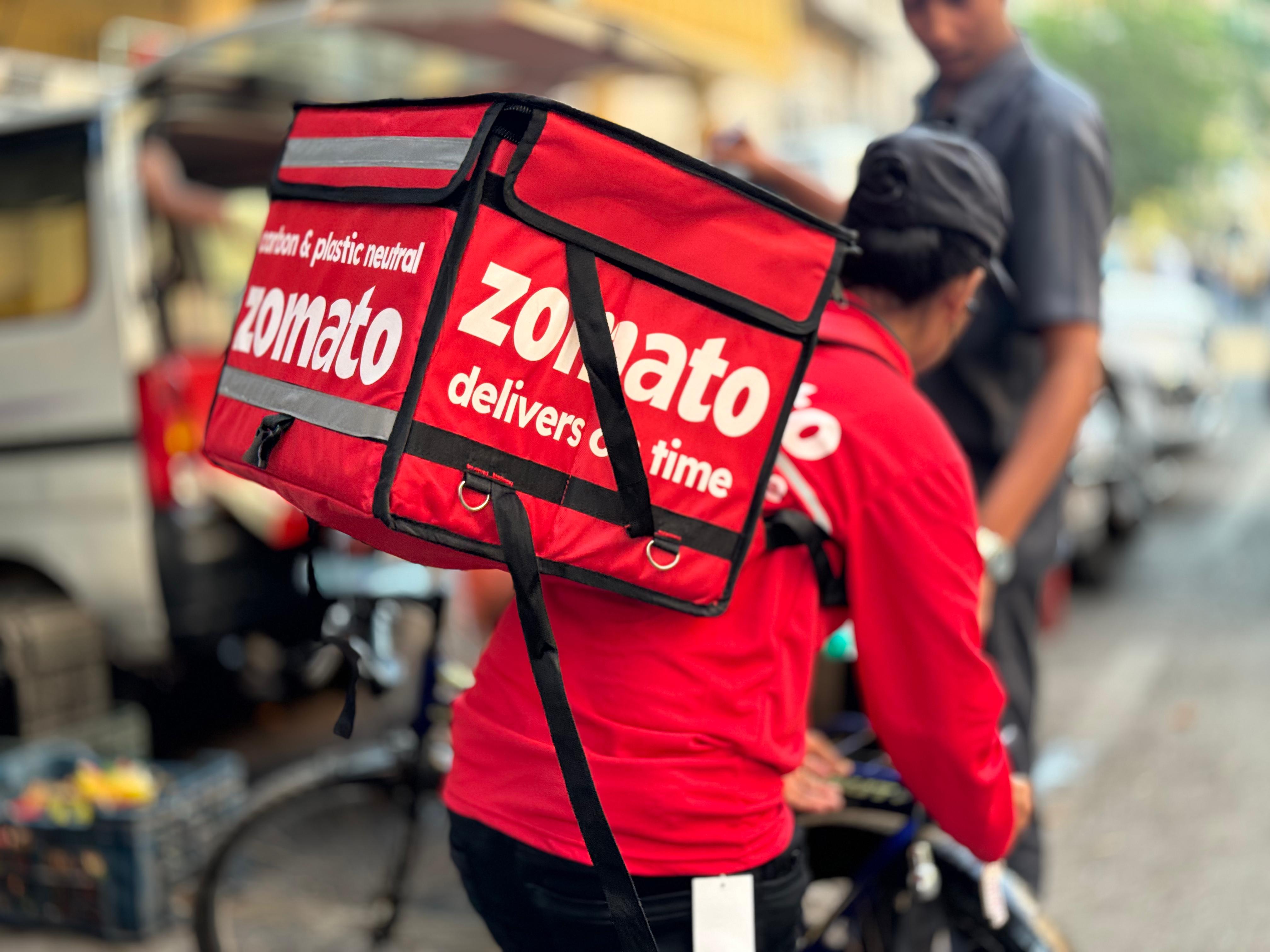
Food delivery aggregator Zomato Ltd. has surpassed automobile major Tata Motors Ltd. in terms of market capitalisation, ahead of its inclusion in the Sensex, the main index of the BSE.
Zomato's market cap has peaked 162% year-to-date to Rs 2.83 lakh crore, thereby surpassing Tata Motors' market cap of Rs 2.79 lakh crore. The Deepinder Goyal-led platform firm has also surged ahead of the market cap of Bajaj Auto, which stands at Rs 2.5 lakh crore.
With effect from Dec. 20, Zomato will be replacing JSW Steel Ltd. in the Sensex. The decision to swap Zomato with the traditional steelmaker, which has a market cap of Rs 2.31 lakh crore, was announced by the oldest Asian stock exchange last month.
Companies are added and excluded from the Sensex based on their average six-month float-adjusted market cap. The frontline index serves as both a benchmark and an investable index and is comprised of 30 large, well-established, and financially sound companies across key sectors.
Zomato is set to bring in an inflow of $513 million, or approximately Rs 4,356 crore, as it gears up to replace JSW Steel, according to Nuvama Alternative & Quantitative Research.
Zomato, whose stock has rallied over 136% year-to-date, has attracted bullish views from brokerages. Morgan Stanley, in a note released last week, said it expects the food delivery firm to soar by around 75% to Rs 510 apiece over the next year in a bull case scenario.
Morgan Stanley also sounded bullish on Blinkit, the quick commerce arm of Zomato, even as it pointed towards the rising competition in the sector. "Superior unit economics, a stronger balance sheet, and strong positioning within consumers should keep Blinkit's market share above 40%," the broking said.
Shares of Zomato were trading 1.67% lower at Rs 291.85 apiece on the NSE, compared to a 0.65% decline in the benchmark Nifty 50, at 2:42 p.m. The stock has climbed by 127% over the past 12 months.
Among the 26 analysts tracking the stock, 24 have a 'buy' rating and only two recommend a 'sell'. The average of 12-month analysts' price target implies a potential upside of 3.7%.

-
A New Samvat Wishlist: Inclusive Prosperity And Human Development

India has strengthened its economic foundations through infrastructure, digital access and enterprise. Its next growth chapter must deepen productivity, create better livelihoods and widen participation in prosperity.
-
Love, Sex Aur Dhokha: The Audacious Plot To Spy On Jensen Huang
A Taipei dinner, a Singapore chip buyer and a suspected Chinese asset: inside the alleged spy operation that got close to NVIDIA's Jensen Huang.
-
Ten Things I Learnt This Samvat
Patience can be a trap. Cheap stocks can stay cheap. Leverage can wipe you out. What did Samvat 2082 teach us? Niraj Shah writes on 10 lessons from the year gone by.
-
Talking Points This Week: Tech Nerves, FII Buying, And A Faraway Banking Shock
The global markets are not shining this Diwali. The exception in the large markets is, India.
-
Midterm Rally Lasted A Day. The Hard Reality Of A Divided US May Last Two Years | Opinion
Between a contested AI boom, a debt ceiling that arrives in 2027 and a president with every incentive to act alone, the next two years may prove more volatile than the first day's rally suggests.
-
Blue Wave Will Derail the AI Trade but Won't Dismantle the AI Era | Unhedged Position
The Democrats' sweep of the US Congress will see politics collide with economic forces both over the long and short term.
-
It's Time To Take The GST Council's Bet On Trust Global
Payment records can prove India's services exports, and clear, proportionate rules can bring foreign digital sellers into the tax net.
-
Opinion | India at 38: From Innovation Overperformer to Innovation Powerhouse
India now has 453 VC-backed deep science startups, 18 of them late-stage, after 117 percent growth since 2020. Laurus Labs, at USD 9.3 billion, is the most valuable deep science company in any middle-income economy outside China.
-
Navigating Energy Crossroads: S Jaishankar's Call For Diversified Supply Chains At G20 Ministerial Meeting
As geopolitical fault lines continue to test maritime trade routes and commodity flows, Jaishankar's message remains pertinent: true economic resilience requires open markets, protected transit lines, and a genuine commitment to multilateral cooperation rather than coercion.









