World Heart Day: Dr Naresh Trehan's Tips For Traders And Investors To Manage Stress
Yoga and Pranayama may be the most effective ways to relieve stress for professionals working in the finance and investment sectors, according to Dr Naresh Trehan, chairman and managing director of Medanta - The Medicity.
In an exclusive interview with NDTV Profit on the occasion of World Heart Day, the Padma Shri and Padma Bhushan awardee noted that people working on trading floors hold high-stress roles as they are responsible in managing funds owned by others.
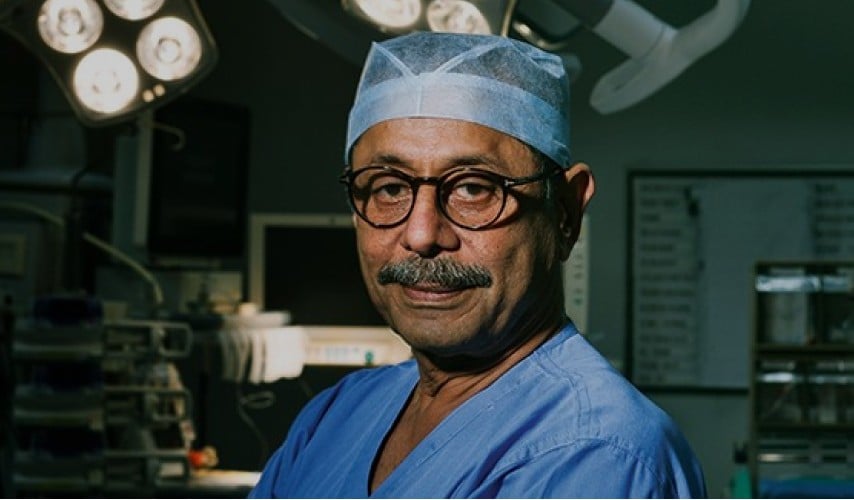
(Source: Medanta website)
There are some professions, some trades where the stress is much higher than others, and when we are talking about people who are on the trading floor, people who are in the financial world, their stress levels are actually directly related to their workDr Naresh Trehan
The significant health risks that come with chronic stress in these sectors, include increased blood pressure and a higher likelihood of developing strokes, according to Trehan. These risks, he warned, only grow over time if stress is not managed effectively.
He also pointed out a worrying trend in India, where individuals are developing heart diseases a decade earlier than the global average. "The problem in India is that we are getting heart disease 10 years younger than the Western population," he said, noting the urgency of addressing lifestyle factors.
Solutions And Tips To Manage Stress
To mitigate these risks, Trehan recommended regular physical activity, a balanced diet, and stress management techniques like yoga and Pranayama. He recommends at least 40 to 45 minutes of brisk walking five times a week and a growing need to maintain a healthy weight.
“Try to maintain your weight no more than 10% above or below your ideal body weight,” he said.
Dr Trehan further stressed the importance of addressing mental stress. “You can't escape stress, but you can neutralise it,” he said. "Yoga and Pranayama are the best tools for stress relief, particularly Pranayama, which can be practiced for just 10 to 15 minutes a day."
Frequent Health Check-ups Are Critical
Individuals should start comprehensive health assessments by age 25, if they have a history of these conditions.
“If there are no risk factors by the age of 30, the next check-up can be five years later. However, if risks are present, regular follow-ups every year or two are essential,” he advised.
For the broader population, he recommended a full check-up by age 30, even if there is no known family history of disease. These evaluations can help detect early signs of heart disease, hypertension, or diabetes, allowing for timely intervention.
Dr Trehan also discussed recent advancements in medical technology, such as genome sequencing, which can predict an individual's risk for lifestyle diseases like heart disease, diabetes, and cancer. He noted that personalised health plans based on genetic data can help mitigate risks early on.

-
High US Salaries, No Green Card Certainty: The Financial Calculation Facing Indian H-1B Families

The suspension of PERM processing at eight technology employers does not cancel existing H-1B visas. What it does is force a question many Indian families have been avoiding: is the US salary worth tying your career and family plans to one employer?
-
Swiggy vs Eternal: Food Delivery's Two Rivals Are No Longer In The Same Race
Eternal is building a private AI assistant, dark.ai. Swiggy is still working out how to make Instamart pay, with an operating loss of Rs 895 crore in the July-September quarter while Blinkit stayed profitable.
-
Where You Live Shapes How You Get To Work | The Reason Why
Two-wheelers are the most popular way to get to work in India, accounting for nearly 43% of workplace commutes.
-
Unhedged Position: Can India See An Indonesia-Style Time Correction?
The Nifty is trading below levels it first clocked in 2024. Is there, then, as I have suggested in the headline, potential that the current time correction drags on painfully for the next three-five, even ten years?
-
Navigating Friction And Energy Realities: An Analysis Of Marco Rubio's October Visit To India
Occurring at a critical juncture marked by stalled trade negotiations and escalating geopolitical pressures over global energy supplies, the visit offers a profound window into modern US-India relations.
-
India Exports Capital. Why Not Export Trusteeship?
The big question, then, is whether India can build an institution that global borrowers, investors, banks, and lawyers can trust, even without an Indian connection.
-
France's Economy & Politics Are In Crisis | The Reason Why
Let's look at how the French economy and politics evolved under Nicolas Sarkozy, Franois Hollande and Emmanuel Macron.
-
You May Inherit The Business. You Must Earn Its Credibility.
Succession tests the founder's ability to share authority as much as it tests the next generation's readiness to assume it.
-
Signing Deals Is One Thing; Making Them Work Is Another | The Week In Whys
Sometimes, things don't turn out as planned. Indian companies have lost some bids to rivals, some projects won't produce until 2030.
-
FOMC Wall, PERM Suspension, Hospital Stocks | Talking Points This Week
A PERM suspension would directly affect green-card sponsorship rather than H-1B visas, so the near-term earnings impact could remain relatively limited. The key question is whether this marks a new phase in US scrutiny of Indian IT.









