Why Torrent Pharma Is Outperforming Its Larger Indian Peers

Shares of Torrent Pharma Ltd. have risen the most among large domestic peers so far this year as its domestic business aided earnings when Indian drugmakers face pricing pressure in the U.S., the largest market for many of them.
The stock has gained over 33 percent since the start of the financial year in April, compared with a 10.6 percent rise in the S&P BSE Healthcare Index. It has jumped over 17 percent so far this year—the most among large domestic peers—and is closet to its all-time high.
The recent rally was aided by its first-quarter earnings. The revenue of India's ninth largest pharma company by market value jumped 37 percent year-on-year in the quarter ended June, with an even better operating profit growth of 60 percent. Profit margin rebounded, but net profit was lower than a year ago because of higher other income in the base quarter.
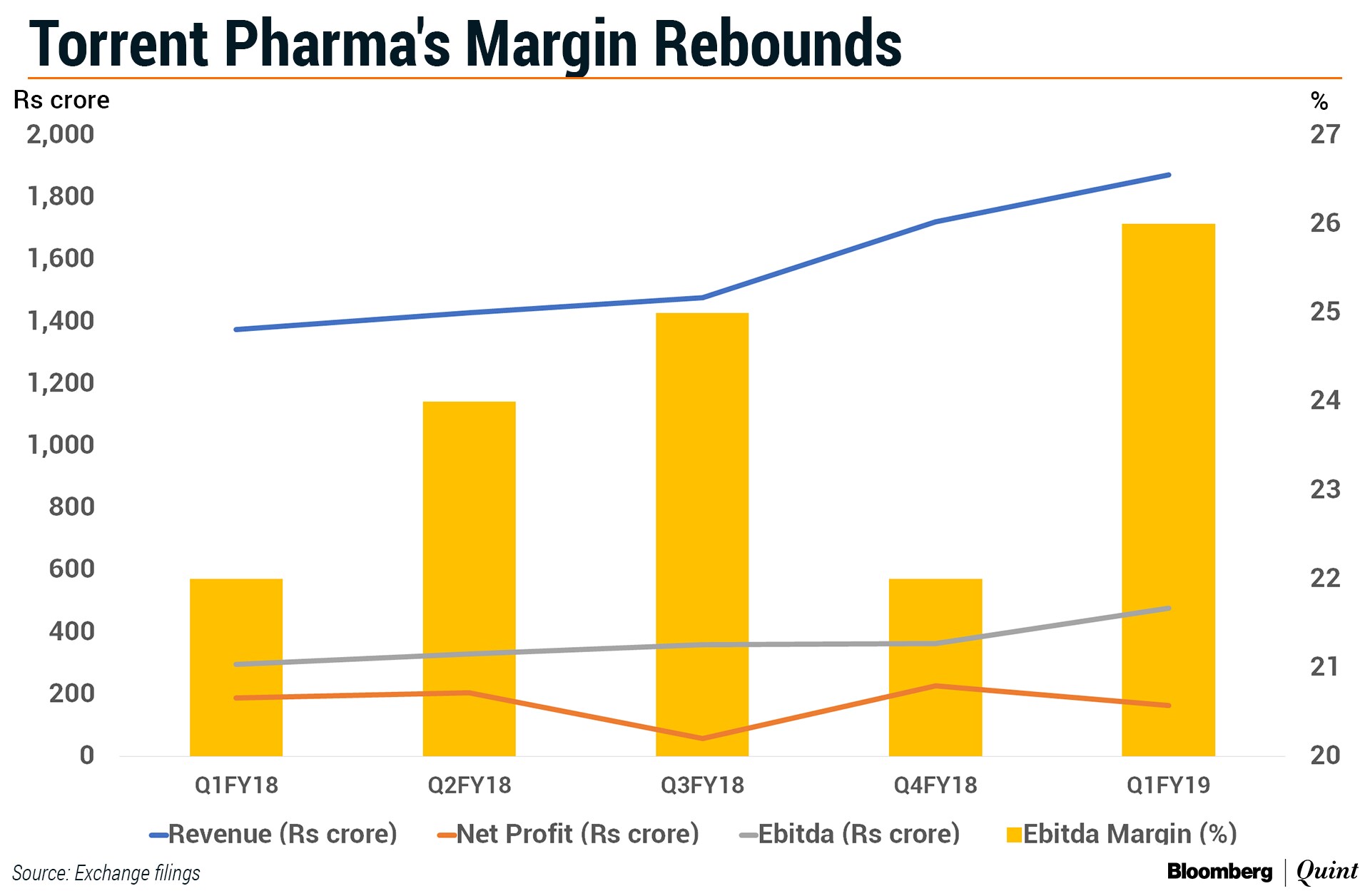
The November acquisition of Unichem Laboratories Ltd. contributed to Torrent Pharma's domestic business. And the company also expects the international segment to improve.
Here's a snapshot of what helped the company:
Unichem Acquisition
Torrent Pharma bought Unichem Laboratories Ltd. in November 2017. The drugmaker expects the acquisition to be break even by the end of the financial year.
It's now focusing on synergies and reviving key brands, the company's management said in a conference call. Field force rationalisation in terms of proper allocation of people for sales and marketing and lower attrition will contribute to synergies in the quarters ahead, it added.
- Nomura expects Unichem's contribution to operating income at Rs 75-80 crore a quarter compared to Rs 40-45 crore at the time of acquisition.
- Like Torrent Pharma turned around Elder Pharma's Shelcal and Chymoral brands, it can realise the full potential of Unichem brands, according to Antique Broking.
- ICICI Securities said Unichem's India business would help improve the growth trajectory and profitability in the domestic market through synergies and operational efficiency.
Domestic Focus
The dual effect of demonetisation and the goods and services tax in the past one year means pharma companies are growing on a low base. That helped most India-focused drugmakers grow faster than export-oriented peers. Torrent Pharma, with 44 percent of its revenue coming from the Indian market, benefited.
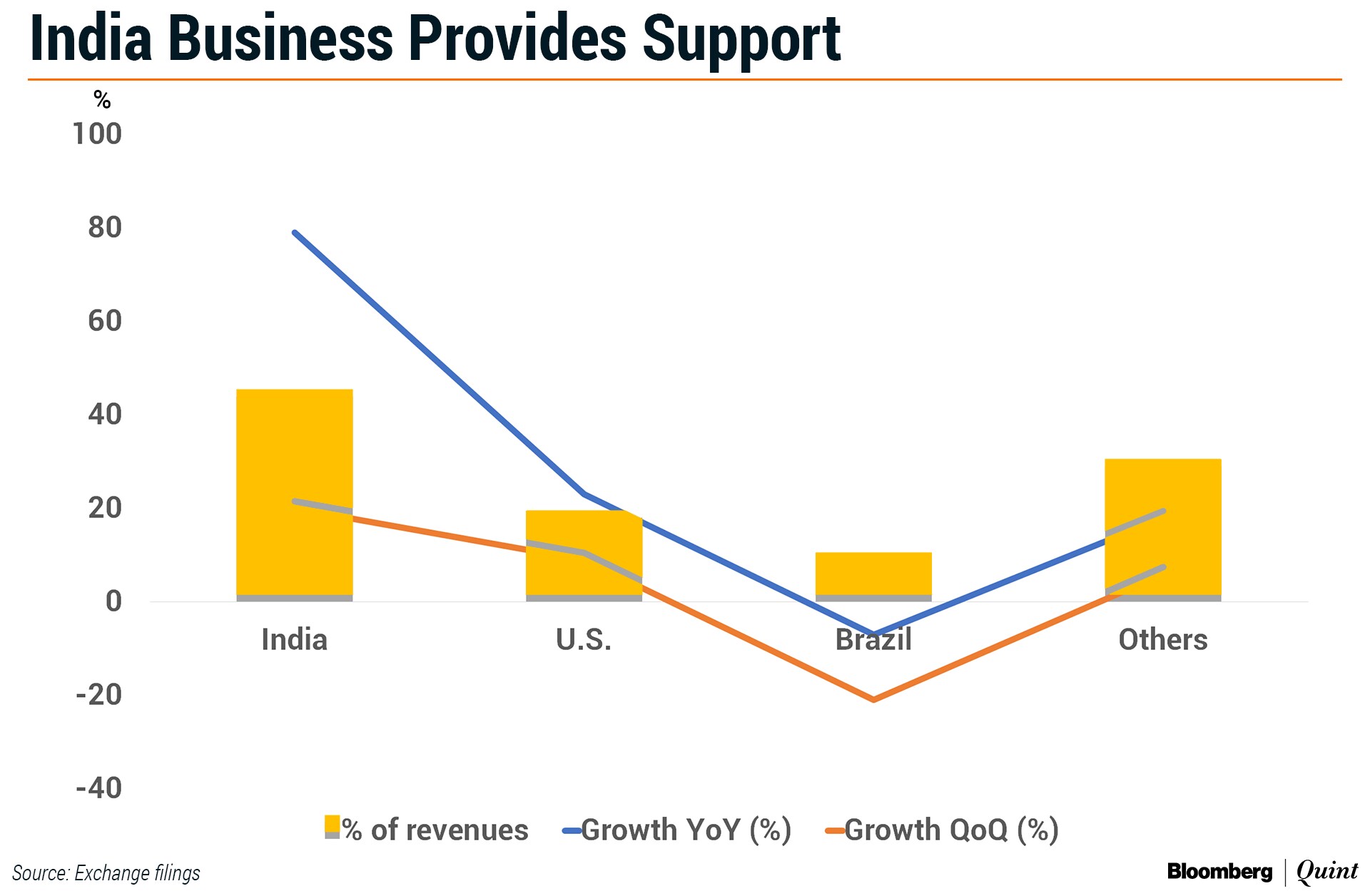
Torrent Pharma, however, lagged India-focused multinational drugmakers. That's because the MNCs derive their entire revenue from India compared with 44 percent for Torrent Pharma.
The company also expects international business to turn around, aided by improved output at its key facility at Dahej, Gujarat.
Dahej Facility
Capacity utilisation at its facility in Dahej, Gujarat—used to make products for the U.S. market—improved to 50 percent from 30 percent a year ago, the management said in a conference call. Torrent Pharma will utilise the plant to produce high-volume products for the German market, the management said.
International Business
Torrent Pharma said pricing erosion in the U.S. is stabilising at low to mid-single digits. And it expects to grow on a low base, aided by new launches.
The U.S. business is likely to gradually ramp up, helped by gViagra in the near term and two-three potential launches every quarter, according to Antique Broking.
New launches are also expected to help the company grow in the German market, the management said in a conference call.
Brazil was the sore point in the first quarter because it discontinued products and faced competition. The company is hopeful of a revival with high single-digit growth in constant currency terms this financial year.
Valuations
Torrent Pharma is the second most expensive drugmaker after Sun Pharmaceuticals Ltd. Moreover, it already trades above the Bloomberg consensus target of Rs 1,638.
Eighteen of the 32 analysts who track the stock have a ‘Buy', according to Bloomberg. Analysts from Reliance Securities Ltd. and IDFC Securities have price targets in excess of Rs 1,800.
Key Risks
Slower growth in India, delay in Unichem synergies, adverse currency moves in emerging markets and a delay in U.S. launches are the key risks for the company, according to Nomura and ICICI Securities.

-
A New Samvat Wishlist: Inclusive Prosperity And Human Development

India has strengthened its economic foundations through infrastructure, digital access and enterprise. Its next growth chapter must deepen productivity, create better livelihoods and widen participation in prosperity.
-
Ten Things I Learnt This Samvat
Patience can be a trap. Cheap stocks can stay cheap. Leverage can wipe you out. What did Samvat 2082 teach us? Niraj Shah writes on 10 lessons from the year gone by.
-
Talking Points This Week: Tech Nerves, FII Buying, And A Faraway Banking Shock
The global markets are not shining this Diwali. The exception in the large markets is, India.
-
Midterm Rally Lasted A Day. The Hard Reality Of A Divided US May Last Two Years | Opinion
Between a contested AI boom, a debt ceiling that arrives in 2027 and a president with every incentive to act alone, the next two years may prove more volatile than the first day's rally suggests.
-
Blue Wave Will Derail the AI Trade but Won't Dismantle the AI Era | Unhedged Position
The Democrats' sweep of the US Congress will see politics collide with economic forces both over the long and short term.
-
It's Time To Take The GST Council's Bet On Trust Global
Payment records can prove India's services exports, and clear, proportionate rules can bring foreign digital sellers into the tax net.
-
Opinion | India at 38: From Innovation Overperformer to Innovation Powerhouse
India now has 453 VC-backed deep science startups, 18 of them late-stage, after 117 percent growth since 2020. Laurus Labs, at USD 9.3 billion, is the most valuable deep science company in any middle-income economy outside China.
-
Navigating Energy Crossroads: S Jaishankar's Call For Diversified Supply Chains At G20 Ministerial Meeting
As geopolitical fault lines continue to test maritime trade routes and commodity flows, Jaishankar's message remains pertinent: true economic resilience requires open markets, protected transit lines, and a genuine commitment to multilateral cooperation rather than coercion.
-
Indians Are Travelling, But Not Every Journey Is A Holiday | The Week In Whys
Pilgrims, patients and working women are the real travellers, and the system hasn't quite caught up with them.









