Why Panic Gripped Indian Markets On Friday
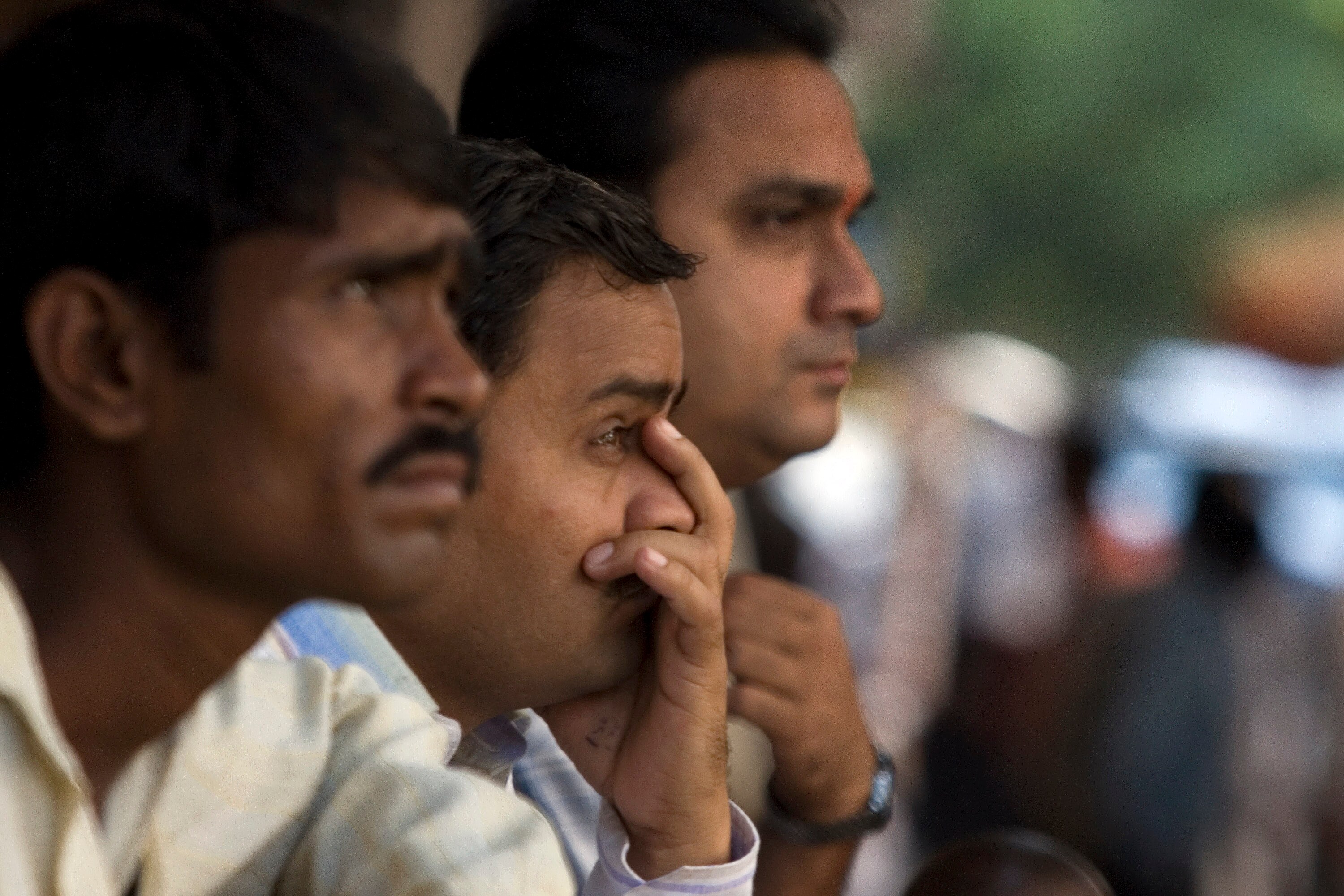
Volatility gripped India's equity benchmarks today as shares of Yes Bank Ltd. and mortgage lenders Dewan Housing Finance Ltd. and Indiabulls Housing Finance Ltd. tumbled.
It began with a 35 percent slide in Yes Bank in morning trading after its co-founder Rana Kapoor was granted only four months extra as its chief executive officer.
The Sensex and Nifty, however, shrugged that off. Till about 1 p.m., the Sensex was trading 1 percent higher. Then shares of Dewan Housing Finance plunged as much as 60 percent, while Indiabulls Housing Finance dropped 35 percent.
Within 10 minutes, the Sensex had fallen about 1,500 points or 3 percent from the day's high, its biggest swing in four years. The broader Nifty 50, too, declined more than 3 percent. But the indices soon started recouping the losses and closed 0.75 and 0.81 percent lower.

It later emerged that DSP Mutual Fund sold bonds of Dewan Housing Finance at a higher yield, which could have triggered fears. More so, after the recent concerns around Infrastructure Leasing & Financial Services Ltd.'s debt facilities. The infrastructure financier and some of its subsidiaries' commercial paper was downgraded to ‘junk' after failure to repay debt on time.
Hemendra Kothari, chairman at DSP Investment Managers, however, said the bond sale happened across sectors and was not focused on any one company. The asset manager has “nothing against DHFL as an issuer”, he said, and still holds its commercial paper.
Dewan Housing Finance and Indiabulls Housing Finance, on their part, blamed rumours and panic after a non-bank lender failed to repay debt a couple of weeks ago. While they didn't name the NBFC, it was apparent that they referred to IL&FS Financial Services Ltd. that defaulted on its payments recently.

“Two things simultaneously led to this panic selling,” according to Deven Choksi of KRChoksey. “Some of the mutual funds schemes ended up offloading part of their portfolios to offset the losses from IL&FS holding. Along with this, heavy selloffs could have happened from arbitrage funds in the cash market. Need to validate this from the end-of-day market data.”
The selloff in equities spread to the money market. The Indian rupee erased early gains and traded 0.11 percent weaker against the dollar at around 1:10 p.m. after the housing finance firms' shares nosedived. The local currency, however, recovered the losses to close 0.25 percent higher.
“We would advise investors to not panic in situations like this,” Choksi said. “Our markets are extremely volatile as they are inefficient, with the derivative market which is driving the cash market crazy,” Choksi said.
Yes Bank ended 29 percent lower for the day, eroding Rs 21,396 crore in market value. Dewan Housing Finance and Indiabulls Housing Finance recovered to close 42.6 percent and 8.4 percent lower, respectively.
Basant Maheshwari of Basant Maheshwari Wealth Advisers, however, stressed that fundamentals of the Indian market remain strong and he was bullish. “If one financial firm is in trouble, it doesn't mean the entire financial sector is facing problems.”

-
Unhedged Position | Blue Wave Will Derail the AI Trade but Won't Dismantle the AI Era

The Democrats' sweep of the US Congress will see politics collide with economic forces both over the long and short term.
-
It's Time To Take The GST Council's Bet On Trust Global
Payment records can prove India's services exports, and clear, proportionate rules can bring foreign digital sellers into the tax net.
-
Opinion | India at 38: From Innovation Overperformer to Innovation Powerhouse
India now has 453 VC-backed deep science startups, 18 of them late-stage, after 117 percent growth since 2020. Laurus Labs, at USD 9.3 billion, is the most valuable deep science company in any middle-income economy outside China.
-
Navigating Energy Crossroads: S Jaishankar's Call For Diversified Supply Chains At G20 Ministerial Meeting
As geopolitical fault lines continue to test maritime trade routes and commodity flows, Jaishankar's message remains pertinent: true economic resilience requires open markets, protected transit lines, and a genuine commitment to multilateral cooperation rather than coercion.
-
Indians Are Travelling, But Not Every Journey Is A Holiday | The Week In Whys
Pilgrims, patients and working women are the real travellers, and the system hasn't quite caught up with them.
-
Getting To Work Costs Women More | The Reason Why
It is not just about women paying more than men. It is about women paying much more in cities than in villages.
-
AI Bias In Investing Cannot Be Eliminated, But It Can Be Governed
Framing is a particularly important example as identical financial information presented in terms of gains rather than losses can lead an LLM to reach a different assessment.
-
Joining The Dots | Dark Skies, Steady Diya: Why Hope Holds This Diwali
With war, a weak rupee and foreign outflows weighing on sentiment, policymakers at the NDTV World Summit and market veterans at NDTV Profit Ignite: Diwali Edition offered the same advice: stay invested and filter out the noise.
-
The Curious Case of Equitas Small Finance Bank And A CEO Who Quit For Stock
PN Vasudevan believes persistent investor concerns over a perceived conflict of interest had become a governance overhang on Equitas Small Finance Bank's stock, even as the lender improved profitability and asset quality.










