Wall Street Goes All In On Great Crypto Comeback Fueled By Trump
It was only three years ago that a dispute between an infamous crypto billionaire and a titan of the financial establishment became the center of attention at an annual event known as the Davos of the derivatives market.
The dust up between FTX founder Sam Bankman-Fried and Terry Duffy, the boss of the US's largest futures and options exchange, was emblematic of Wall Street's skepticism then about a new generation promoting digital assets and the crypto bigwig's plans to change the way derivatives trade.
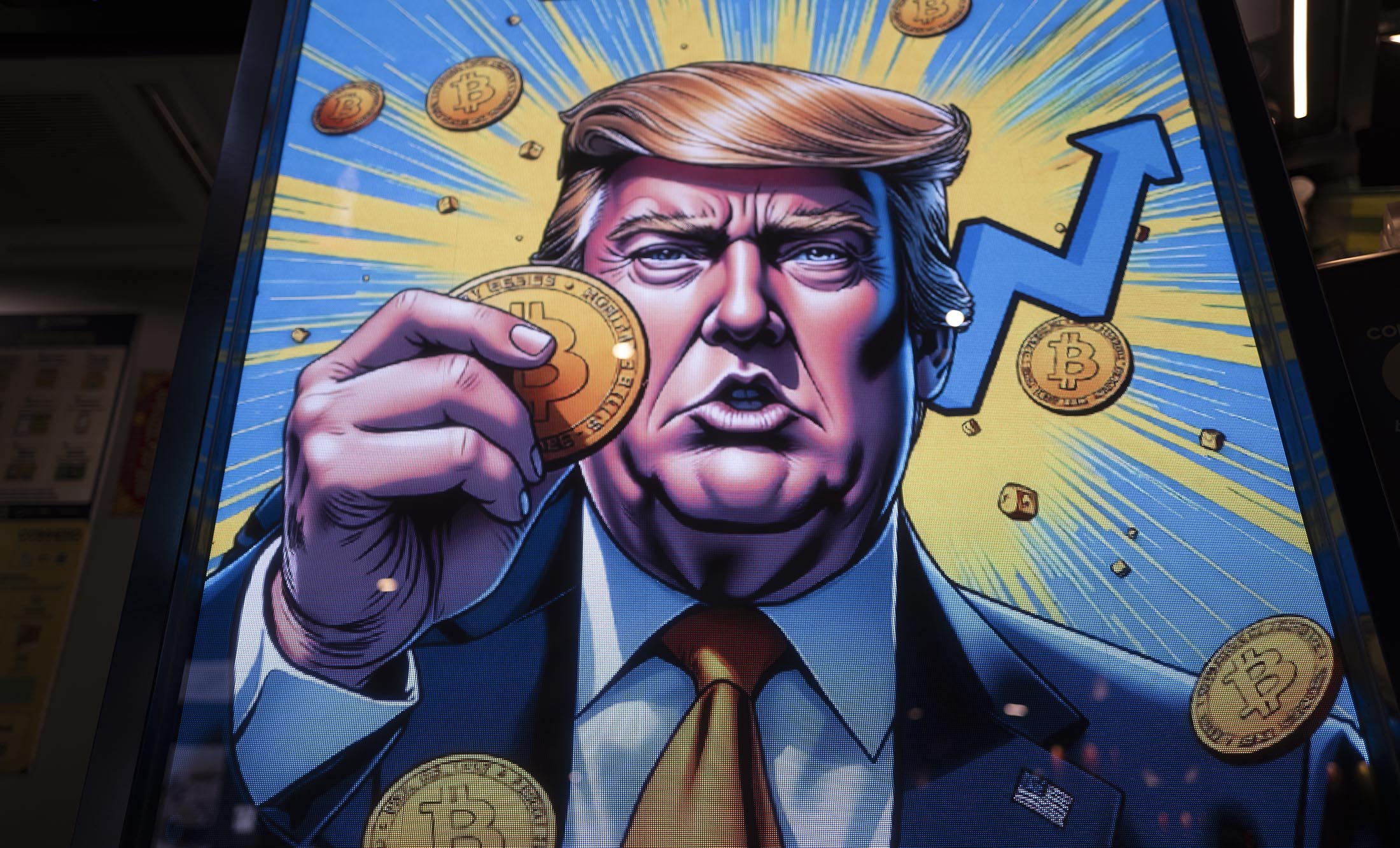
But that was then. This year, as executives from the world's largest exchanges and trading firms prepared to head to the Futures Industry Conference in the crypto hotbed of Florida, President Donald Trump announced he was creating a strategic Bitcoin reserve — a move that's symbolic, but one that effectively entrenches the legitimacy of digital assets as mainstream financial instruments.
For Wall Street firms that had only dipped their toes in the crypto space, the next four years present an opportunity to make inroads in an industry that's swiftly gained momentum amid the Trump administration's embrace. On Thursday, Bloomberg News reported that World Liberty Financial Inc., one of the Trump family's crypto ventures, has discussed doing business with the world's largest digital-asset exchange, Binance Holdings Ltd.
That shift in sentiment was on full display at the conference, held at The Boca Raton hotel, where traditional finance executives this week rubbed shoulders with those in the crypto industry. One noticeable difference: This time, almost everyone was in suits, or at least a collared shirt; gone were the shorts-and-t-shirt uniforms so ubiquitous among the crypto crowd in times past.
The entertainment also skewed older. The 1970s hitmakers Cheap Trick blasted their tunes for the likes of New York Stock Exchange President Lynn Martin and DRW Holdings founder Don Wilson.
“Crypto is back,” Catherine Clay, head of derivatives at Chicago-based options powerhouse Cboe Global Markets, said in an interview. “We definitely have seen the re-emergence of the crypto theme back at Boca after a few years of it being pretty much absent.”
Trump pledged to make the US the “crypto capital of the planet” during his campaign, and since taking office has worked to make good on his promises. He issued an executive order on digital assets and his top securities regulator has started a task force on crypto headed by Hester Peirce, a longtime advocate for the industry.
All of that is giving Wall Street confidence. Ken Griffin's Citadel Securities, previously conservative in its approach to digital assets, is now looking to get more involved as a liquidity provider for cryptocurrencies. CME Group Inc. is expanding by launching Solana futures after overtaking Binance as the world's largest Bitcoin derivatives exchange. Intercontinental Exchange Inc., which had stayed away, sees opportunities to step in and compete with rival CME, according to people familiar with the matter.
Even exchanges abroad are jumping on the bandwagon. At the conference, the Singapore Exchange Ltd., or SGX, announced plans to list Bitcoin perpetual futures in the second half of the year. The company said its first digital asset contract will strictly target institutional clients.
“By the end of the year, there will be a lot more firms charging into crypto,” said Jeanine Hightower-Sellitto, chief commercial and strategy officer at EDX Markets LLC, a digital-asset firm backed by Citadel Securities. “There's been a substantial shift in the past two and a half month, ever since inauguration day.”
For Wall Street, this year's event also brought a reckoning: the blockchain that created and electronically-stored cryptocurrencies will be key to the shift to trading US stocks 24 hours a day, seven days a week.
“There was a previous year where there was a lot of hype around crypto,” said DRW's Wilson, who also co-founded crypto firm Digital Asset. “But this year there is a recognition that using blockchain is actually going to be an important part of how we move to 24-7 trading.”
Crypto fell out of favor after Bankman-Fried was convicted of fraud following his firm's collapse in 2022. His FTX exchange had sponsored a late-night cocktail party by the beach in Boca that year, offered branded swag from its mega-booth in the exhibition hall, and hosted a fireside chat with baseball star turned business man Alex Rodriquez. Because he was throwing money around, everyone from US regulators to politicians and even Tom Brady were willing to listen.
Not Duffy. The long-time head of CME, who started his career in the trading pits of Chicago in the 1980s, wasn't buying Bankman-Fried's ambitious plans. FTX wanted to handle every aspect of customers' crypto derivatives needs on its own, using algorithms rather than brokers to help clear trades.
“I listed crypto at CME in 2017, that's long before I even knew who Sam Bankman-Fried was,” Duffy said in an interview this year. SBF's plan “was dangerous from a perspective of risk management,” he said.
Duffy has been open about their 2022 encounter at the hotel bar in Boca, calling it “a little dust up.” In an previous interview with Bloomberg, he recalled telling Bankman-Fried that he was a fraud and saying that he had more money in his right pocket than the crypto executive was worth. His view seemed to be vindicated when FTX filed for bankruptcy in late 2022, exposing a yearslong fraud that prosecutors said swindled about $10 billion from customers, investors and lenders.
What followed the FTX fallout was a huge crypto crackdown by regulators under President Joe Biden. The Commodity Futures Trading Commission, the US's top derivatives regulator, recovered a record $17.1 billion in enforcement actions last year, with large sums coming from digital asset cases against FTX and Binance.
As a result, some companies pro-actively scaled back and turned to financial hubs overseas such as Dubai, Singapore and Hong Kong. Trading giants Jump and Jane Street pulled back their crypto market making in the US. Cboe shut down its spot crypto business due to lack of regulatory clarity out of Washington.
Since Trump took office, guardrails have already started to come down. Last month the US Securities and Exchange Commission closed its investigation into Robinhood Markets Inc.'s crypto operations, and won't pursue any enforcement action. It also dropped its lawsuit accusing Coinbase Global Inc., the largest US digital assets trading platform, of operating an illegal exchange.
In the last month alone, the SEC dismissed or paused at least 10 cases against crypto companies.
A quickly evolving regulatory environment is opening doors for institutional investors to get more involved in crypto, said Elisabeth Kirby, the head of market structure at Tradeweb, a company that operates an over-the-counter marketplace for rates, credit, money markets and equities, including crypto ETFs.
Banks are also plotting ways to win more crypto business. Morgan Stanley, which hadn't been a major presence in the space, is now courting potential clients for initial public offerings. Bank of America Corp.'s senior executives are discussing a potential push into facilitating deals for digital asset firms, while Royal Bank of Canada is looking to do more business after working on its first crypto deal late last year.
At the conference this week, the tone was cooperative. Conversations centered around how traditional finance and the crypto industry can work together.
Even Duffy says he's now rooting for the success of crypto — after all, average daily volume for digital assets at CME surged more than 200% last year, with transactions valued at $6.8 billion.
“We listed Bitcoin, then we listed Ether, now we just announced we're going to list Solana,” Duffy said. “I want to see crypto become more mainstream.”

-
Navigating Energy Crossroads: S Jaishankar's Call For Diversified Supply Chains At G20 Ministerial Meeting

As geopolitical fault lines continue to test maritime trade routes and commodity flows, Jaishankar's message remains pertinent: true economic resilience requires open markets, protected transit lines, and a genuine commitment to multilateral cooperation rather than coercion.
-
Indians Are Travelling, But Not Every Journey Is A Holiday | The Week In Whys
Pilgrims, patients and working women are the real travellers, and the system hasn't quite caught up with them.
-
Getting To Work Costs Women More | The Reason Why
It is not just about women paying more than men. It is about women paying much more in cities than in villages.
-
AI Bias In Investing Cannot Be Eliminated, But It Can Be Governed
Framing is a particularly important example as identical financial information presented in terms of gains rather than losses can lead an LLM to reach a different assessment.
-
Joining The Dots | Dark Skies, Steady Diya: Why Hope Holds This Diwali
With war, a weak rupee and foreign outflows weighing on sentiment, policymakers at the NDTV World Summit and market veterans at NDTV Profit Ignite: Diwali Edition offered the same advice: stay invested and filter out the noise.
-
The Curious Case of Equitas Small Finance Bank And A CEO Who Quit For Stock
PN Vasudevan believes persistent investor concerns over a perceived conflict of interest had become a governance overhang on Equitas Small Finance Bank's stock, even as the lender improved profitability and asset quality.
-
Talking Points This Week: AI Cash Burn, A Tiger Comeback And An India That Still Finds Its Own Path
India is not immune to higher oil or tighter global liquidity, yet its earnings base is broader, its domestic policy levers are still available.
-
Foreign Investors Own Half Of HDFC Bank and ICICI Bank. An LTCG Cut Could Matter Most Here
Foreign portfolio investors have US$115 billion parked in HDFC Bank, ICICI Bank. If the government cuts long-term capital gains tax, Jefferies says returning foreign money could land here first.
-
'Never Seen This Level Of Negativity': Sandeep Tandon Says The Next Rally May Be Closer Than You Think
Veteran investor Sandeep Tandon says foreign selling is easing, large-caps are due a comeback and mid-caps are crowded, while he turns positive on gold, power and pharma this Diwali.










