U.S. Anti-Dumping Duty On Indian Shrimps Won’t Hit Trade: Apex Frozen Food
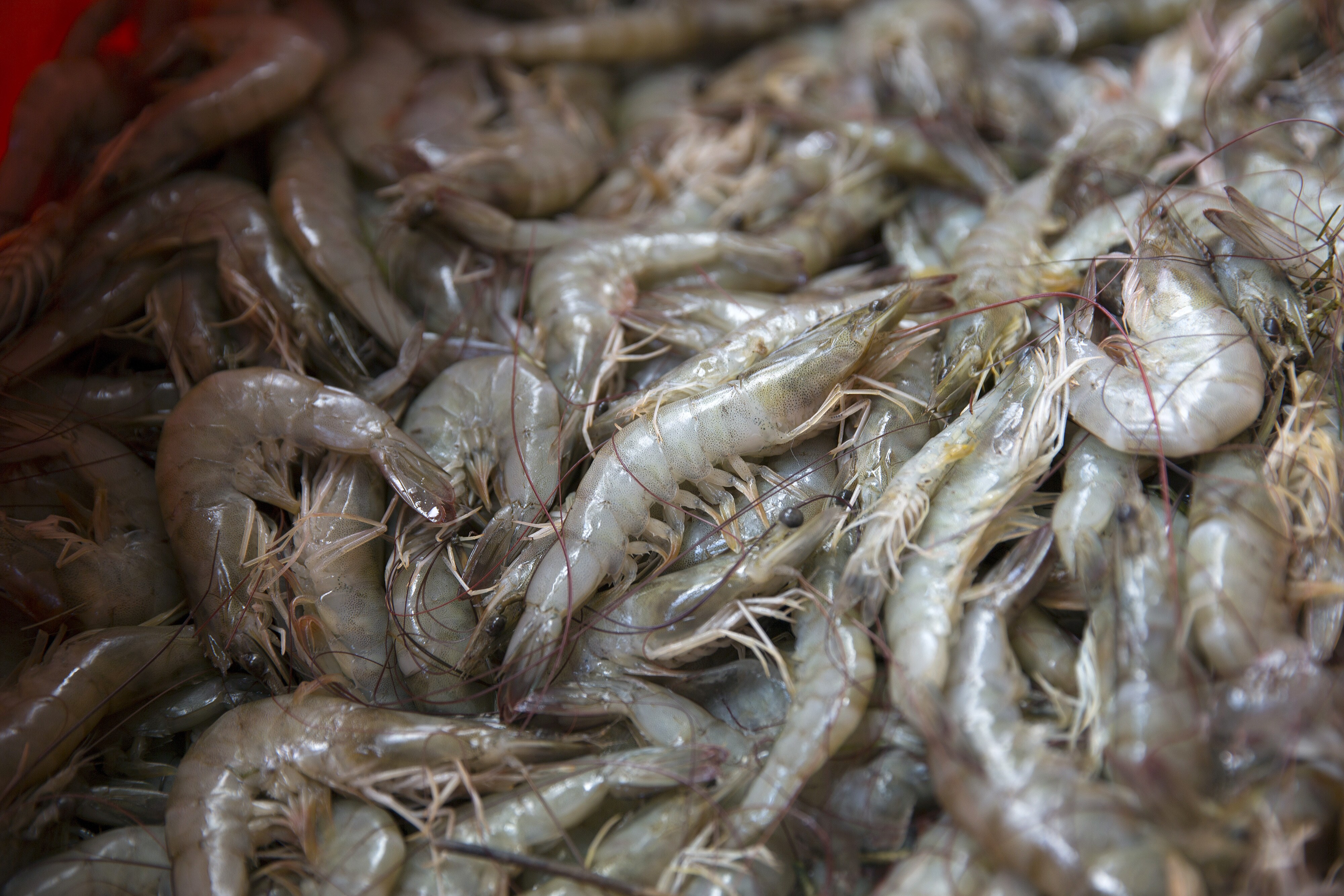
Indian shrimp exporter Apex Frozen Foods Ltd. does not see the preliminary anti-dumping duty on the seafood suggested by the U.S. Department of Commerce impacting trade.
The U.S., which is the largest market for Indian seafood, in its preliminary review, has determined that a certain “frozen warm-water shrimps” from India have been sold at less than normal value and, therefore, are subject to anti-dumping duties. In lieu of this, the government has suggested an increase in its rate to 2.34 percent from earlier 0.84 percent finalised in September last year.
“The hike suggested by the U.S. is just preliminary. Last year too, they had suggested at 1.07 percent, but later the final rate was kept at 0.84 percent. Even if the rate is finalised at 2.34 percent in the later part of the year, then too there would be no impact on trade. Trade will continue,” KS Choudary, executive director of Apex Frozen Foods Ltd. told BloombergQuint.
This will not lead to any major disruption in export volumes or impact margins of Indian shrimp processing companies, domestic brokerage house Equirus Securities said in a report. It continues to remain bullish on the medium- to long-term prospects of aquaculture in India, the brokerage added.
Apex Frozen Foods generates nearly two-thirds of its revenue from exports to the U.S. market. The other listed shrimp exporter, who are subject to the new rates, include Avanti Feeds Ltd., Waterbase Ltd. and ITC Ltd.
According to the latest data released by U.S. for January 2018, India's shrimp exports to the U.S. rose nearly 49 percent year-on-year— the highest in the last seven months.

Beating 52 other countries of the world, India continued to emerge as the largest exporter of shrimp, a major seafood export item, to the U.S.
The rise in imports from India was on the back of increase in overall imports in to the USA and because of lower supply from other countries. Going forward, the export growth from India can be very much sustained as the country has been successful in maintaining the quality and competitive pricing of this commodity.KS Choudary, Executive Director, Apex Frozen Foods
To meet the expected surge in demand, the company is increasing its capacity by 20,000 million tonnes per annum by the end of June 2018, it had said earlier.
Also Read: Apex Frozen Says China Foray On The Cards As Stock Continues Surge
The underlying shrimp imports in the U.S. grew by 20 percent in January 2018 in terms of volumes taking the total imports to 61,593 tonnes. In January this year, the U.S. imported nearly 33 percent of shrimps from India. Value-wise, the U.S. imported $201 million worth of shrimps in January, up 53 percent.
Another highlight was increase in realisation. Realisations increased to $10 per kilogram in January 2018, compared to $9.7 per kilogram last year.
Indian shrimp exporters have emphasised on lower-density shrimp farms to control diseases, while maintaining quality across the value chain, which has led to rise in exports, according to a Crisil report. India's shrimp production doubled, and helped it grab the opportunity created by lower supplies from Asia.
For the calendar year 2017, India had exported $2.2 billion dollars of shrimp in the U.S. and with increasing support from government, Indian shrimp exports are expected to remain on strong footing in 2018 as well.

-
Blue Wave Will Derail the AI Trade but Won't Dismantle the AI Era | Unhedged Position

The Democrats' sweep of the US Congress will see politics collide with economic forces both over the long and short term.
-
It's Time To Take The GST Council's Bet On Trust Global
Payment records can prove India's services exports, and clear, proportionate rules can bring foreign digital sellers into the tax net.
-
Opinion | India at 38: From Innovation Overperformer to Innovation Powerhouse
India now has 453 VC-backed deep science startups, 18 of them late-stage, after 117 percent growth since 2020. Laurus Labs, at USD 9.3 billion, is the most valuable deep science company in any middle-income economy outside China.
-
Navigating Energy Crossroads: S Jaishankar's Call For Diversified Supply Chains At G20 Ministerial Meeting
As geopolitical fault lines continue to test maritime trade routes and commodity flows, Jaishankar's message remains pertinent: true economic resilience requires open markets, protected transit lines, and a genuine commitment to multilateral cooperation rather than coercion.
-
Indians Are Travelling, But Not Every Journey Is A Holiday | The Week In Whys
Pilgrims, patients and working women are the real travellers, and the system hasn't quite caught up with them.
-
Getting To Work Costs Women More | The Reason Why
It is not just about women paying more than men. It is about women paying much more in cities than in villages.
-
AI Bias In Investing Cannot Be Eliminated, But It Can Be Governed
Framing is a particularly important example as identical financial information presented in terms of gains rather than losses can lead an LLM to reach a different assessment.
-
Joining The Dots | Dark Skies, Steady Diya: Why Hope Holds This Diwali
With war, a weak rupee and foreign outflows weighing on sentiment, policymakers at the NDTV World Summit and market veterans at NDTV Profit Ignite: Diwali Edition offered the same advice: stay invested and filter out the noise.
-
The Curious Case of Equitas Small Finance Bank And A CEO Who Quit For Stock
PN Vasudevan believes persistent investor concerns over a perceived conflict of interest had become a governance overhang on Equitas Small Finance Bank's stock, even as the lender improved profitability and asset quality.










