Stocks Radar: Tata Motors, Reliance Infra, Indian Oil Corp, Vedanta
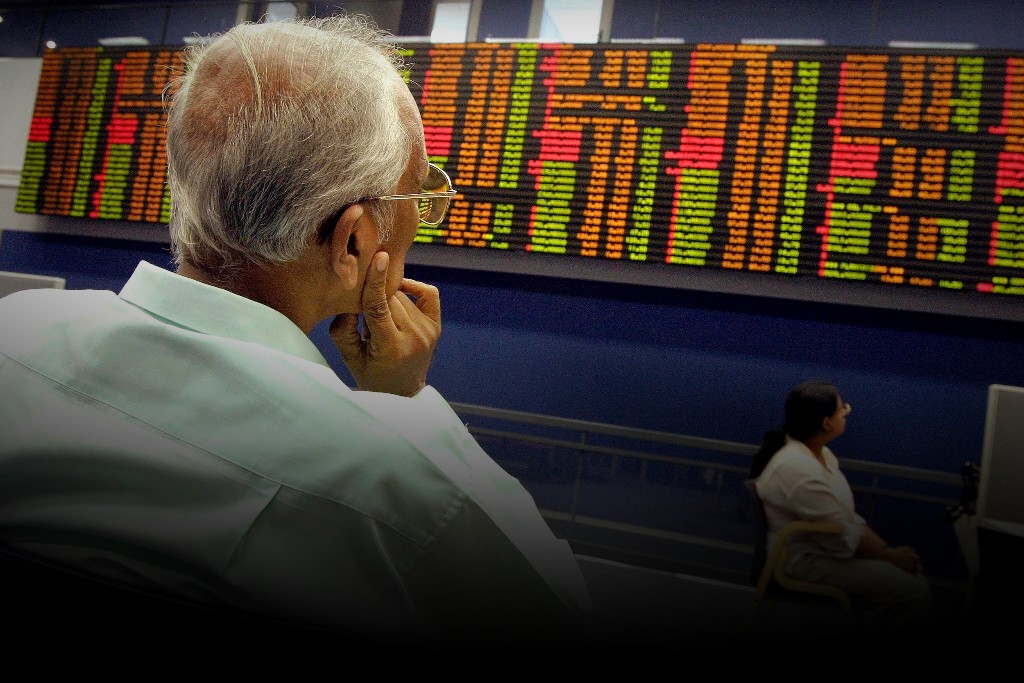
Indian equity benchmarks remained flat in early trade as the gains in oil marketing companies and State Bank of India were offset by losses in Tata Motors, HDFC Bank and Bharti Airtel.
The S&P BSE Sensex rose for the ninth session and traded 0.2 percent higher at 36,698 as of 09.45 a.m. The NSE Nifty 50 Index rose as much as 0.27 percent at 11,378.75.
The market breadth was tilted in favour of buyers. Eight of the 11 sectoral gauges compiled by the National Stock Exchange gained, led by a 0.48 percent rise in the Nifty FMCG Index. The Nifty Financial Services Index was the biggest sectoral loser, down 0.14 percent.
Here Are The Stocks Moving The Market This Morning
Tata Motors Plunges After Posting Surprise Loss In First Quarter
Shares of the automaker dropped as much as 6.6 percent—the most in over a month—to Rs 248 apiece after the company reported its worst quarterly loss in over nine years.
The parent of the Jaguar Land Rover reported a net loss of Rs 1,902.4 crore in the quarter ended June compared with a net profit of Rs 3,199 crore a year ago.
The company has decided to stop manufacturing operations in Thailand and will switch to a distribution model, according to its exchange filing.
The stock, the worst performer on the Sensex, trades at 17 times trailing 12-month earnings per share, according to Bloomberg data.
Indian Oil Gains On Taiwan Deal
Shares of the state-run oil company gained as much as 2.83 percent to Rs 167.80 apiece.
Taiwan's state-owned CPC Corp proposed to invest $6.6 billion in petrochemical projects in India, using feedstock from Indian Oil Corporation, according to Bloomberg.
The trading volume of Indian Oil stock, the best performer on the NSE Nifty 50 Index, was 1.2 times the 20-day average.
Other oil stocks such as Hindustan Petroleum Corp. and Bharat Petroleum Corp., too, gained 2.18 percent and 2 percent, respectively.
Vedanta Gains Even As First Quarter Profit Misses Estimates
Shares of the mining company gained as much as 3.06 percent to Rs 224.60 apiece even as the company's first quarter profit missed estimates.
Net profit grew 2 percent over last year to Rs 1,533 crore, according to its exchange filing. Earnings in the April-June period were impacted by lower zinc and iron ore output and the shutdown of a key copper smelter in South India.
The stock trades at 6.6 times trailing 12-month earnings per share and the volume was 3.3 times the 20-day average, Bloomberg data showed.
Bank Of Baroda Falls After Shutting Foreign Branches
Shares of the state-owned bank fell as much as 2.05 percent to Rs 151.40 apiece after the lender shut operations at its Oman and Bahrain branch.
Analysts at Arihant Capital, however, upgraded the stock to ‘Accumulate' from ‘Hold'.
The stock's trading volume was 23.7 times the 20-day average, Bloomberg data showed.
Jindal Steel Gains After Winning Railway Tender
Shares of the steelmaker gained as much as 2.73 percent to Rs 209.25 apiece.
Jindal Steel & Power Ltd. bagged 20 percent of the Rs 2,500-crore global tender of the Indian Railways to supply long rails, newswire PTI reported.
The stock trades at 21 times its estimated earnings per share for the coming year, according to Bloomberg data.
Reliance Infrastructure Plunges After Crisil Cuts Two Bonds On Non-Payment
Shares of the Anil Ambani-led company fell as much as 7 percent, the most in over five months, to Rs 371 after credit rating agency Crisil downgraded two bonds to D rating citing non-payment of interest, principle obligations.
Crisil lowered rating on Reliance Infrastructure's non-convertible debentures of Rs 585 crore and bonds of Rs 125 crore from ‘BB+', the ratings agency said in a statement.
On July 28, the Reliance Infra said it expected to make payments in early August from the proceeds of sale of its Mumbai power business to Adani Transmission.
Other Reliance Group stocks:
- Reliance Capital falls 3.8 percent.
- Reliance Home Finance declines 3.75 percent.
- Reliance Power slips 3 percent.

-
A New Samvat Wishlist: Inclusive Prosperity And Human Development

India has strengthened its economic foundations through infrastructure, digital access and enterprise. Its next growth chapter must deepen productivity, create better livelihoods and widen participation in prosperity.
-
Love, Sex Aur Dhokha: The Audacious Plot To Spy On Jensen Huang
A Taipei dinner, a Singapore chip buyer and a suspected Chinese asset: inside the alleged spy operation that got close to NVIDIA's Jensen Huang.
-
Ten Things I Learnt This Samvat
Patience can be a trap. Cheap stocks can stay cheap. Leverage can wipe you out. What did Samvat 2082 teach us? Niraj Shah writes on 10 lessons from the year gone by.
-
Talking Points This Week: Tech Nerves, FII Buying, And A Faraway Banking Shock
The global markets are not shining this Diwali. The exception in the large markets is, India.
-
Midterm Rally Lasted A Day. The Hard Reality Of A Divided US May Last Two Years | Opinion
Between a contested AI boom, a debt ceiling that arrives in 2027 and a president with every incentive to act alone, the next two years may prove more volatile than the first day's rally suggests.
-
Blue Wave Will Derail the AI Trade but Won't Dismantle the AI Era | Unhedged Position
The Democrats' sweep of the US Congress will see politics collide with economic forces both over the long and short term.
-
It's Time To Take The GST Council's Bet On Trust Global
Payment records can prove India's services exports, and clear, proportionate rules can bring foreign digital sellers into the tax net.
-
Opinion | India at 38: From Innovation Overperformer to Innovation Powerhouse
India now has 453 VC-backed deep science startups, 18 of them late-stage, after 117 percent growth since 2020. Laurus Labs, at USD 9.3 billion, is the most valuable deep science company in any middle-income economy outside China.
-
Navigating Energy Crossroads: S Jaishankar's Call For Diversified Supply Chains At G20 Ministerial Meeting
As geopolitical fault lines continue to test maritime trade routes and commodity flows, Jaishankar's message remains pertinent: true economic resilience requires open markets, protected transit lines, and a genuine commitment to multilateral cooperation rather than coercion.









