Stocks Wipe Out Rally as Powell Dashes Pivot Hopes: Markets Wrap
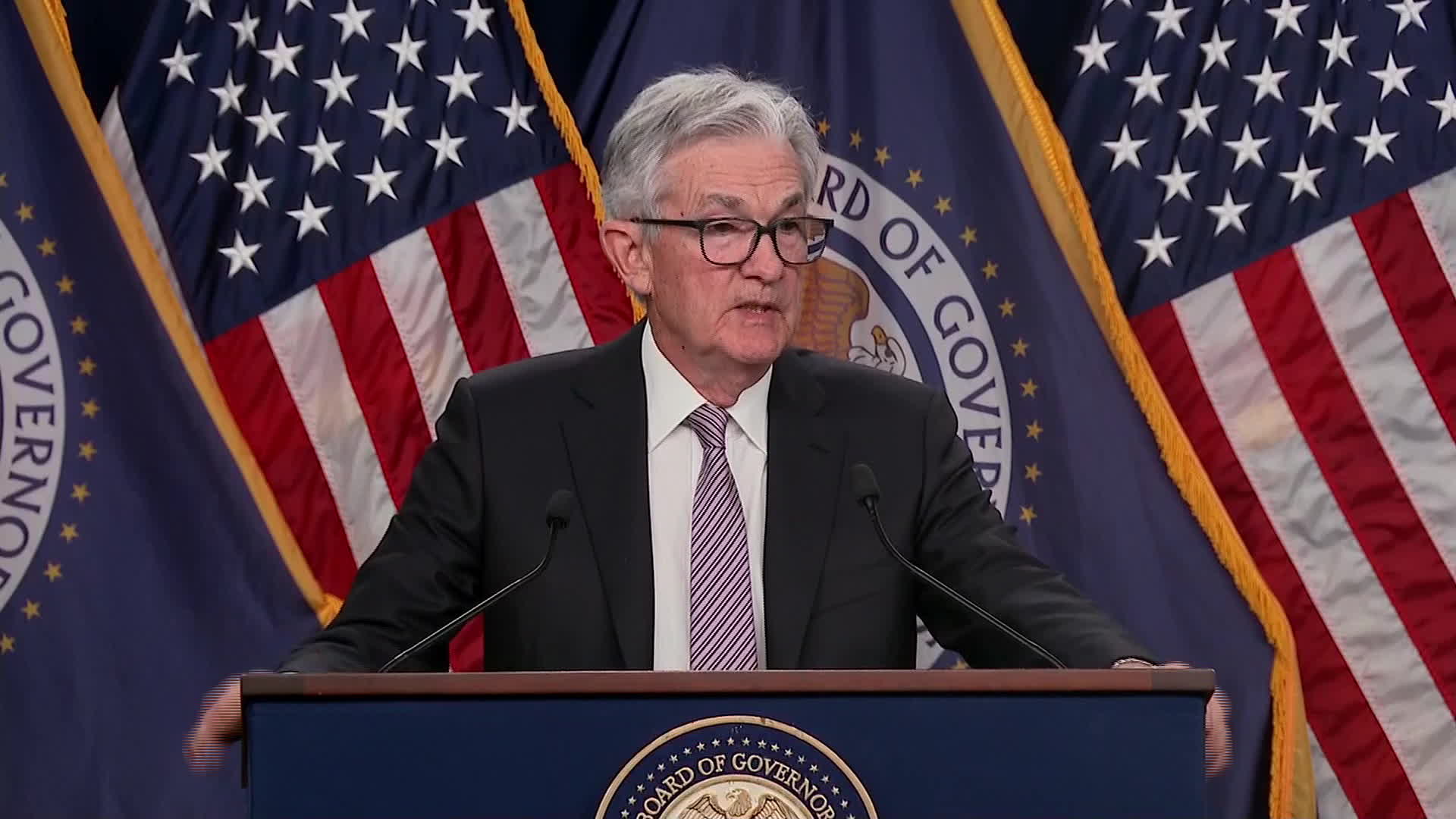
(Bloomberg) -- Wall Street's excitement about a potential pause in the Federal Reserve's aggressive tightening campaign wasn't enough to keep the stock rally going, with Jerome Powell pushing back on interest-rate cuts for now.
The bond market isn't buying that. Swap contracts continued to imply a significant easing in monetary policy before the end of 2023. Treasury two-year yields sank as much as 16 basis points to around 3.8%, while the dollar notched a back-to-back slide.
“Potential Fed pause, but no Fed pivot yet,” said Jason Pride, chief of investment strategy and Research at Glenmede. “The Fed is telegraphing that additional monetary tightening may or may not occur, but rate cuts do not yet appear to be on the table.”
After the usual back-and-forth of Fed days, the S&P 500 erased a rally that approached 1%. In late trading, a $370 billion exchange-traded fund tracking the US equity benchmark (SPY) whipsawed as concerns over the stability of the financial system resurfaced after Bloomberg News reported that PacWest Bancorp. has been weighing a range of strategic options, including a sale.
That's setting the stage for more volatility on Thursday. Powell said bank conditions had “broadly improved” since early March, but said the strains in the sector “appear to be resulting in even tighter credit conditions for households and businesses,” following a tightening in credit over the past year.
The Fed raised rates by another quarter-point Wednesday to a target range of 5% to 5.25%, the highest level since 2007. The vote was unanimous, and the Federal Open Market Committee omitted a line from its previous statement in March that said it “anticipates that some additional policy firming may be appropriate.”
Not even Powell's forecast for modest growth, instead of a recession was able to embolden stock buyers for long on Wednesday.
For one, traders were already expecting the Fed to signal a pause after the May hike. Then, there's the fact that even if that happens as early as June, borrowing costs will remain high — curtailing credit in crucial corners of the US economy. And there's the heart of the problem — inflation.
History has shown that buying stocks at the end of a hiking cycle has proven to be a winning strategy in relatively low-inflationary environments like in the 1990s. But in the wake of inflationary pressures in the 1970s and beyond, stocks fell in the three months after every last hike, according to Bank of America Corp.
More Comments:
- Callie Cox at eToro:
“The Fed is dropping hints that we're nearing the end of the rate hike cycle, even though it wants to maintain some wiggle room in case inflation stops slowing. It's a fair concern. The good news? If this is the last hike, the S&P 500 has risen a year after six out of the last 9 hiking cycles. But in the three times stocks didn't climb after hikes, it was because of a recession or market crisis. History doesn't tell us much, other than the Fed better not screw this up.”
- David Russell at TradeStation:
“The Fed took another step back from its super-hawkish stance by saying they need to determine future policy. They're setting up a potential pivot by outlining a series of reasons to pause. Given developments in the banking sector and slowing inflation, there's more chance this was the last hike.”
- Ronald Temple at Lazard:
“No surprises here. The FOMC struck an appropriate balance between taming inflation while avoiding exacerbating stress in the banking system. Assuming banking issues subside, additional rate hikes may be needed, but it's time for a pause to allow the full effects of tightening to work its way through the economy.”
- Gregory Faranello at AmeriVet Securities:
“The change is language was consistent with our view, and historically the evolution over the prior few meetings, signals the end of a tightening cycle.”
- Peter Boockvar, author of the Boock Report:
“It's just about time to call a time-out, which implies the game/fight against inflation is still ongoing, but at least they can sit back and determine ‘the extent to which additional policy firming may be appropriate to return inflation to 2% over time'.”
Key events this week:
- US initial jobless claims, trade balance, Thursday
- European Central Bank rate decision, followed by ECB President Christine Lagarde's news conference, Thursday
- US unemployment, nonfarm payrolls, Friday
Some of the main moves in markets:
Stocks
- The S&P 500 fell 0.7% as of 4 p.m. New York time
- The Nasdaq 100 fell 0.6%
- The Dow Jones Industrial Average fell 0.8%
- The MSCI World index fell 0.2%
Currencies
- The Bloomberg Dollar Spot Index fell 0.4%
- The euro rose 0.5% to $1.1053
- The British pound rose 0.7% to $1.2552
- The Japanese yen rose 1.1% to 135.03 per dollar
Cryptocurrencies
- Bitcoin fell 1.3% to $28,321.04
- Ether was little changed at $1,869.67
Bonds
- The yield on 10-year Treasuries declined seven basis points to 3.35%
- Germany's 10-year yield declined one basis point to 2.25%
- Britain's 10-year yield advanced three basis points to 3.70%
Commodities
- West Texas Intermediate crude fell 4.9% to $68.14 a barrel
- Gold futures rose 1% to $2,043.60 an ounce
This story was produced with the assistance of Bloomberg Automation.
--With assistance from Namitha Jagadeesh and Michael Mackenzie.
More stories like this are available on bloomberg.com
©2023 Bloomberg L.P.

-
Ten Things I Learnt This Samvat

Patience can be a trap. Cheap stocks can stay cheap. Leverage can wipe you out. What did Samvat 2082 teach us? Niraj Shah writes on 10 lessons from the year gone by.
-
Talking Points This Week: Tech Nerves, FII Buying, And A Faraway Banking Shock
The global markets are not shining this Diwali. The exception in the large markets is, India.
-
Midterm Rally Lasted A Day. The Hard Reality Of A Divided US May Last Two Years | Opinion
Between a contested AI boom, a debt ceiling that arrives in 2027 and a president with every incentive to act alone, the next two years may prove more volatile than the first day's rally suggests.
-
Blue Wave Will Derail the AI Trade but Won't Dismantle the AI Era | Unhedged Position
The Democrats' sweep of the US Congress will see politics collide with economic forces both over the long and short term.
-
It's Time To Take The GST Council's Bet On Trust Global
Payment records can prove India's services exports, and clear, proportionate rules can bring foreign digital sellers into the tax net.
-
Opinion | India at 38: From Innovation Overperformer to Innovation Powerhouse
India now has 453 VC-backed deep science startups, 18 of them late-stage, after 117 percent growth since 2020. Laurus Labs, at USD 9.3 billion, is the most valuable deep science company in any middle-income economy outside China.
-
Navigating Energy Crossroads: S Jaishankar's Call For Diversified Supply Chains At G20 Ministerial Meeting
As geopolitical fault lines continue to test maritime trade routes and commodity flows, Jaishankar's message remains pertinent: true economic resilience requires open markets, protected transit lines, and a genuine commitment to multilateral cooperation rather than coercion.
-
Indians Are Travelling, But Not Every Journey Is A Holiday | The Week In Whys
Pilgrims, patients and working women are the real travellers, and the system hasn't quite caught up with them.
-
Getting To Work Costs Women More | The Reason Why
It is not just about women paying more than men. It is about women paying much more in cities than in villages.









