Sterling & Wilson Solar IPO: Here’s All You Need To Know
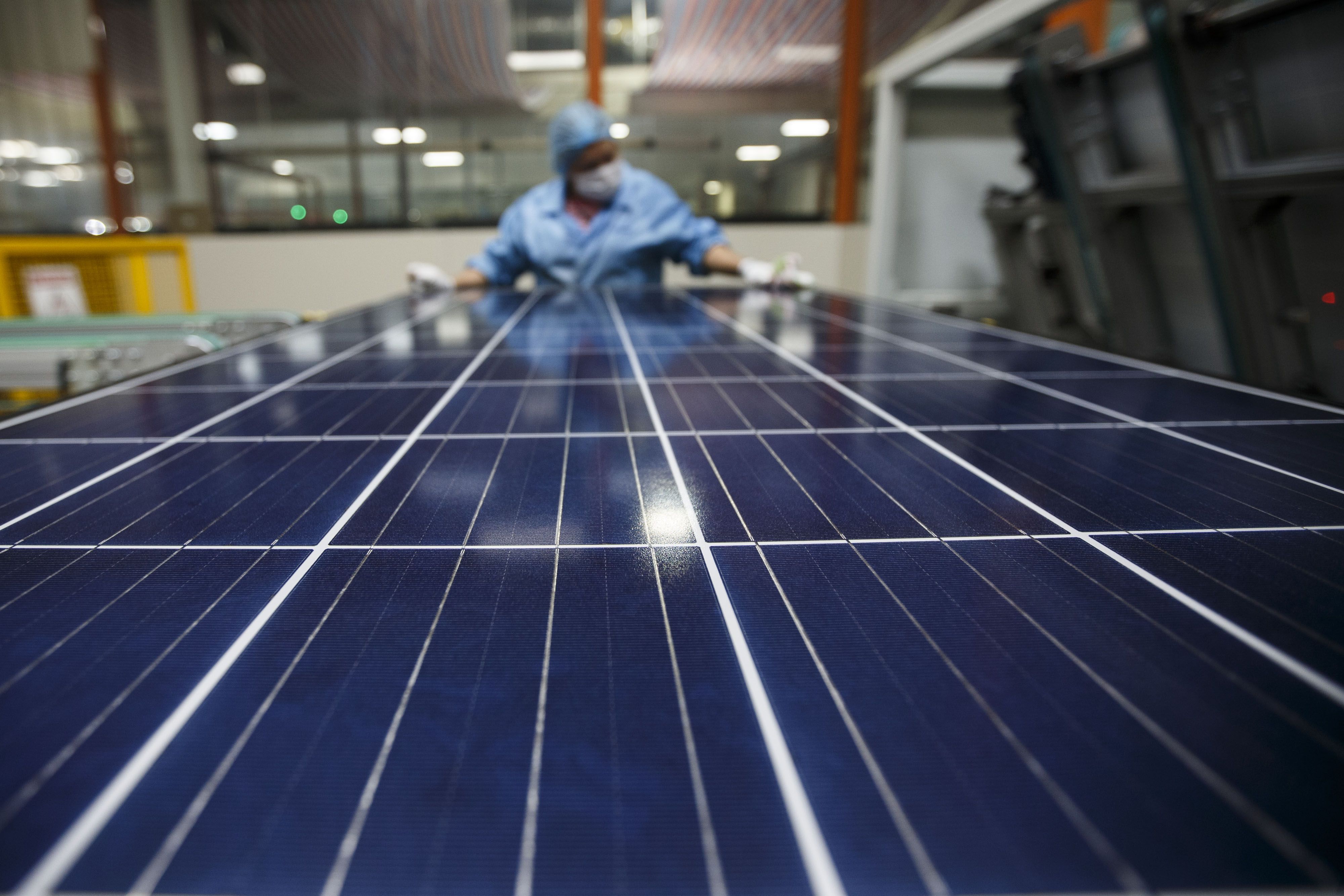
Sterling & Wilson Solar Ltd. will launch its three-day initial public offering on Tuesday as the chairman and promoter plan to pare their holdings in the Shapoorji Pallonji Group's solar engineering, procurement and construction company.
The Sterling & Wilson Solar plans to raise close to Rs 3,125 crore by selling four crore equity shares at Rs 775-780 apiece via IPO, according to the solar firms's red herring prospectus. The issue is a pure offer-for-sale by the promoter—Shapoorji Pallonji & Co. Pvt. Ltd—and Chairman Khurshed Daruvala.
At the upper end of the price band, the company is valued at nearly Rs 12,500 crore, according to BloombergQuint's calculations. After listing, the promoter shareholding will fall to 75 percent from 100 percent.
Business
Sterling & Wilson Solar, a pure-play end-to-end EPC company, provides services for utility-scale solar power projects with a focus on project design and engineering. It also manages all aspects of project execution from conceptualising to commissioning, and provides operations and maintenance services—which contributes only 1 percent to its total revenue.
The renewable energy EPC firm, which is present in 26 countries, commissioned and contracted 205 solar projects with a total capacity of 6,870.12 megawatt as of March 2019, according to its red herring prospectus.
In 2017, Sterling & Wilson Solar won a contract to build a 1,177-MW solar photovoltaic plant in Abu Dhabi—the largest such project at a single location.
Order Book
In 2015-16, Sterling & Wilson Solar generated 100 percent of its orders from India. Now it has diversified its order book.
Sterling & Wilson's order book stood at Rs 3,831 crore as of March this year, and it had received letter of intent for orders worth Rs 3,908 crore, the red herring prospectus showed.
Financials
The company's net worth stood at Rs 841 crore as of March this year, translating into a book value of Rs 52.4 apiece.
Sterling & Wilson Solar's revenue has grown at an annualised rate of 44.4 percent over financial years 2016-2019. Its net profit rose at a compound annual growth rate of 72.1 percent during the period. Growth in revenue was primarily led by a significant increase in EPC revenue from South East Asia, Africa, the U.S. and Latin America.
The company's earnings before interest, tax and depreciation and amortisation grew at an annualised rate of 50.4 percent through fiscals 2016-2019, while its Ebitda margin rose from 6.9 percent to 7.8 percent during the period. The margin improved due to operating leverage and higher efficiency.
Debt Structure
The company's total debt rose to Rs 2,228 crore in the financial year ended March 31, 2019 over the year-ago period. That was because of the company's inter-corporate loan to a promoter group entity. To be sure, the promoter group company will repay the debt within 90 days of listing.
- Total debt-to-equity ratio as of March: 2.6 times
- Total debt-to-Ebitda: 3.5 times
Business Model
Sterling & Wilson Solar has an asset-light business model. Its customers are responsible for sourcing and acquiring real estate, while it leases the equipment. Thus, the company has lower capital expenditure and fixed costs. Its return ratios are also higher, owing to the business model.
Peers And Valuations
Sterling & Wilson Solar has no direct listed peer in India.
Its earnings per share will be close to Rs 40 for 2018-19. At the upper end of the price band, the company's price-to-earnings ratio stands at 19.6 times, according to BloombergQuint's calculations.

-
A New Samvat Wishlist: Inclusive Prosperity And Human Development

India has strengthened its economic foundations through infrastructure, digital access and enterprise. Its next growth chapter must deepen productivity, create better livelihoods and widen participation in prosperity.
-
Love, Sex Aur Dhokha: The Audacious Plot To Spy On Jensen Huang
A Taipei dinner, a Singapore chip buyer and a suspected Chinese asset: inside the alleged spy operation that got close to NVIDIA's Jensen Huang.
-
Ten Things I Learnt This Samvat
Patience can be a trap. Cheap stocks can stay cheap. Leverage can wipe you out. What did Samvat 2082 teach us? Niraj Shah writes on 10 lessons from the year gone by.
-
Talking Points This Week: Tech Nerves, FII Buying, And A Faraway Banking Shock
The global markets are not shining this Diwali. The exception in the large markets is, India.
-
Midterm Rally Lasted A Day. The Hard Reality Of A Divided US May Last Two Years | Opinion
Between a contested AI boom, a debt ceiling that arrives in 2027 and a president with every incentive to act alone, the next two years may prove more volatile than the first day's rally suggests.
-
Blue Wave Will Derail the AI Trade but Won't Dismantle the AI Era | Unhedged Position
The Democrats' sweep of the US Congress will see politics collide with economic forces both over the long and short term.
-
It's Time To Take The GST Council's Bet On Trust Global
Payment records can prove India's services exports, and clear, proportionate rules can bring foreign digital sellers into the tax net.
-
Opinion | India at 38: From Innovation Overperformer to Innovation Powerhouse
India now has 453 VC-backed deep science startups, 18 of them late-stage, after 117 percent growth since 2020. Laurus Labs, at USD 9.3 billion, is the most valuable deep science company in any middle-income economy outside China.
-
Navigating Energy Crossroads: S Jaishankar's Call For Diversified Supply Chains At G20 Ministerial Meeting
As geopolitical fault lines continue to test maritime trade routes and commodity flows, Jaishankar's message remains pertinent: true economic resilience requires open markets, protected transit lines, and a genuine commitment to multilateral cooperation rather than coercion.









