Stake Sale In Public Sector Banks Only After Their Health Improves, Says Jaitley
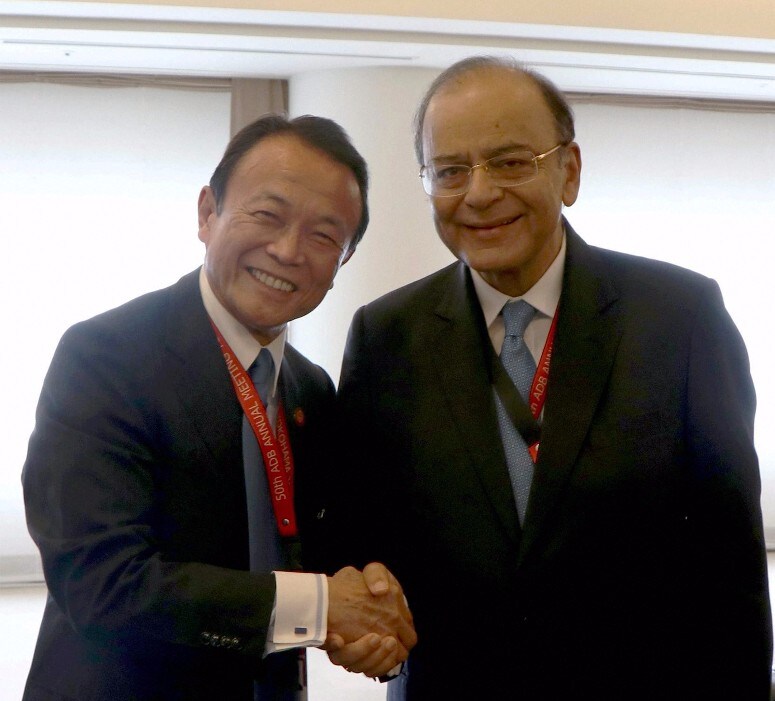
The government will dilute its stake in state-run banks to 52 percent once the health of the lenders improve and the money will be used to inject capital in them, Finance Minister Arun Jaitley said on Monday.
He hoped for a resolution to the burgeoning bad loan problem are the government empowered the Reserve Bank of India (RBI) to order lenders to initiate insolvency proceedings against defaulters and create committees to advise banks on recovering non-performing loans.
We already have a programme under which we have been supporting recapitalisation of banks. Where more funds are required from the government, we will be quite willing to look at that. But once the health of the banks themselves improve, we have also announced that the government will be willing to bring down its own equity in the banks to 52 per cent and that can be used for banks' recapitalisation.Finance Minister Arun Jaitley In Japan
This fiscal, the government has budgeted Rs 10,000 crore of capital infusion in public sector banks.
The amount is lower than Rs 25,000 crore set aside in the previous budget but will be insufficient to help state-run banks raise about Rs 80,000 crore of equity capital that they will require over the next two years to comply with the Basel III norms and support credit growth.
Jaitley said the non-performing assets (NPA) problem is limited to "a certain set of accounts and these numerically are not very large in number but the quantum is high and therefore, they impact the balance sheet of banks".
"Now, we will wait for the result over the next few months of what we decided (through the ordinance) and ensure that under the empowerment that is being given to the RBI, the banking industry itself goes in for resolution," he said.
At a separate interactive session on 'India's Business Environment: Reforms and Opportunities' organised by the Confederation of Indian Industry (CII), Indian Embassy and Japan Chamber of Commerce, he said that now with the RBI being empowered a resolution to the stressed asset problem will be reached soon.
"We were trying over the last few years to address this problem and about three days ago, we have empowered the central bank to take certain precipitative action in relation to resolving the issue of stressed asset itself. I do hope, with this new system in place, resolution of lot of stressed asset in India would take place," he said.

-
Medicine Pricing: Where Must Profit Stop?

India must confront excessive margins, hidden incentives and regulatory gaps that threaten the integrity of medicine.
-
Why Amazon And Flipkart Are Struggling To Beat Meesho In India's Smaller Cities
With 274 million users and lowest-cost logistics, Meesho is defending its value commerce crown against giants like Amazon and Flipkart.
-
High US Salaries, No Green Card Certainty: The Financial Calculation Facing Indian H-1B Families
The suspension of PERM processing at eight technology employers does not cancel existing H-1B visas. What it does is force a question many Indian families have been avoiding: is the US salary worth tying your career and family plans to one employer?
-
Swiggy vs Eternal: Food Delivery's Two Rivals Are No Longer In The Same Race
Eternal is building a private AI assistant, dark.ai. Swiggy is still working out how to make Instamart pay, with an operating loss of Rs 895 crore in the July-September quarter while Blinkit stayed profitable.
-
Where You Live Shapes How You Get To Work | The Reason Why
Two-wheelers are the most popular way to get to work in India, accounting for nearly 43% of workplace commutes.
-
Unhedged Position: Can India See An Indonesia-Style Time Correction?
The Nifty is trading below levels it first clocked in 2024. Is there, then, as I have suggested in the headline, potential that the current time correction drags on painfully for the next three-five, even ten years?
-
Navigating Friction And Energy Realities: An Analysis Of Marco Rubio's October Visit To India
Occurring at a critical juncture marked by stalled trade negotiations and escalating geopolitical pressures over global energy supplies, the visit offers a profound window into modern US-India relations.
-
India Exports Capital. Why Not Export Trusteeship?
The big question, then, is whether India can build an institution that global borrowers, investors, banks, and lawyers can trust, even without an Indian connection.
-
France's Economy & Politics Are In Crisis | The Reason Why
Let's look at how the French economy and politics evolved under Nicolas Sarkozy, Franois Hollande and Emmanuel Macron.
-
You May Inherit The Business. You Must Earn Its Credibility.
Succession tests the founder's ability to share authority as much as it tests the next generation's readiness to assume it.










