Sensex Falls 800 Points, Rupee Hits Record Low
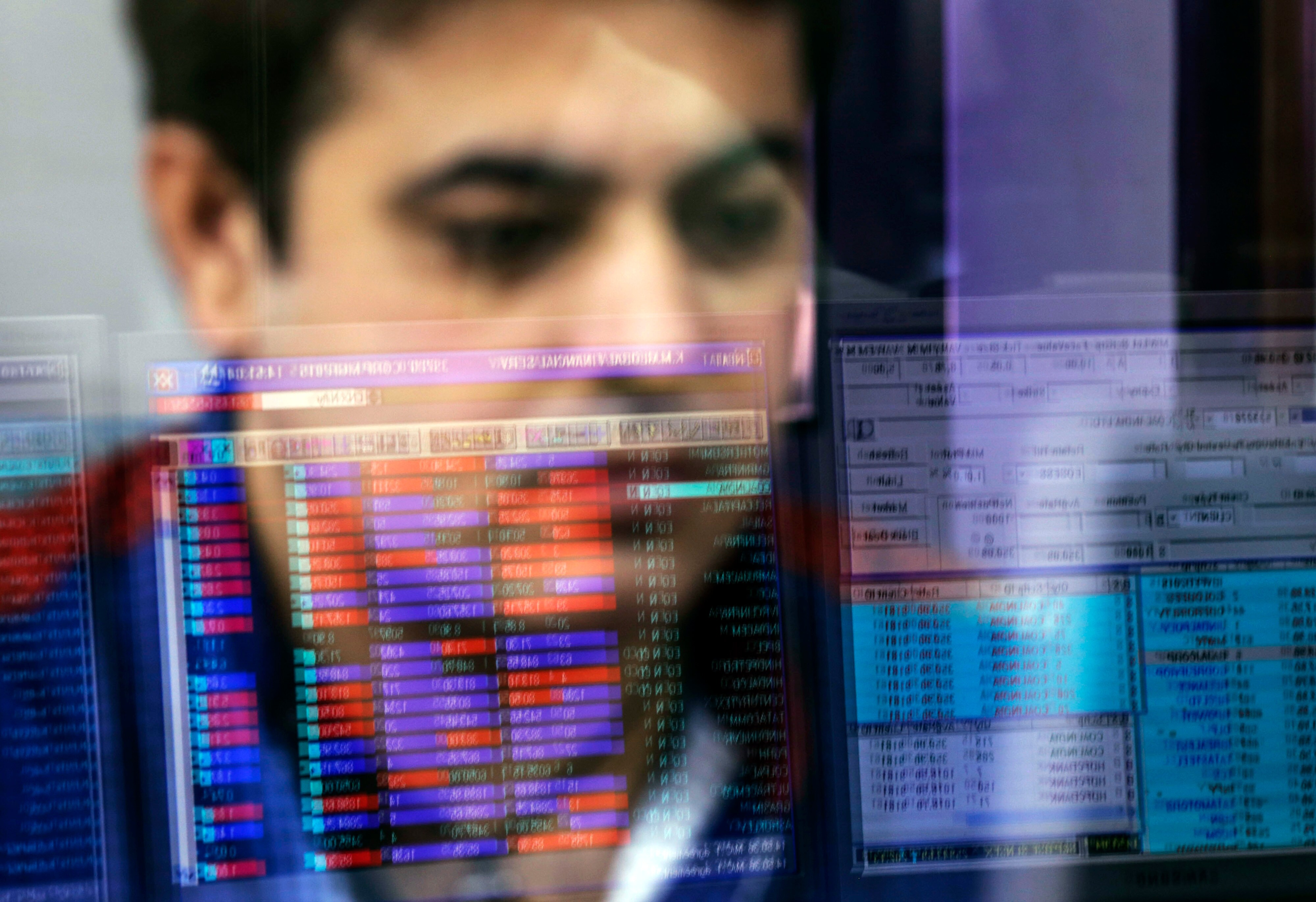
Indian stocks, currency, and government bonds fell sharply today in response to a tough global landscape where oil prices and interest rates are at multi-year highs and interest in emerging market assets is on the decline.
The benchmark equity indices fell to their lowest in over three months as surging oil prices added to rupee's weakness, leading to a selloff a day ahead of an expected increase in rates by the central bank.
The S&P BSE Sensex and the NSE Nifty 50 Index fell more than 2 percent to 35,169.16 and 10,599.25, respectively. The Indian rupee slumped to a fresh low of 73.58 against the U.S. dollar, raising fears of a widening current account deficit. The local unit closed at 73.34 against the greenback on Wednesday. Bond prices fell pushing the benchmark 10-year yield to its highest in three weeks at 8.20 percent.


Brent crude's rally to a four-year high and rising U.S. treasury yields are beginning to hurt most emerging market currencies. The rupee, the worst-performer among major Asian currencies, is down close to 13 percent for the year, exceeding the quantum of losses seen in 2013 when the taper tantrum hit emerging market economies perceived to be weak.
Higher crude prices will push India's current account deficit towards an unsustainable level of 3 percent of gross domestic product. This, in a year when capital flows have dried up. Foreign investors have sold a net of Rs 66,000 crore across Indian debt and equity markets.
“Foreign investors' exit is driven by a threat of the rupee depreciating further and to protect their portfolios from currency loss (mark-to-market),” Deven Choksey, managing director at KR Choksey Securities, said. “They are taking out funds from Indian markets and paying of losses they have incurred in other markets.”
Ajay Bagga, executive chairman at OPC Asset Solutions, said a fear of crude spiking further, the Reserve Bank moving to a hawkish stance to anticipate any inflationary pressures from crude spikes and the general liquidity issues in the domestic market are driving the selloff. “Some recovery, however, is possible once earnings season starts but it is time to stay on the sidelines, not a time to do bottom-fishing or for intraday trading.”
In a bid to check rising fuel costs amid higher crude, the central government on Thursday lowered prices of petrol and diesel by Rs 2.5 a litre. The government lowered the excise duty on petrol and diesel Rs 1.50 a litre and asked state-run oil retailers to cut prices by Re 1. Following the decision, shares of oil marketing companies tumbled.
On Thursday, the selling pressure was global in nature. Overnight, the benchmark U.S. 10-year bond yield spiked to 3.18 percent. The U.S. Dollar Index rose to 96.11 and Brent crude prices hit $86 a barrel. A stronger dollar and higher U.S. interest rates could lead to more rapid outflows, unless India raises interest rates to increase the attractiveness of its domestic debt assets.
Against this backdrop, India's Monetary Policy Committee will announce its latest policy decision on Friday. Most analysts expect at least a 25-basis points hike. Some see the possibility of a reversal of the MPC's neutral stance as well.
“We expect the Reserve Bank of India to raise rates by 25 basis points at the October policy review and change its stance to reveal a tightening bias,” Sajjid Chinoy, chief India economist at JPMorgan, said in a note on Thursday. “This, however, is likely to be accompanied by continuing OMOs (open market operations) to ensure inter-bank liquidity stays neutral.”

-
Opinion | India at 38: From Innovation Overperformer to Innovation Powerhouse

India now has 453 VC-backed deep science startups, 18 of them late-stage, after 117 percent growth since 2020. Laurus Labs, at USD 9.3 billion, is the most valuable deep science company in any middle-income economy outside China.
-
Navigating Energy Crossroads: S Jaishankar's Call For Diversified Supply Chains At G20 Ministerial Meeting
As geopolitical fault lines continue to test maritime trade routes and commodity flows, Jaishankar's message remains pertinent: true economic resilience requires open markets, protected transit lines, and a genuine commitment to multilateral cooperation rather than coercion.
-
Indians Are Travelling, But Not Every Journey Is A Holiday | The Week In Whys
Pilgrims, patients and working women are the real travellers, and the system hasn't quite caught up with them.
-
Getting To Work Costs Women More | The Reason Why
It is not just about women paying more than men. It is about women paying much more in cities than in villages.
-
AI Bias In Investing Cannot Be Eliminated, But It Can Be Governed
Framing is a particularly important example as identical financial information presented in terms of gains rather than losses can lead an LLM to reach a different assessment.
-
Joining The Dots | Dark Skies, Steady Diya: Why Hope Holds This Diwali
With war, a weak rupee and foreign outflows weighing on sentiment, policymakers at the NDTV World Summit and market veterans at NDTV Profit Ignite: Diwali Edition offered the same advice: stay invested and filter out the noise.
-
The Curious Case of Equitas Small Finance Bank And A CEO Who Quit For Stock
PN Vasudevan believes persistent investor concerns over a perceived conflict of interest had become a governance overhang on Equitas Small Finance Bank's stock, even as the lender improved profitability and asset quality.
-
Talking Points This Week: AI Cash Burn, A Tiger Comeback And An India That Still Finds Its Own Path
India is not immune to higher oil or tighter global liquidity, yet its earnings base is broader, its domestic policy levers are still available.
-
Foreign Investors Own Half Of HDFC Bank and ICICI Bank. An LTCG Cut Could Matter Most Here
Foreign portfolio investors have US$115 billion parked in HDFC Bank, ICICI Bank. If the government cuts long-term capital gains tax, Jefferies says returning foreign money could land here first.










