SBI Chief Arundhati Bhattacharya Pitches For A Rate Cut From RBI Next Week
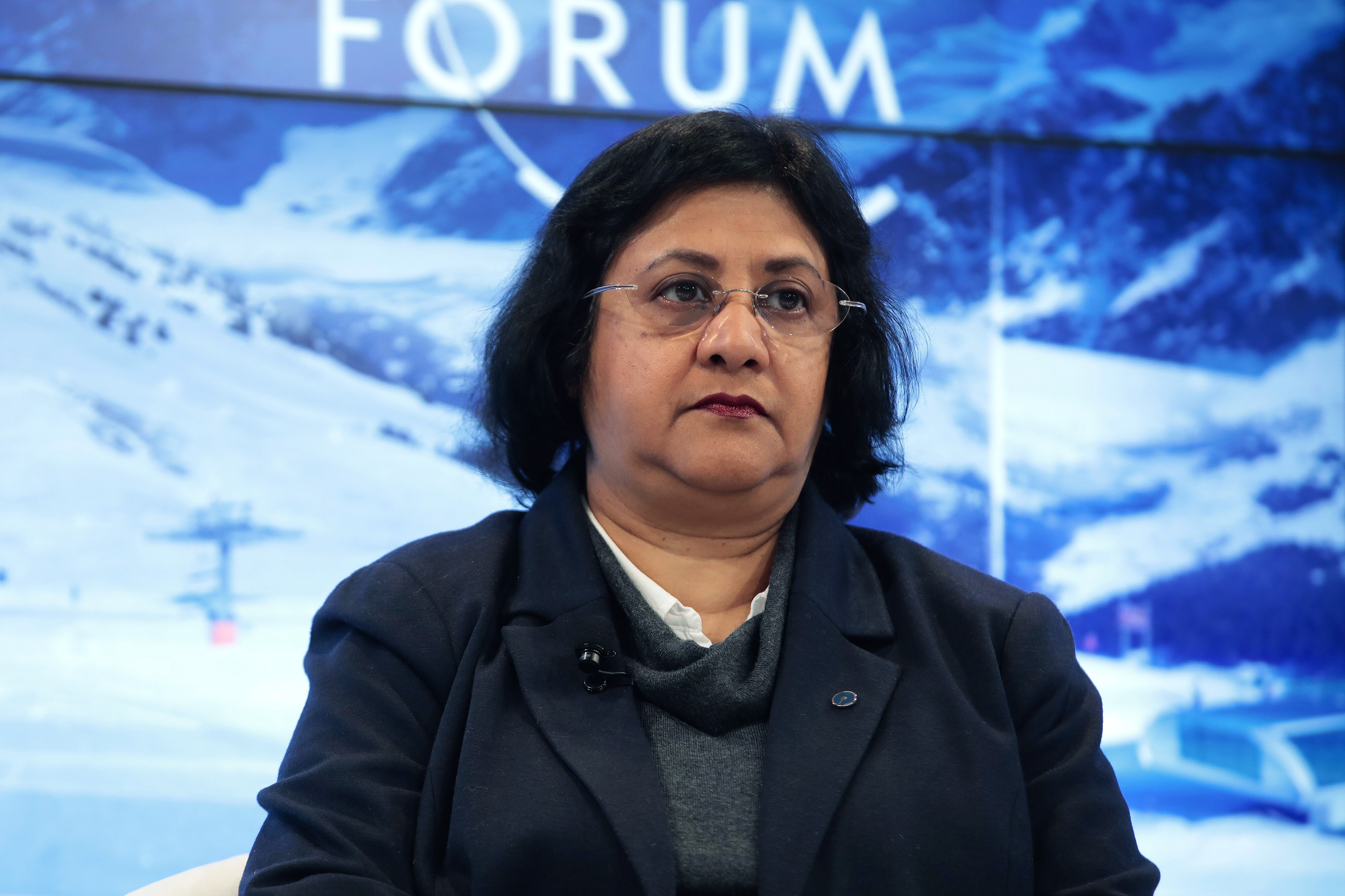
Arundhati Bhattacharya, chairman of India's largest lender, State Bank of India, has pitched for a rate cut in the June 6 monetary policy review of the Reserve Bank of India after the country's growth slowed sharply in the three months ended March.
A rate cut by the Monetary Policy Committee of the RBI will send a positive signal, Arundhati Bhattacharya, chairman of the country's largest lender, State Bank of India Ltd., said.
India's growth as measured by gross value added (GVA) slowed to 5.6 percent in the fourth quarter, down from 6.7 percent in the previous three months and 8.7 percent in the year-ago period. The slowdown in the economy will put greater pressure on the RBI to explain its recently tightened monetary policy stance. It had moved from an ‘accommodative' policy stance to ‘neutral' in February, citing upside risks to inflation. Consumer inflation was near 3 percent in April, well below the RBI's medium-term target of 4 percent.
The RBI has time and again prodded lenders to pass on the previous rate cuts to consumers. Speaking to Bloomberg TV on the sidelines of the annual Russia Economic Forum in St. Petersburg, Bhattacharya said the transmission will depend on the liquidity situation.
Transmission happens when there is liquidity. But what does happen when the central bank cuts rates is that it gives a signal. Sometimes, signalling is very important. So we would welcome a rate cut.Arundhati Bhattacharya, Chairman, State Bank of India
Note Ban A Success
The SBI chairman termed the Narendra Modi government's decision to withdraw old currency notes of Rs 500 and Rs 1,000 as an “unqualified success”.
Demonetisation led to a huge push towards digitisation and the resultant surplus liquidity brought down lending costs, she said.
We have done the work of around two years in a space of 60 days. The amount of resources that have come into the banking system has also enabled us to lend at lower rates which is something that the industry was clamouring for.Arundhati Bhattacharya, Chairman, State Bank of India
Note ban also provided a greater push to financial inclusion, she said.
Also Read: Demonetisation Leaves An Imprint On GDP Growth In FY17
Resolving NPA Crisis
Bhattacharya said the central bank has not been flexible enough in the past to resolve the bad loan problem and the government's decision to empower the RBI through a recent ordinance is a good move.
Hoping that the resolution would work, she expected a push towards the Bankruptcy Code through the National Company Law Tribunal (NCLT).
You cannot typecast every loan into a rigid mould. Every account has its own solution. So we are hoping that the central bank will not put a very rigid structure around it.Arundhati Bhattacharya, Chairman, State Bank of India
Fund Raising Plans
India's largest lender is planning to raise funds via a qualified institutional placement as well as the initial public offer of its insurance arm SBI Life Insurance.
Bhattacharya sees India on the cusp of a “very good” growth cycle and wants to ensure that the bank has enough capital to be part of the nation's growth story. The bank would like to augment its capital ratios from the fund raise, she said.
The bank will not consider any further consolidation after merging its six associate banks with itself.
The merger of the six banks was a huge IT challenge but we have got past that. The focus now is to integrate the human resources and ensure that productivity and efficiency goes up.Arundhati Bhattacharya, Chairman, State Bank of India

-
Opinion | India at 38: From Innovation Overperformer to Innovation Powerhouse

India now has 453 VC-backed deep science startups, 18 of them late-stage, after 117 percent growth since 2020. Laurus Labs, at USD 9.3 billion, is the most valuable deep science company in any middle-income economy outside China.
-
Navigating Energy Crossroads: S Jaishankar's Call For Diversified Supply Chains At G20 Ministerial Meeting
As geopolitical fault lines continue to test maritime trade routes and commodity flows, Jaishankar's message remains pertinent: true economic resilience requires open markets, protected transit lines, and a genuine commitment to multilateral cooperation rather than coercion.
-
Indians Are Travelling, But Not Every Journey Is A Holiday | The Week In Whys
Pilgrims, patients and working women are the real travellers, and the system hasn't quite caught up with them.
-
Getting To Work Costs Women More | The Reason Why
It is not just about women paying more than men. It is about women paying much more in cities than in villages.
-
AI Bias In Investing Cannot Be Eliminated, But It Can Be Governed
Framing is a particularly important example as identical financial information presented in terms of gains rather than losses can lead an LLM to reach a different assessment.
-
Joining The Dots | Dark Skies, Steady Diya: Why Hope Holds This Diwali
With war, a weak rupee and foreign outflows weighing on sentiment, policymakers at the NDTV World Summit and market veterans at NDTV Profit Ignite: Diwali Edition offered the same advice: stay invested and filter out the noise.
-
The Curious Case of Equitas Small Finance Bank And A CEO Who Quit For Stock
PN Vasudevan believes persistent investor concerns over a perceived conflict of interest had become a governance overhang on Equitas Small Finance Bank's stock, even as the lender improved profitability and asset quality.
-
Talking Points This Week: AI Cash Burn, A Tiger Comeback And An India That Still Finds Its Own Path
India is not immune to higher oil or tighter global liquidity, yet its earnings base is broader, its domestic policy levers are still available.
-
Foreign Investors Own Half Of HDFC Bank and ICICI Bank. An LTCG Cut Could Matter Most Here
Foreign portfolio investors have US$115 billion parked in HDFC Bank, ICICI Bank. If the government cuts long-term capital gains tax, Jefferies says returning foreign money could land here first.










