Rupee Remains Under Pressure, Closes Weak Against Dollar
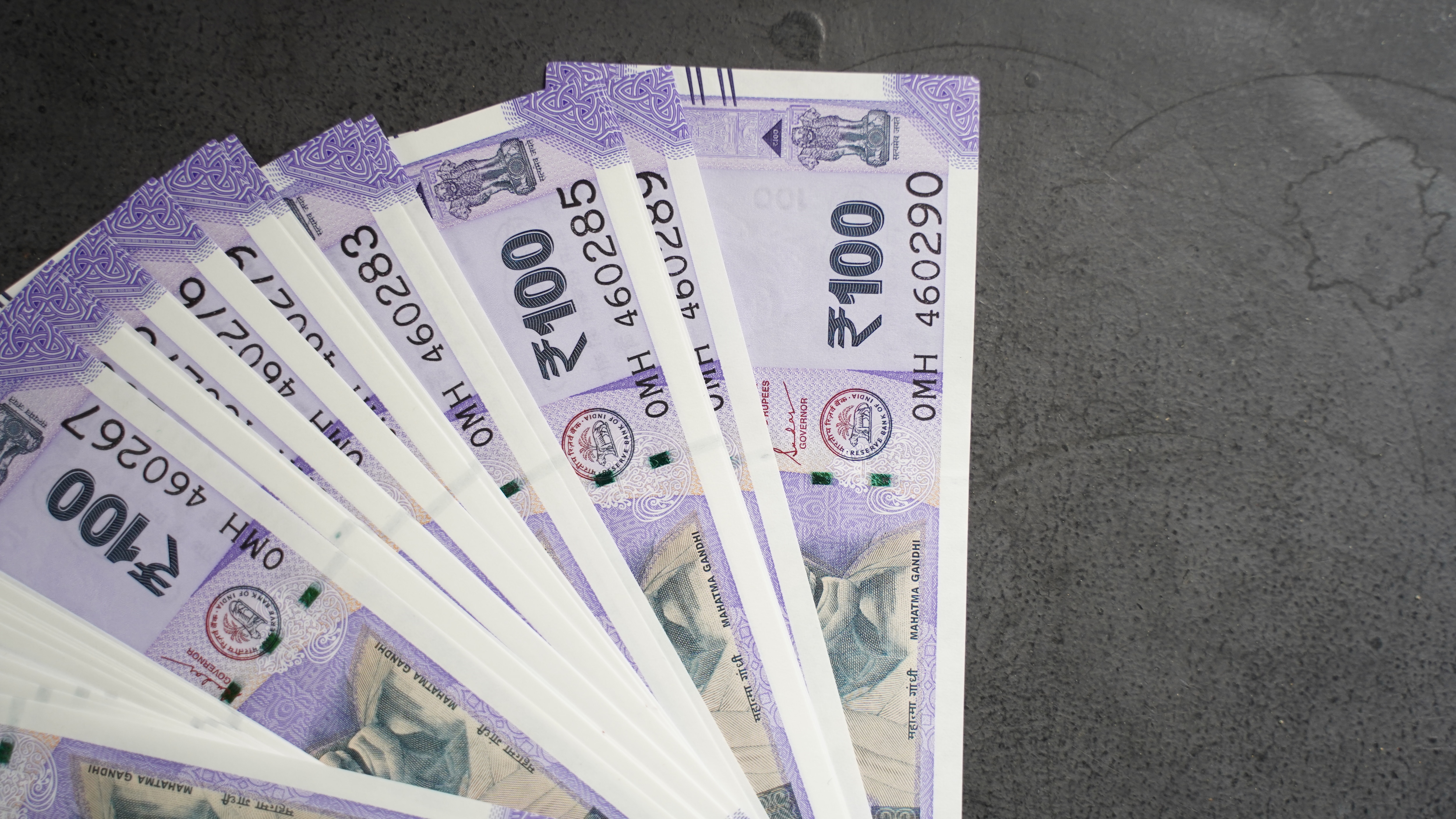
The Indian rupee closed weaker against the US dollar on Monday. The domestic currency weakened by 13 paise to close at 86.34 against the US dollar.
It opened on a weaker note, depreciating 14 paise to 86.35 against the greenback. Last week, the currency had performed stronger throughout the week and closed stronger by 26 paise at 86.21 on Friday, according to Bloomberg data.
The dollar index was trading 0.05% lower at 107.38 at 03:33 p.m. on Monday. Crude oil prices were trading lower too. Brent crude was trading 0.09% lower at $78.43 per barrel at 03:20 p.m.

Crude oil prices faced downward pressure on Friday after US President Donald Trump urged Saudi Arabia to lower prices in order to help curb Russia's ongoing conflict. Trump also warned of potential sanctions on Russia unless it de-escalates the war.
Market participants are also anticipating the US Federal Reserve to keep interest rates unchanged during its January meeting. The FOMC press conference will be closely watched for any signals regarding the US rate path, according to Kunal Sodhani of Shinhan Bank India.
Exporters are advised to consider hedging small amounts around the 86.60 level, which is being supported by the Reserve Bank of India. Importers were advised to buy the dips as the currency moves lower, according to Anil Bhansali, executive director at Finrex Treasury Advisors LLP.
UBS Group AG recently suggested that investors short the Indian rupee and adopt an underweight stance on Indian stocks. According to UBS, India's $4 trillion economy is entering a "structural slowdown", driven by weak credit growth, declining foreign direct investment, and a general deceleration in the country's economic performance.

-
Talking Points This Week: Tech Nerves, FII Buying, And A Faraway Banking Shock

The global markets are not shining this Diwali. The exception in the large markets is, India.
-
Midterm Rally Lasted A Day. The Hard Reality Of A Divided US May Last Two Years | Opinion
Between a contested AI boom, a debt ceiling that arrives in 2027 and a president with every incentive to act alone, the next two years may prove more volatile than the first day's rally suggests.
-
Blue Wave Will Derail the AI Trade but Won't Dismantle the AI Era | Unhedged Position
The Democrats' sweep of the US Congress will see politics collide with economic forces both over the long and short term.
-
It's Time To Take The GST Council's Bet On Trust Global
Payment records can prove India's services exports, and clear, proportionate rules can bring foreign digital sellers into the tax net.
-
Opinion | India at 38: From Innovation Overperformer to Innovation Powerhouse
India now has 453 VC-backed deep science startups, 18 of them late-stage, after 117 percent growth since 2020. Laurus Labs, at USD 9.3 billion, is the most valuable deep science company in any middle-income economy outside China.
-
Navigating Energy Crossroads: S Jaishankar's Call For Diversified Supply Chains At G20 Ministerial Meeting
As geopolitical fault lines continue to test maritime trade routes and commodity flows, Jaishankar's message remains pertinent: true economic resilience requires open markets, protected transit lines, and a genuine commitment to multilateral cooperation rather than coercion.
-
Indians Are Travelling, But Not Every Journey Is A Holiday | The Week In Whys
Pilgrims, patients and working women are the real travellers, and the system hasn't quite caught up with them.
-
Getting To Work Costs Women More | The Reason Why
It is not just about women paying more than men. It is about women paying much more in cities than in villages.
-
AI Bias In Investing Cannot Be Eliminated, But It Can Be Governed
Framing is a particularly important example as identical financial information presented in terms of gains rather than losses can lead an LLM to reach a different assessment.









