Rupee Hits Six-Week High, But Is It Sustainable?
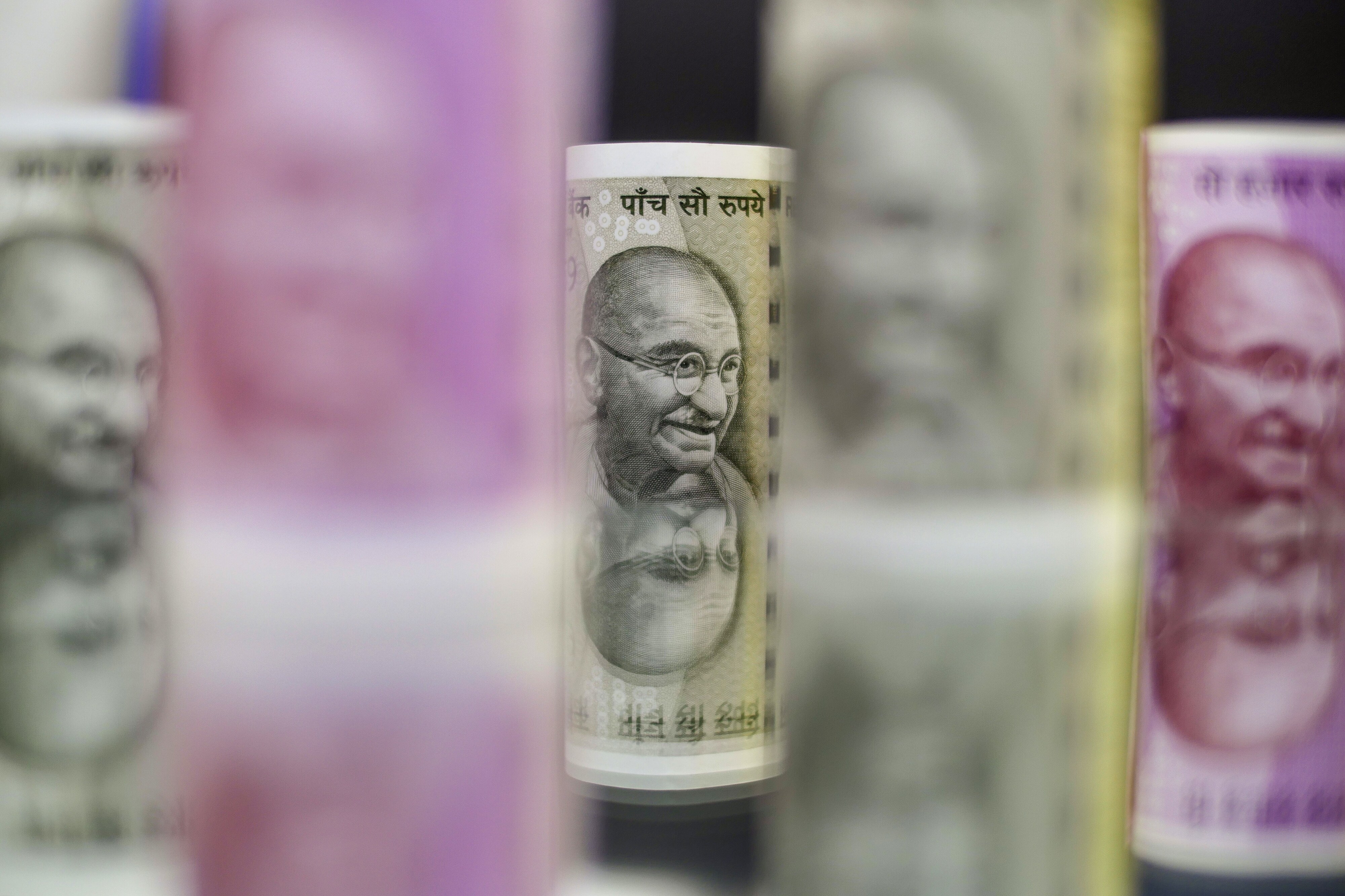
The rupee, the year's worst performing Asian currency, appreciated to its strongest in six weeks in early trades before erasing most of the gains tracking emerging market peers as the U.S. Federal Reserve stuck to its plan to lift rates gradually.
The Indian currency strengthened initially as India's monetary policy committee's decision to hike benchmark rates by 25 basis points for the second straight time to curb inflation is expected to provide support. The Reserve Bank of India also maintained the growth outlook for the economy, projecting an expansion of 7.4 per cent in 2018-19.
The RBI has balanced the growth-inflation dynamics keeping in view the unfolding global and domestic scenarios, V S Parthasarathy, chief financial officer of the Mahindra Group, said. The rate hike should help temper inflation and hopefully provide support to the rupee.
The currency opened at 68.39 to a dollar and strengthened to 68.27. It, however, lost ground to trade 0.06 percent weaker at 68.47 at 12:50 p.m.

Most Asian currencies fell after the Federal Reserve stuck to its plan to gradually lift borrowing costs. Fed left the U.S. interest rates unchanged but said the economic activity has been “rising at a strong rate”, indicating that it's on track for two more hikes this year.
What Experts Says
Hao Zhou, senior emerging markets economist at Commerzbank said the U.S. economy remains in a sweet spot and he expects the Fed to hike rates in September and December. The commentary by the Fed was seen as backing bets for a rate hike, he said. “We remain cautious on emerging markets due to currency pressure and bullish on advanced economies now.”
The rupee has weakened 6.7 percent so far this year as rising fuel prices widened India's trade deficit and triggered a selloff by foreign investors. That put pressure on the Indian currency.
The pace of outflows, however, eased in July. Foreign funds withdrew the least in four months as crude came off the $80 level.
Re-emergence of foreign funds on the back of high-profile GDR issues has predominantly helped the rupee's upmove, K Harihar, head of treasury, First Rand Bank. FIIs bought debt worth Rs 700 crore yesterday; higher demand for debt reduces interest rates and hence the rupee strengthens, he said.
“Also, the hike in the repo rate along with upbeat comments on growth supported the positive sentiment.” Harihar expects the currency to trade at 68-69 against the dollar in the near term.
Abhishek Goenka, founder and chief executive officer at India Forex Advisors, said the rupee strengthened with the RBI selling at higher levels, and a drop in crude and the hike in policy rates provided support to buyers of government securities. The only concern is a continuous weakness in the Chinese yuan, trade war between the U.S. and China or any impending reversal in Indian stocks or vulnerability due to oil prices, he said.
Goenka, while ruling out extreme depreciation, said the medium- to long-term trend for the rupee is still bearish but it could strengthen till 68 against a dollar.
Yuan is a concern for Rajiv Shastri, executive and chief executive officer of Essel Mutual Fund, too. With the Chinese currency depreciating and exerting a downward pressure on the rupee and other export-oriented currencies, he said imported inflation is a potential threat.

-
A New Samvat Wishlist: Inclusive Prosperity And Human Development

India has strengthened its economic foundations through infrastructure, digital access and enterprise. Its next growth chapter must deepen productivity, create better livelihoods and widen participation in prosperity.
-
Ten Things I Learnt This Samvat
Patience can be a trap. Cheap stocks can stay cheap. Leverage can wipe you out. What did Samvat 2082 teach us? Niraj Shah writes on 10 lessons from the year gone by.
-
Talking Points This Week: Tech Nerves, FII Buying, And A Faraway Banking Shock
The global markets are not shining this Diwali. The exception in the large markets is, India.
-
Midterm Rally Lasted A Day. The Hard Reality Of A Divided US May Last Two Years | Opinion
Between a contested AI boom, a debt ceiling that arrives in 2027 and a president with every incentive to act alone, the next two years may prove more volatile than the first day's rally suggests.
-
Blue Wave Will Derail the AI Trade but Won't Dismantle the AI Era | Unhedged Position
The Democrats' sweep of the US Congress will see politics collide with economic forces both over the long and short term.
-
It's Time To Take The GST Council's Bet On Trust Global
Payment records can prove India's services exports, and clear, proportionate rules can bring foreign digital sellers into the tax net.
-
Opinion | India at 38: From Innovation Overperformer to Innovation Powerhouse
India now has 453 VC-backed deep science startups, 18 of them late-stage, after 117 percent growth since 2020. Laurus Labs, at USD 9.3 billion, is the most valuable deep science company in any middle-income economy outside China.
-
Navigating Energy Crossroads: S Jaishankar's Call For Diversified Supply Chains At G20 Ministerial Meeting
As geopolitical fault lines continue to test maritime trade routes and commodity flows, Jaishankar's message remains pertinent: true economic resilience requires open markets, protected transit lines, and a genuine commitment to multilateral cooperation rather than coercion.
-
Indians Are Travelling, But Not Every Journey Is A Holiday | The Week In Whys
Pilgrims, patients and working women are the real travellers, and the system hasn't quite caught up with them.









